Having already dedicated a post to Poe's mother, it is only fitting to follow it up with one about his father. Perhaps appropriate to the inventor of the modern detective story, however, Edgar Poe's father is a bit of a mystery.
David Poe, Jr. was born in Baltimore in 1784. His father, the original David Poe, was known for his patriotic self-sacrifice during the American Revolution. He was such a strong patriot, in fact, friends called him "General," despite not having such a title. One of those friends was the Marquis de La Fayette (who young Edgar Poe met years later).
David Poe, Jr.'s family was not well-off and they expected him to become a lawyer. He began studying law but, at the age of 22, was in Norfolk, Virginia, when he first laid eyes on the young widow Eliza Arnold Hopkins. Whether he was smitten by her or her acting performance is uncertain, but David decided to become an actor himself, to the dismay of his family. Eliza's first husband, Charles Hopkins, had been dead only six months when she and David married in 1806. Nine months later, their first son (William Henry Leonard Poe) was born. Two years later came baby Edgar. The parents weren't able to take care of their children and relied on David's Baltimore family to take care of them while they traveled and performed.
In fact, David did not excel as an actor. Over six years, he played 137 roles, 19 of them in Shakespeare works. Despite his attractive face, he just couldn't act. One critic noticed Mr. and Mrs. Poe: "the lady was young and pretty, and evinced both talent both as a singer and actress; the gentleman was literally nothing." Another wrote, "This man was never destined for the high walks of the drama; — a footman is the extent of what he ought to attempt." Puns on "Poe" and "p'oh" or "poo" were abundant.
The hard-tempered and sensitive David may have, in fact, suffered from stage fright. He turned to drinking. When Edgar was born, he realized his family was in a financial crisis. Rather than ask his famous father for help, he turned to a cousin in Stockertown, Pennsylvania named George Poe. Arriving at night unannounced, he was asked to come back the next day. Instead, he wrote a note — the only surviving letter from Edgar Poe's father — begging for money, with an all-to-insistent promise to pay him back. Edgar would write several similar notes.
David Poe appeared on stage in October 1809 — apparently his last. By July 1811, David had abandoned his family, quite literally disappearing off the map. It may have been due to his drinking, his lackluster performances, his jealousy of his wife, his frustration over his financial woes, or maybe he was dismissed from the troupe for his bad behavior and attitude (and bad acting skills). Or, perhaps, if we believe rumors suggested by both John Allan and Elizabeth Ellet, he left when his wife became pregnant with a third child — one which was not his.
David Poe, Jr. may have died on December 11, 1811* — three days after Eliza's death — in Norfolk, Virginia — the same town where he met his wife. Poe may or may not have known the circumstances. Known for making up his own autobiographical details, he did once acknowledge that his father outlived his mother, but by "a few weeks." David's burial place is unknown, and no image of him is known to exist.
*This date seems to have come from Susan Archer Talley Weiss, a minor poetess from Richmond who claimed to have known Poe intimately. Her claims should always be considered questionable. Nevertheless, I've seen this date listed in two other Poe sources. Go figure.
Showing posts with label Baltimore. Show all posts
Showing posts with label Baltimore. Show all posts
Friday, December 11, 2009


Friday, November 6, 2009
A football interlude
 Way back in 1995, the ill-fated NFL franchise the Cleveland Browns was struggling (what else is new?). The controversial owner, Art Modell, was frequently criticized for his leadership. But, Cleveland is a football town, and the city discussed the possibility of spending a substantial amount of money to upgrade their stadium, all for the benefit of the Browns (and their fans).
Amid discussions of improving the stadium, however, Modell was secretly in talks with the state of Maryland about their desire for a football team (they were without a team since the Colts moved to Indianapolis in the 1980s). Just days short of the city's announcement that it would upgrade the stadium, on November 5, 1995, Art Modell announced that he was taking his team on the road — permanently. Reaction was quick and harsh, and critics said Modell purposely got ahead of the bill to improve the stadium so he had one more excuse why the Cleveland Browns needed to leave Cleveland. The city sued the Browns and its leadership. The agreement was to shut down the team entirely for a three-year period, suspending the creation of a Maryland football team until 1999, and requiring that the team's brand (name, colors, etc.) never make it out of Ohio.
The good news was that the NFL approved an expansion team to be named "Cleveland Browns." So, football stayed in Cleveland.
Back in Maryland, in preparation for their new team, to be housed in Baltimore, a local poll asked for help in determining their team name and mascot.
What does this have to do with Edgar A. Poe?
The city of Baltimore, in naming their relocated football team, chose to honor their greatest writer, their adopted son, by naming the team the Baltimore Ravens. Their mascot was named in his honor (originally Edgar, Allan, and Poe; now just Poe). In their second season, the team won their first (and only) SuperBowl. So far as I know, the Baltimore Ravens remain the only professional sports team named after a poem.
Wednesday, October 28, 2009
Young Poe and Lafayette
 Here's another story of Poe's teen years. At the age of 15, a young Edgar Poe served as a lieutenant (in fact, second-in-command) for the Richmond Junior Volunteers, a group of teenaged riflemen-in-training. This role put him in the direct path of the Marquis de La Fayette, one of the most celebrated generals of the American Revolution.
La Fayette, on his tour of the United States nearly a half-decade after the Revolution, included a three-day tour of Richmond. During a parade, Poe's group of Junior Volunteers were chosen to accompany General La Fayette's carriage.
We don't know for sure if Poe and La Fayette had a conversation, shook hands, or anything like that (though, allegedly, La Fayette himself inspected all his young bodyguards to make sure they were in full uniform). However, we know that Poe was particularly proud of his role that day. Years later, Thomas Ellis (son of Charles Ellis, business partner of Poe's foster-father John Allan) wrote: "But never was I more proud of [Poe] than when, dressed in the uniform... he walked up and down in front of the marquee erected on the Capitol Square, under which the old general held a grand reception." Poe's pride in this uniformed group may have inspired his attempts at joining the military. At one point, he even considers soliciting La Fayette himself to earn an appointment to the Polish Army.
Three weeks after the parade, Poe partnered with another boy, "Captain" John Lyle, in writing a letter to the governor of the Commonwealth of Virginia. They asked for permission "to retain the arms which they lately were permitted to draw from the Armory." A couple days later, the two boys met with a member of the Virginia State Council to further discuss the proposition.
During the same trip to the United States, the Marquis de La Fayette visited Baltimore. The young Edgar probably didn't know that the only person La Fayette asked about in Baltimore was his good friend "General" David Poe, Poe's paternal grandfather. Distressed to hear of his death, La Fayette went to visit his grave at Westminster Burying Ground — next to the plot where Poe would be (first) buried only 25 years later. There, he said, Ici repose un coeur noble ("Here rests a noble heart").
*The image above is of La Fayette circa 1825, shortly after his Richmond trip. The artist is believed to be Matthew Harris Jouett. It is now part of the National Portrait Gallery.
Monday, October 19, 2009
$50 found in a bottle
On October 19, 1833, Baltimore's Saturday Visiter published Poe's tale "MS. Found in a Bottle." The tale is considered one of Poe's first major success. The newspaper was sponsoring a writing contest, as announced in their June 15, 1833 issue: "The proprietors of the Baltimore Saturday Visiter feeling desirous of encouraging literature, and at the same time serving their readers with the best that lies within their reach, offer a premium of 50 dollars for the best Tale and 25 dollars for the best Poem, not exceeding 100 lines." Though the newspaper claimed it was a national contest, both winners were identified as "Baltimoreans" — including Poe.
Interestingly, the paper had been founded in part by Lambert Wilmer, a friend of Poe's older brother. The judges for the contest, which included John Pendleton Kennedy, deliberated on October 7. Poe was chosen as the winner for prose and he was granted the $50 prize (apparently this translates to just over $1000 today). His prize-winning tale was published 12 days later with an introduction praising that it was "highly graphic in its style of composition."
"MS. Found in a Bottle" tells the story of an unnamed narrator ("Of my country and of my family I have little to say.") whose was a passenger aboard a ship caught in a hurricane/sandstorm/typhoon. Everyone aboard the ship is blown overboard — except the narrator and an old Swedish man. Driven south by the storm, this ship eventually collides with another, and the narrator climbs on board. It is while aboard this strange ship, continuously heading south, that the narrator begins to record a journal (the "manuscript" of the title). That manuscript is thrown into the sea just before... well, you'll have to read the story.
This incident was not without controversy. Shortly after "MS. Found in a Bottle" was published, Poe's poetry submission, "The Coliseum," was published as well. In fact, the poetry contest winner was "Henry Wilton" — a pseudonym for John H. Hewitt, one of the judges of the contest. Poe (and others) was outraged and suspected something was afoul. He, of course, presumed he would have been the poetry winner, if it wasn't for the whole contest being rigged. Decades later, in 1885, Hewitt claimed that he had a fistfight with Poe on the street over the accusation (no further evidence exists to substantiate this claim). A third judge, John H. B. Latrobe, later admitted that Poe was right: he would have won, if not for Hewitt.
Either way, "MS. Found in a Bottle" was a major financial boon for Poe, not to mention a morale boost for the struggling writer early in his career. Poe would continue writing adventures at sea for many years, including his only complete novel The Narrative of Arthur Gordon Pym of Nantucket. He would later win another writing contest with his tale "The Gold-Bug."
Interestingly, the paper had been founded in part by Lambert Wilmer, a friend of Poe's older brother. The judges for the contest, which included John Pendleton Kennedy, deliberated on October 7. Poe was chosen as the winner for prose and he was granted the $50 prize (apparently this translates to just over $1000 today). His prize-winning tale was published 12 days later with an introduction praising that it was "highly graphic in its style of composition."
"MS. Found in a Bottle" tells the story of an unnamed narrator ("Of my country and of my family I have little to say.") whose was a passenger aboard a ship caught in a hurricane/sandstorm/typhoon. Everyone aboard the ship is blown overboard — except the narrator and an old Swedish man. Driven south by the storm, this ship eventually collides with another, and the narrator climbs on board. It is while aboard this strange ship, continuously heading south, that the narrator begins to record a journal (the "manuscript" of the title). That manuscript is thrown into the sea just before... well, you'll have to read the story.
This incident was not without controversy. Shortly after "MS. Found in a Bottle" was published, Poe's poetry submission, "The Coliseum," was published as well. In fact, the poetry contest winner was "Henry Wilton" — a pseudonym for John H. Hewitt, one of the judges of the contest. Poe (and others) was outraged and suspected something was afoul. He, of course, presumed he would have been the poetry winner, if it wasn't for the whole contest being rigged. Decades later, in 1885, Hewitt claimed that he had a fistfight with Poe on the street over the accusation (no further evidence exists to substantiate this claim). A third judge, John H. B. Latrobe, later admitted that Poe was right: he would have won, if not for Hewitt.
Either way, "MS. Found in a Bottle" was a major financial boon for Poe, not to mention a morale boost for the struggling writer early in his career. Poe would continue writing adventures at sea for many years, including his only complete novel The Narrative of Arthur Gordon Pym of Nantucket. He would later win another writing contest with his tale "The Gold-Bug."
Monday, October 12, 2009
Death of Poe: The Mystery Continues
 This is the second of a two-part guest blog by mystery novelist Matthew Pearl (The Dante Club, The Poe Shadow, and The Last Dickens).
The Real Investigators of Poe's death
Part II: The Mysterious Mr. Benson
by Matthew Pearl
There may have been another man snooping around Baltimore to find out more about Poe's death in the fall of 1849—or it may be another fiction in the Poe death narrative.
Before going to Baltimore on his way to New York, Poe was staying in Richmond and took the oath from the Sons of Temperance, probably to appease Elmira Shelton and her family. The president of the anti-drinking organization, William J. Glenn, was interviewed at the age of 76 in the Richmond Times March 10, 1893 about Poe's pledge and makes an interesting claim.
“Several of the members of the Council went to Baltimore to make inquiries into the circumstances of the poet’s death,” says Glenn. “After a careful investigation they were satisfied that he had not been drinking. His new coat had been substituted by an old, much-worn garment, and several valuables which he had with him were missing. According to the theory of those who made the investigation, he had been drugged and robbed before he was taken to the hospital where he died.”
Seven years later, in a letter dated December 4, 1900, Glenn gets more specific about this investigation. “In October,” Glenn writes of Poe, “he started to Baltimore... A few days later we heard of his death at a hospital in that city, and the statement was made and too busily circulated that his death was the result of a spree commenced as soon as he reached Baltimore. We of the temperance order to which he belonged exerted ourselves to get at the facts, and the consensus of opinion was that he had not been drinking, but had been drugged. A gentleman by the name of Benson, born in Baltimore in 1811, and living there until he was 21 years old, went to Baltimore, and, as he knew Poe and felt much interest in the manner of his death, went to the hospital at which he died, and had a talk with the doctor (an acquaintance), who told him that Poe had not been drinking when brought to the hospital, but was under the influence of a drug; he added that he suggested the use of stimulants, but that Mr. Poe positively declined taking any.”
Can we put stock in Glenn's accounts? It is intriguing to have a name, at least: Benson. Perhaps it is made more credible by the details about Benson's age and background (if Glenn was making it up, wouldn't he leave that out?). Benson, if he existed, would have been approximately 38 in 1849. He would have lived in Baltimore until about 1832, and by 1849 lived in Richmond. Can we find out who Benson was? If so, could this lead us to more details about Poe's death? Are there other accounts by Glenn or this mysterious Mr. Benson waiting for us out there?
Did the Sons of Temperance really launch their own investigation into Poe's death? If so, was it several members who traveled to Baltimore—as claimed in the 1893 interview—or just one named Benson, as claimed in Glenn's 1900 letter?
*Special thanks to Matthew, who was kind enough to prepare these posts and wait two months before they were posted. On a more personal note, I highly recommend Matthew's novels, especially The Dante Club. -RV
Thursday, October 8, 2009
Death of Poe: The funeral
On Monday, October 8, 1849, Edgar Poe was laid to rest in his family's burial plot in Baltimore, Maryland after a short funeral. The funeral, held in a light rain beginning at 4:00 that afternoon, was attended by six people: Dr. Joseph Evans Snodgrass, cousin Neilson Poe, University of Virginia classmate Z. Collins Lee, cousin Elizabeth Herring and her husband, and former schoolmaster Joseph Clarke. The ceremony was officiated by the Reverend W. T. D. Clemm, cousin of Poe's wife Virginia. He had prepared a longer speech, but cut it short when he saw the small crowd. Instead, it lasted about three minutes.
The sexton at the Westminster Church and Burial Ground, George W. Spence oversaw the burial. He reported: "It was a dark and gloomy day, not raining but just kind of raw and threatening."
There's no doubt that the affair was rushed. Poe had died only the day before. Nevertheless, all of the logistics were taken care of. According to various reports, a shroud was made by the wife of Dr. John J. Moran (Poe's attending physician in his final days), Poe's cousin Neilson Poe provided a hearse, and Poe's uncle Henry Herring provided a mahogany coffin (claimed to have no nameplate, no handles, no cloth lining, and not even a cushion for the corpse's head). He was buried in a plot of the cemetery which was already owned by his family, next to his grandfather, "General" David Poe (his brother, William Henry Leonard Poe, was buried there as well).
 Poe's grave was left unmarked. A white marble headstone was commissioned by cousin Neilson Poe (pictured at left; image from Matthew Pearl) with the inscription "Here, at last, he is happy." The completed stone never made it to the cemetery. A train derailed and crashed into the monument yard where it was housed, destroying the headstone. Instead, Poe was marked with a sandstone block marked "No. 80."
Poe would not rest forever in this spot.
Poe's importance was recognized posthumously; supporters included fellow bicentennial poet Alfred, Lord Tennyson, who referred to Poe's "long-neglected" burial spot and called him "the greatest American genius" (apparently echoing similar laudatory words from Fitz-Greene Halleck). Baltimore teacher Sara Sigourney Rice led a campaign to better memorialize Poe. But, more on that another time. In the meantime, Poe's supporters had something else to deal with in the days after Poe's death.
The sexton at the Westminster Church and Burial Ground, George W. Spence oversaw the burial. He reported: "It was a dark and gloomy day, not raining but just kind of raw and threatening."
There's no doubt that the affair was rushed. Poe had died only the day before. Nevertheless, all of the logistics were taken care of. According to various reports, a shroud was made by the wife of Dr. John J. Moran (Poe's attending physician in his final days), Poe's cousin Neilson Poe provided a hearse, and Poe's uncle Henry Herring provided a mahogany coffin (claimed to have no nameplate, no handles, no cloth lining, and not even a cushion for the corpse's head). He was buried in a plot of the cemetery which was already owned by his family, next to his grandfather, "General" David Poe (his brother, William Henry Leonard Poe, was buried there as well).
 Poe's grave was left unmarked. A white marble headstone was commissioned by cousin Neilson Poe (pictured at left; image from Matthew Pearl) with the inscription "Here, at last, he is happy." The completed stone never made it to the cemetery. A train derailed and crashed into the monument yard where it was housed, destroying the headstone. Instead, Poe was marked with a sandstone block marked "No. 80."
Poe would not rest forever in this spot.
Poe's importance was recognized posthumously; supporters included fellow bicentennial poet Alfred, Lord Tennyson, who referred to Poe's "long-neglected" burial spot and called him "the greatest American genius" (apparently echoing similar laudatory words from Fitz-Greene Halleck). Baltimore teacher Sara Sigourney Rice led a campaign to better memorialize Poe. But, more on that another time. In the meantime, Poe's supporters had something else to deal with in the days after Poe's death.
Wednesday, October 7, 2009
Death of Poe
 On October 7, 1849, Edgar Poe died. He was 40 years old. Thus ended his struggle for financial success, his foibles (whatever they were), and his genius. Thus begins his greatest mystery.
Perhaps it is fitting (or ironic, depending on your point of view) that the man who invented the modern detective story left such a strange question unanswered: What killed Edgar Poe?
Rising to the challenge, several have offered their theories — some inspired by personal bias, others based on scientific evidence; some a posthumous attempt to malign his character, others an attempt at further fictionalizing the man's already-fascinating story. Besides the cooping theory, and the theory that Poe was drugged/beaten by the brothers of Sarah Elmira Royster, there have been suggestions that Poe was murdered (some even dare to suggest Rufus Griswold) or that he committed suicide. I tend to disagree with those violent suggestions (and even the quote from Baudelaire that says Poe's death was a suicide which was long time in coming).
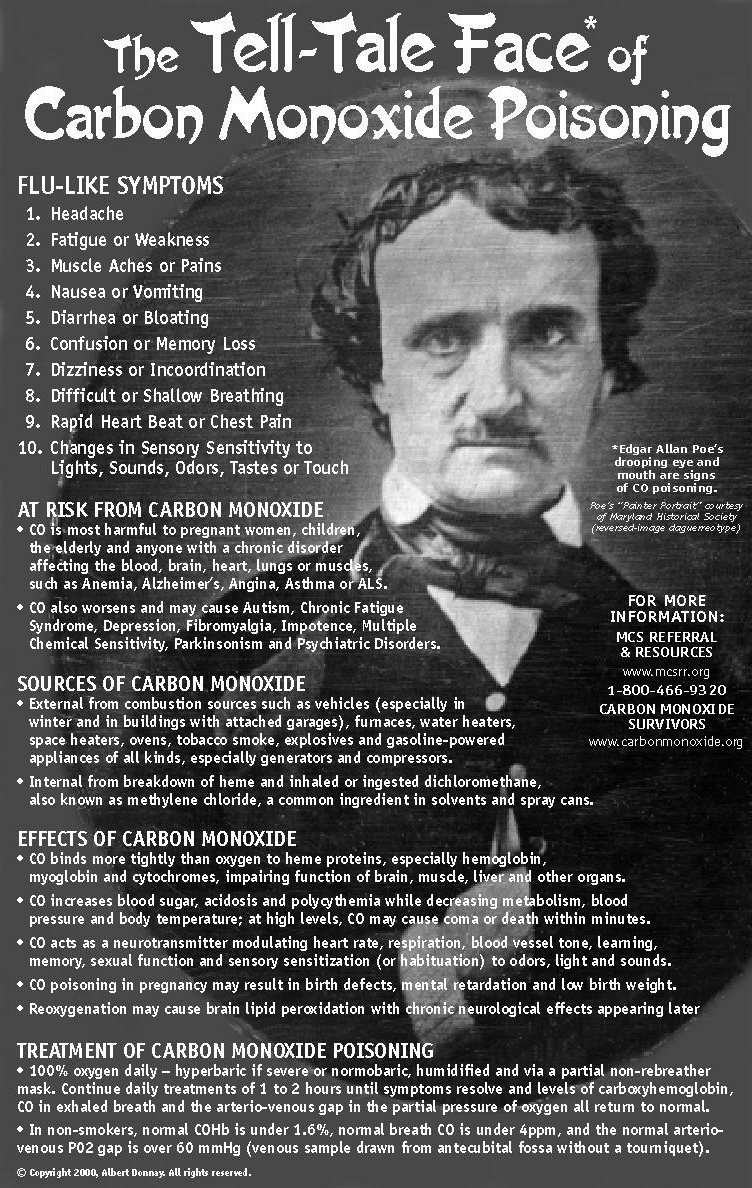
Is it mundane to think that Poe died of medical reasons? Perhaps it is too simple for people that want a more titillating story but the reality seems to be that people were more likely to die by disease than violence in the 19th century (excluding the Civil War). If Poe's death was because of a medical condition, theories include the following (deep breath): diabetes, epilepsy, tuberculosis, heart attack or heart disease, brain tumor, carbon monoxide poisoning, arsenic, lead poisoning, alcohol poisoning (still popular despite contrary evidence), cholera, syphilis, meningitis, and rabies.
Rabies? Yes, and for a time the theory had fairly substantial support. Though most biographies mention the cooping theory, it seems few take it seriously and many point to medical theories instead.
Regardless, one of the greatest imaginations in all of American writing died this day in 1849. Though his death remains a mystery, I am thankful to know that I can enjoy his works any time. It is unfortunate that today, for the first time in about five years, I will not be able to visit Poe at his grave in Baltimore (his original burial plot is today marked, as shown in the photo above).
*As a footnote, on this same day 45 years later, fellow bicentennial poet Oliver Wendell Holmes died. He was 85 years old.
Monday, October 5, 2009
Reynolds, help my poor soul
 At Washington College Hospital at Broadway and Fayette Street in Baltimore, Edgar Poe was dying. His room has been described as "prison-like," with barred windows, in a section of the hospital normally reserved for drunks. He was denied visitors.
Poe's had suddenly appeared in Baltimore "rather the worse for wear" after disappearing for six days. His stay at the hospital would provide no answers. He was incoherent, occasionally raving mad. A handful of major legends stand out from this time period, both attributable to the questionable testimony of Dr. John J. Moran, Poe's attending physician from October 3 to October 7, 1849. Moran made a minor celebrity of himself, earning his 15 minutes of fame as Poe's last doctor by offering several stories of the writer's last days — stories which occasionally contradicted one another.
In one of Poe's few coherent moments, the good doctor claims that he tried to cheer Poe by saying he would soon be out of the hospital and enjoying the company of friends. Poe's response was that "the best thing his friends could do is blow out his brains with a pistol."
Moran also claimed that Poe woke up to call out the name "Reynolds" — a claim which has inspired much speculation (if even true). Could the name refer to Jeremiah N. Reynolds, the Antarctic explorer who inspired Poe's novel The Narrative of Arthur Gordon Pym of Nantucket? Many biographers seem to think so, without offering justification why Poe recollected a man he never met 11 years after his novel was published. Historical fiction writers have made the attempt to figure out the mystery as well. Another possibility is Henry R. Reynolds, apparently one of the judges who oversaw Ryan's Tavern's use as the fourth ward polls (Poe was discovered on Election Day). Some suggest Moran misheard and that Poe really was calling for "Herring," his uncle by marriage who lived in Baltimore.
Many of those who speculate on the "Reynolds" mystery seem to ignore that Moran's later accounts did not mention the alleged "Reynolds" rantings. He also claimed that Poe mentioned having a wife in Richmond, which wasn't far off. But, really, how much of Moran's accounts should be trusted?
Moran made it seem as if he was by Poe's side for the entire four days he was in the hospital. This is obviously not likely. But, realistically, it's conceptually possible that Moran was the only witness to Poe's last words. Moran claimed those words were: "The arched heavens encompass me, and God has his decree legibly written upon the frontlets of every created human being, and demons incarnate, their goal will be the seething waves of blank despair."
Huh?
In another account, Moran offered a simpler possibility: "Lord, help my poor soul." That version is the one that has been entered in the record books as "fact."
*The image above is Washington College Hospital as it looks today, courtesy of Baltimore Then and Now.
Sunday, September 27, 2009
Poe takes his last trip
 On September 27, 1849, Edgar A. Poe fell off the radar. He will not be seen or heard from again for another six days.
The night before his disappearance, there are several stories about what he was doing; how true they are is debated. He apparently visited the office of the Southern Literary Messenger (his former employer) to meet with John R. Thompson. He told Thompson he was leaving for New York the next day but stopping in Philadelphia on the way. In Philadelphia, he was supposed to edit a volume of (bad) poetry by a poetaster named Mrs. Marguerite St. Leon Loud — a gig he only accepted for the decent pay. Thompson gave Poe $5 to cover the trip (as well as a letter to give to Rufus Griswold in Philadelphia); Poe paid him back with a manuscript of a poem titled "Annabel Lee." Likely, this was just a gift, not intended for publication, as "Annabel Lee" had just been sold to John Sartain of the Union Magazine. Thompson published it anyway, claiming to Griswold that he paid "a high price" for it. Information from Thompson comes from his letter to Griswold as well as interviews with the questionable William Fearing Gill, an early (fanatic) biographer of Poe.
Sarah Elmira Royster Shelton claimed that Poe visited her at home the same day. "He came up to my house on the evening of the 26th Sept. to take leave of me — He was very sad, and complained of being quite sick." Elmira claimed he had a fever and urged him not to travel in such a condition the next day. She claims that she confirmed he had already left the next morning when she tried to check on him. Elmira's recollections often wavered so she may or may not be credible.
"About half-past nine" in the evening, Poe visited a young doctor named John F. Carter, presumably for the fever Elmira mentioned. He left (supposedly switching canes with Carter) to eat dinner at Sadler's Restaurant. According to Dr. Carter, the restaurant later told him Poe left "at exactly twelve that night" to board a boat which would depart at four o'clock. Biographer Arthur Hobson Quinn did some considerable thinking about this aspect of the story, whether Poe was really taking a boat which left at 4 a.m. or one at 4 p.m. and which boat, if any, was scheduled to leave that day.
Either way, it was the next day, September 27, a Thursday, when Poe left Richmond. It is believed he boarded a steamer to Baltimore (odd, considering the plans he revealed to John Thompson), identified by Arthur Hobson Quinn and others as Pocahontas. If it was this particular ship, we know that it successfully arrived in Baltimore the next day. Whether it was the next day or not, Poe's next appearance (six days later) would definitely be in Baltimore. Speculation rages if Poe went to Baltimore first, then went on to Philadelphia or New York, then returned to Baltimore, or if he never made it out of Baltimore. That's not including the speculation about whether or not Poe actually left on the 27th or if he went a day or two later. Poe was not in a condition to explain any of it. More on that soon.
Sunday, July 19, 2009
The Red Death returns
 Poe often republished his works, particularly when he was editor/owner of the Broadway Journal. My guess is that, always looking to fill space, he constantly had new versions of his previously-published works on hand. One example is the July 19, 1845 issue of the Broadway Journal, when Poe published a work formerly known as "The Mask of the Red Death: A Fantasy." This new version was renamed "The Masque of the Red Death." The minor shift from "Mask" to "Masque" is no small matter; Poe carefully calculated each and every word he used in his major works. The new title emphasizes the party scene in the story, putting it in the possession or control of the Red Death — and making it just that much more ominous.
If you don't know the story, I'd be surprised. Briefly, it follows a wealthy prince named Prospero, who invites his friends and fellow royals into his "castellated abbey" to avoid the plague raging outside. As his townspeople die out, he believes he will be perfectly safe and even throws a masquerade party to celebrate his sagacity. The massive gala takes place throughout seven rooms, each decorated with a specific color theme. The only room that most guests avoid is the final room, a black chamber with a foreboding ebony clock. When a strange-looking guest appears, wearing the garb of a victim of the plague, Prospero confronts him and, well, no words sum it up better than the final words in the story: "And Darkness and Decay and the Red Death held illimitable dominion over all."
Despite being one of Poe's popular mainstream works, "The Masque of the Red Death" has invited substantial critical commentary too. Often, it is read as an allegory about the inevitability of death — a reading complicated by Poe's outspoken dislike of using allegory. Particularly inviting to scholars is the question of the disease. Some suggest it stands in for tuberculosis, a disease which Poe had personal experience with; his wife Virginia was suffering from it at the time the story was written. Poe also witnessed a cholera epidemic while in Baltimore and the "red death" may reference that disease. Bubonic plague, also known as the black death, is another candidate, especially because of the symbolism of the final black room.
If you ask me, the "Red Death" is the "Red Death" and nothing more. In creating a fictitious disease, Poe makes the story about all disease, not any specific one. But, it is because of this debate and these questions of "What did Poe mean?" which help the story be more than just a scary tale but one of depth and value. Overall, "The Masque of the Red Death" stands as one of Poe's most important — and most entertaining — prose works.
*The image at the top right is by Harry Clarke, published in 1919, with an added red tint. I couldn't resist.
Monday, July 13, 2009
A wedding and a death
 At a ceremony held at St. John's Protestant Episcopal Church in Baltimore, presided over by "Rev. Mr. Wyatt," William Clemm Jr. married Maria Poe on July 13, 1817.
Maria Poe was the younger sister of David Poe, Jr. — other siblings were John Hancock Poe, William Poe, George Washington Poe, Samuel Poe, and Elizabeth Poe. She was William Clemm's second wife and their marriage would produce three children: Henry Clemm, Virginia Marie Clemm, and Virginia Eliza Clemm (the first Virginia died as an infant; her younger sister was born the same year and given her name as an honor). That second Virginia Clemm would later marry Edgar A. Poe.
Very little is known about the marriage of William Clemm and Maria Poe Clemm. He already had five children from his first marriage and very little property or money when he had his second marriage. His first wife, in fact, was Maria's first cousin Harriet Poe. He died in 1826 and left what little he had to the five children from his first marriage. It's likely he never met Edgar Poe, who was living overseas with the Allans at the time of this marriage.
A relative of Clemm, presumably a nephew, became minister of the Methodist Episcopal Church in Baltimore — and presided over the three-minute burial service held after Poe's death in 1849.
 Today also marks the death of George Rex Graham in 1894. Over his 81-year life, he experienced a series of ups and downs. Between 1839 and 1840, he acquired the Saturday Evening Post and then merged two Philadelphia journals to create Graham's Magazine. Shortly after, he hired Poe as his book review editor at the salary of $800 a year. Though Poe questioned the "namby-pamby" magazine on occasion, he helped lead it to become one of the most prominent publications in the country. Graham was concerned about his writers: his magazine was one of the first in the U. S. to copyright each issue and some writers (if they were paid at all) were granted an average five times more than other magazines. After Poe left, Graham hired Rufus Wilmot Griswold to replace him.
Nevertheless, Graham was pushed into bankruptcy in 1848 and lost controlling interest of both the Saturday Evening Post and Graham's Magazine. The latter magazine ceased publication in 1858. At the age of 70, Graham lost his eyesight and relied on the financial assistance of publisher George William Childs. The one-time powerhouse of American publishing, Graham died in obscurity in Orange, New Jersey on July 13, 1894 and was buried in Philadelphia's Laurel Hill Cemetery — apparently unmarked (I could not find it after three or four attempts).
Monday, June 1, 2009
The chess-playing robot is debunked
 People were astounded by the accomplishments of a robot which not only was capable of playing chess, but which frequently beat its human competitors. "The Turk," as the robot was called (pictured in an engraving at right), had been touted throughout Europe by Wolfgang von Kempelen before being brought to the United States by Johann Nepomuk Mälzel in 1825. On June 1, 1828, however, a writer for the Baltimore Gazette questioned the authenticity of this modern marvel in an essay titled "The Chess-Player Discovered."
Edgar Poe may have witnessed this same automaton in action while in Richmond circa 1835. Poe, however, was not easily fooled and, perhaps more importantly, often questioned the sort of wonders he witnessed. In April 1836, the Southern Literary Messenger published Poe's own take of the chess-playing robot. The essay, titled "Maelzel's Chess-Player," tried to be more specific than the previous articles which debunked the robot hoax. Viewing the mystery almost like a game of chess, Poe analyzes the possible explanation for this marvelous "technology." He knows intuitively that it isn't possible, that it must be a fake — "the only question is the I manner in which human agency is brought to bear," he writes. Ultimately, Poe concludes that a very small person is operating the contraption from within, hiding in concealed compartments.
The reality is that The Turk had already been exposed as a fraud at least as early as June 1, 1828 — eight years before Poe's essay. What's important about Poe's story is the analysis he does, the step-by-step process, the method of debunking as much as possible before reaching his final conclusion. "Maelzel's Chess-Player" is, ultimately, a precursor to the "ratiocination" process which Poe will create in his character C. Auguste Dupin in "The Murders in the Rue Morgue." Yes, "Maelzel's Chess-Player" is another step towards Poe's invention of the modern detective story.
Poe, of course, was a hoaxster himself — among his most famous hoaxes is "The Balloon-Hoax," a story which suggested a gas balloon was able to cross the Atlantic Ocean in only three days. Poe would later borrow the name of the man who created The Turk in another hoax-like story about creating gold.
Saturday, May 16, 2009
The Unusual Marriage of the Poes
 The marriage which joined Edgar A. Poe to his teenage cousin Virginia Clemm was certainly unusual — and it has nothing to do with their blood relations or the bride's age.
There is a signed document (a not-so-good reproduction is pictured at right) dated May 16, 1836 which serves as the couple's official marriage bond. A deputy clerk named Thomas W. Cleland served as witness and testified that Virginia was, in fact, "of the full age of twenty-one years" (she was 13). The ceremony was officiated by a Presbyterian minister and attendees included Virginia's mother Maria Clemm (the younger sister of Poe's father), Poe's on-and-off boss Thomas W. White, and White's daughter Eliza (a young lady with whom Poe may have flirted for a time). The document from the city of Richmond was made under the agreement "that whereas marriage is shortly intended to be had and solemnized between... Edgar A. Poe and Virginia E. Clemm." It was signed 173 years ago today.
The question is: When did they really get married?
Several months earlier, on September 22, 1835, the Clerk of the Baltimore County Court issued a marriage license for Edgar and Virginia. She was 13; he was 27. There is debate if a marriage really took place (Arthur Hobson Quinn believes it impossible, Kenneth Silverman believes it to be likely). It seems, nevertheless, that the majority side with Quinn: Poe did not marry his 13-year old cousin.*
Instead, he married his 13-and-a-half-year old cousin on this date — May 16 — in 1836.
Those that believe the "secret" first marriage to be the "true" one suggested that the second "marriage" in 1836 was more public because, now only a few months shy of age 14, Virginia was of a more socially-acceptable age to marry. It's the difference between being just a month over age 13 or being just three months shy of 14. Reverend Amasa Converse did not seem to have a problem that the young woman was obviously not 21 years old as was claimed (for most of her life, she was described as "childlike" in appearance, even when in her 20s). The happy newlyweds then spent a couple days in Petersburg, Virginia.
I say this nonchalantly to prove a minor point: Virginia's age at marriage wasn't as shocking then as it seems today. Marriage at such a young age does not appear rampant in this period, but it also doesn't seem particularly uncommon. Poe seems to have been somewhat embarrassed, however, and occasionally (as on the wedding certificate) suggested that Virginia was older or that he himself was younger. For those that want to paint Poe as a pedophile, he did not take advantage of her. Unlike some, I will not psychoanalyze his writing (i.e. "Annabel Lee" or "Berenice") for examples that prove Virginia was, well, virginal. Poe's own words are better suited: most believe he was sincere when he said he slept alone and did not "assume the position of husband" for two years at least. Some suggest the couple never consummated their marriage at all.
Within 11 years of their marriage, Virginia would die of tuberculosis at the age of 24 — and, today, 162 years after her death, most still refer to her as Poe's "child bride," forced to never grow up in historical memory.
*As for the blood relationship, this was not entirely unusual either. I may write about this more in-depth in a later entry.
Tuesday, March 10, 2009
Poe and the Polish?
After Poe was dismissed from West Point Academy, he was sort of unsure where to go next. By this point, he was not interested in returning to John Allan and was hoping to make his own fortune. Despite giving up on the Army and purposely getting kicked out of West Point, Poe still toyed with the idea of military success. On March 10, 1831, Poe wrote to Colonel Sylvanus Thayer, Superintendent of West Point, from New York: "I intend by the first opportunity to proceed to Paris with the view of obtaining , thro' the interest of the Marquis de La Fayette, an appointment (if possible) in the Polish Army." In his letter, Poe asked Thayer to attest to his good standing at the Academy or to contact any friends in Paris who could help him out. Poe claimed at this point to have "no longer any ties which can bind me to my native country -- no projects -- nor any friends."
There are so many stories to recount here!
For one, there is no sincere evidence that Poe ever went to Poland, though he did make occasional claims. Some fringe theorists in the studies of Poe claim it is absolutely true and, from his stint with the Polish Army, he became an international spy (some say he was partnered with Washington Irving) and his death 18 years later in 1849 was due to a government conspiracy. Think what you will.

What's more interesting to me is the connection to La Fayette. What made Poe think that this great American Revolutionary hero would give him the time of day?
The Marquis was in Richmond in October 1824 and a young Edgar Poe (age 15) was part of a volunteer company of Richmond boys known as the Junior Morgan Riflemen. It was this organization that rode in the procession for the celebrated La Fayette that led him to his hotel. Edgar, in uniform, was presented to La Fayette himself for inspection.
Two weeks earlier, in Baltimore, the Marquis asked about an old Baltimore friend. "I have not seen among these my friendly and patriotic commissary, Mr. David Poe, who resided in Baltimore when I was here." David Poe, Edgar's grandfather, was dead by this point, and La Fayette demanded he be shown the grave. There, he said, Ici repose un coeur noble ("Here rests a noble heart"). La Fayette did not ask about any others during that trip to Baltimore. Of all the people in that city, why would the great La Fayette single out David Poe?
During the American Revolution, from 1778-1779, David Poe was part of Captain John McClellan's Company of Baltimore troops. Appointed Assistant Deputy Quartermaster, he was authorized to purchase supplies for the colonial army. Seeing a need, David Poe used $40,000 of his own money to supply troops with items like boots. His self-sacrifice earned him a nickname, from the Marquis and others: "General Poe."
Edgar A. Poe often looked back with fondness that his grandfather had played a role in the Revolution. To some degree, his interest in joining the Army, attending West Point, and enlisting for the Polish cause may have been attempts at his own similar military glory.
There are so many stories to recount here!
For one, there is no sincere evidence that Poe ever went to Poland, though he did make occasional claims. Some fringe theorists in the studies of Poe claim it is absolutely true and, from his stint with the Polish Army, he became an international spy (some say he was partnered with Washington Irving) and his death 18 years later in 1849 was due to a government conspiracy. Think what you will.

What's more interesting to me is the connection to La Fayette. What made Poe think that this great American Revolutionary hero would give him the time of day?
The Marquis was in Richmond in October 1824 and a young Edgar Poe (age 15) was part of a volunteer company of Richmond boys known as the Junior Morgan Riflemen. It was this organization that rode in the procession for the celebrated La Fayette that led him to his hotel. Edgar, in uniform, was presented to La Fayette himself for inspection.
Two weeks earlier, in Baltimore, the Marquis asked about an old Baltimore friend. "I have not seen among these my friendly and patriotic commissary, Mr. David Poe, who resided in Baltimore when I was here." David Poe, Edgar's grandfather, was dead by this point, and La Fayette demanded he be shown the grave. There, he said, Ici repose un coeur noble ("Here rests a noble heart"). La Fayette did not ask about any others during that trip to Baltimore. Of all the people in that city, why would the great La Fayette single out David Poe?
During the American Revolution, from 1778-1779, David Poe was part of Captain John McClellan's Company of Baltimore troops. Appointed Assistant Deputy Quartermaster, he was authorized to purchase supplies for the colonial army. Seeing a need, David Poe used $40,000 of his own money to supply troops with items like boots. His self-sacrifice earned him a nickname, from the Marquis and others: "General Poe."
Edgar A. Poe often looked back with fondness that his grandfather had played a role in the Revolution. To some degree, his interest in joining the Army, attending West Point, and enlisting for the Polish cause may have been attempts at his own similar military glory.
Wednesday, January 21, 2009
Rob on Poe
I wrote a special guest blog for the (very well-done) Read Street Blog at the Baltimore Sun about Poe's continuing legacy. Take a look and let me know what you think. This week has been and will continue to be full of guest writers on behalf of Poe's 200th birthday. I'm in some very good company, including a Pulitzer Prize-winner and several published mystery novelists.
Of course, Poe's legacy is international! I was also interviewed for "Sunday Breakfast" with Jose Barbosa on New Zealand's radio 95bFM. The whole podcast of the interview is here along with other chapters in their spotlight on Poe. I discuss Poe's diversity as a writer with a special emphasis on his criticism and the barely-known novel The Narrative of Arthur Gordon Pym of Nantucket.
Of course, Poe's legacy is international! I was also interviewed for "Sunday Breakfast" with Jose Barbosa on New Zealand's radio 95bFM. The whole podcast of the interview is here along with other chapters in their spotlight on Poe. I discuss Poe's diversity as a writer with a special emphasis on his criticism and the barely-known novel The Narrative of Arthur Gordon Pym of Nantucket.
Sunday, November 30, 2008
50 days
It's about 50 days away from the big day - January 19, 2009. My plans (right now) are to attend the first weekend of the "official" Edgar Allan Poe bicentennial celebration in Baltimore. The inimitable John Astin is reprising his impersonation of Poe himself. Tickets go on sale as of December 1, and I'm sure they will sell quickly (they tend to sell out anyway; this time around might just be quicker).
Other events are scheduled all over. Richmond is hosting a 24-hour birthday party at the Edgar Allan Poe Museum. Philadelphia has its own event planned, celebrating the grand re-opening of the Poe National Historic Site with refurbished house and brand new exhibits (and one-time equivalent of the Poet Laureate Daniel Hoffman). Shockingly, even the city of Poe's birth is taking part. Boston is infamous for its 199-year long snubbing of Poe but a small (and dedicated) group are trying to give him his due at Boston College. So, there are plenty of options as far as where to celebrate. Where will you be?
Just a reminder that you can spend all 365 days of 2009 celebrating Poe's 200th birthday... err, year. Click here to purchase your copy of the Poe bicentennial desk calendar.
Other events are scheduled all over. Richmond is hosting a 24-hour birthday party at the Edgar Allan Poe Museum. Philadelphia has its own event planned, celebrating the grand re-opening of the Poe National Historic Site with refurbished house and brand new exhibits (and one-time equivalent of the Poet Laureate Daniel Hoffman). Shockingly, even the city of Poe's birth is taking part. Boston is infamous for its 199-year long snubbing of Poe but a small (and dedicated) group are trying to give him his due at Boston College. So, there are plenty of options as far as where to celebrate. Where will you be?
Just a reminder that you can spend all 365 days of 2009 celebrating Poe's 200th birthday... err, year. Click here to purchase your copy of the Poe bicentennial desk calendar.
Subscribe to:
Posts (Atom)