Showing posts with label letters. Show all posts

Wednesday, December 30, 2009

I have made up my mind not to die

Edgar Poe watched his wife slowly die over about five years. Virginia Eliza Clemm Poe was no longer the "child-bride" incessantly referred to by Poe biographers and middle school teachers. She was twenty years old when she had her first major tuberculosis-induced coughing fit. She had been married to Poe for over six years. She and Poe were quite in love... And Poe watched her deteriorate at what should have been the prime of her life.

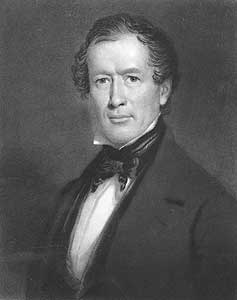
After the final stage of his wife's illness was made public, several literary friends tried to make an appeal for her support. It wasn't entirely clear what was happening, but most people would have likely known the death sentence of "consumption." It was reported that Poe himself was also suffering from his own illness. Poe took it upon himself to write a letter in response to the great but perpetually convalescent Nathaniel Parker Willis (pictured at right) on December 30, 1846: "I am getting better... The truth is, I have a great deal to do; and I have made up my mind not to die 'til it is done."

At this stage in his life, Poe had published several books, become well-known as a fierce literary critic, had become one of the most well-known (yet underpaid) poets of his generation, had watched the Broadway Journal fail under his leadership, but he was determined to start a new journal, The Stylus, and become financially stable. He had every reason to be resolute and optimistic.

Nevertheless, exactly one month after his letter to Willis, Virginia Poe died in New York. The Stylus was never produced. And Poe himself died less than three years after he made his conviction not to die.

Thursday, December 17, 2009

I was not his friend, nor he mine

Rufus Wilmot Griswold was the first major figure to express Poe's personality after the author's death in 1849. He took great liberties, embellishing Poe's bad habits or character flaws and even making a few up. It is not entirely clear what inspired Griswold, nicknamed "the Grand Turk," in what is now labeled a "character assassination." Conjecture says that his jealousy for the attention of Fanny Osgood had something to do with it; perhaps a rivalry began when the editorship of Graham's Magazine changed hands; Griswold may have never forgiven Poe for his lukewarm review of The Poets and Poetry of America; or, Griswold was still angry that Poe mocked him during a lecture tour. Likely all of those ideas are at least partially true. More importantly, however, is understanding what Griswold wrote on December 17, 1849 — two months after Poe's death.

Poe was not without his defenders, after all. One of the loudest voices on his behalf was Sarah Helen Whitman, the woman who almost became Poe's second wife. She was suspicious that Griswold was the author of the so-called "Ludwig article," the obituary which announced Poe's death in a less-than-sympathetic manner. Whitman herself had been quoted in the work of Rufus Griswold, allegedly for calling Poe "intemperate and dissolute." Responding to the claim, Whitman wrote that, regardless of Griswold's interpretation of Poe, he had never been that way in her experience. Griswold casually side-stepped the accusation that he was a liar, writing back in a letter dated December 17, 1849, simply that "I was not his friend, nor he mine."

That lack of friendship might be just enough for Griswold not to care much about the damage he was doing to Poe's posthumous reputation.

That same day, a poet named John Greenleaf Whittier turned 42 years old. Perpetually nicknamed "the Quaker Poet," Whittier was well-represented in Griswold's poetry anthology. Whittier, in fact, was likely one of the New England writers that Poe thought was over-represented in Griswold's book. Likely, Poe also disapproved of Whittier's poetry which, at the time, was almost exclusively abolitionist in nature.

The two poets rarely crossed paths and, ultimately, they would likely have admitted that they were not friends. Nevertheless, Whittier (who generally avoided the literary battles of the day) was one of Poe's targets in his "Chapter on Autography." Poe wrote he "is placed by his particular admirers in the very front rank of American poets. We are not disposed, however, to agree with their decision in every respect." Though Poe admitted Whittier was "a fine versifier" he lacked imagination. Likely referring to the anti-slavery works, Poe added succinctly: "His themes are never to our liking."

Whittier never took it personally. In fact, several years later, Whittier would contribute a few words in honor of the memorial to Poe which was dedicated in 1875.

Monday, December 7, 2009

Or Broadway Something...

Charles Frederick Briggs was mostly known as a writer of satiric novels, particularly the then-famous The Adventures of Harry Franco. To his dismay, his title character also became his nickname (much like Poe was later referred to as "The Raven"). Wanting to do more, Briggs intended to start his own journal. He was struggling, however, with choosing a name.

On December 7, 1844, Briggs wrote his friend,* the literary critic James Russell Lowell: "I shall issue a prospectus in a day or two; the name will be, for the sake of individuality... the Broadway Journal, or Review, or Chronicle, or Broadway Something..."

Briggs wanted to emphasize the distinct New York flavor to his journal. Most periodicals were regional, after all (even Poe original aimed for Pennsylvanian readers when planning The Penn; he later renamed it The Stylus to appeal to a broader audience). The one which Briggs was planning would become The Broadway Journal with the help of his business-minded partner John Bisco.

In the same letter to Lowell, he asks about getting in touch with Poe. Poe came in as a co-editor and business partner. The venture, however, never turned a substantial profit and Bisco eventually bailed out. Oddly enough, Briggs had difficulty working with Poe, in part due to the vitriolic style of criticism which first drew him towards hiring Poe. He soon sold his portion of the business to Poe to break the partnership. By the fall of 1845, The Broadway Journal was solely under the control and ownership of Edgar Poe — it was the only journal and the only business Poe ever owned.

During his tenure there, Poe tweaked and republished a substantial portion of his major works; many of the versions featured in The Broadway Journal became the standard editions. He continued reviewing other writers, noticed newly-published works, updated his readers on local politics, and gave his theories on good literature.

Despite his best intentions (and even a vow to his friend Thomas Holley Chivers to "make a fortune of it yet"), Poe did not succeed in bringing the struggling journal to success. Its final issue was in January 1846. Nevertheless, the experience pushed him closer to producing The Stylus. Despite working in earnest, his plans never came to fruition.

*More work could be done considering their friendship. Lowell turned over all profits from his famous A Fable for Critics directly to Briggs. Certainly, some of the animosity Lowell will begin to feel towards Poe during the "Longfellow War" comes from Briggs's trash-talking, so to speak.

Friday, November 20, 2009

Grotesque and Arabesque

Perhaps in ironic contrast to yesterday's post, publishers Lea and Blanchard wrote to Poe on November 20, 1839, declining to print more copies of a book of his writings.

The publishing history of Poe's prose collection Tales of the Grotesque and Arabesque was a horror story unto itself. The collection was two volumes, packaging a hefty 25 stories (including "The Fall of the House of Usher," "The Man That Was Used Up," "Ligeia," and "William Wilson" in volume one; "Berenice," "Metzengerstein," "Von Jung," and "The Unparalleled Adventure of One Hans Pfaall" in volume two). The Philadelphia-based publishers originally offered a production run of 1750 copies. However, still reeling from the Bank Panic of 1837, the struggling economy forced them to cut back to 750 copies. It was released in the first week of December 1839, though it carried an 1840 copyright notice.

They offered to take all financial risk. This is substantial; Poe had to pay out of his own pocket for the publication of his first book, Tamerlane and Other Poems. Having little money, he was limited to only about 50 copies. The book went virtually unnoticed. Typically, publishing in this period required authors personally to purchase any and all unsold copies after a certain time period. Lea & Blanchard were sure to point out their kindness, and their regret for such kindness. In their letter, they noted: "When we undertook their publication, it was solely to oblige you and not with any view to profit." In fact, they noted their concern about recovering their initial investment, and kindly noted Poe should consider contributing "to relieve us from the publication at cost, or even a small abatement."

Poe hoped he could persuade his publishers to eke out a few extra copies. After all, no less a literary luminary than Washington Irving had offered his endorsement of Poe's prose. Reviews noted the book showed "a power of vivid description, an opulence of imagination, a fecundity of invention, and a command over the elegances of diction which have seldom been displayed."

However, the response from Lea & Blanchard in their November 20 letter was straightforward. Hypothetically considering if they were to do it all over again, the publishers noted: "If the offer was now before us we should certainly decline it."

Monday, November 16, 2009

Poe gets arrested... maybe

In a letter dated November 16, 1831, Poe wrote to his foster-father John Allan in need of assistance. Earlier in the year, he had gotten himself kicked out of West Point Military Academy. About three months earlier, his older brother (the sailor) died of tuberculosis. Lost and alone in the world, Poe was getting desperate, which led him back to John Allan, the foster-father who had lost all interest in him.

In fact, John Allan finally had a legitimate heir, a son born earlier that year to his second wife, Louisa Patterson Allan.

In the letter, Poe makes a startling revelation: "I was arrested eleven days ago for a debt which I never expected to have to pay." Whether this was a monetary debt or not is uncertain. He says part of the expense was on his brother Henry, dating to about two years prior. "I would rather have done any thing on earth than to apply to you again... If you will only send me this one time $80, by Wednesday next, I will never forget your kindness & generosity." There is no evidence that this arrest actually happened (police records of this incident, for example, do not exist). Further, Allan should find no evidence that Poe would have paid him back, having just said that his last debt was one he "never expected to have to pay."

Poe's request for aid was in vain. About four months after this letter was written, John Allan wrote the first draft of his will, in which he left absolutely nothing of his vast fortune for the boy he raised for nearly two decades.

The letter shows a transition period in Poe's young adulthood. He wanted to hold on to the hope that Allan, the man he once called "Pa," still had some concern for him. At the same time, however, he wanted to make it on his own. Rather than return home after his ordeal in jail (if it ever happened), he continued to live his life on his own terms.

Sunday, November 15, 2009

Moran writes to Muddy

On November 15, 1849, five weeks after Poe's death, the 26-year old doctor who tended to him in his final days wrote to Maria Clemm. Dr. John Joseph Moran, the resident physician at Washington College Hospital, had earned his medical degree only four years prior and, it seems, not only worked at the hospital but lived there as well. Considering the sheer number of patients he would have "treated," it's been speculated that he rarely personally saw Poe during his four days at the hospital, if at all.

Maria Clemm first heard of her nephew/son-in-law's death through the newspapers the day after his funeral. A cousin of Edgar named Neilson Poe finally wrote to her four days after his death: "He died on Sunday morning, about 5 o'clock... I was never so shocked, in my life." "Muddy" as she was nicknamed, might have been comforted that Poe's funeral was overseen by a relative, the Reverend W. T. D. Clemm. Still, she desperately sought out details surrounding the circumstances of Poe's death.

Muddy continuously wrote to Neilson Poe and Dr. John Joseph Moran for information and for the return of some of Poe's personal belongings (particularly his trunk, which is now housed at the Richmond Poe Museum, I believe). Poe biographer Kenneth Silverman believes the trunk was finally returned to Muddy while she was staying in Lowell, Massachusetts.

In Moran's November 15 letter, Moran tried to make up for Poe's hasty burial and its lack of pomp and circumstance. He claimed Poe's remains were "visited by some of the first individuals of the city, many of them anxious to have a lock of his hair." It seems unlikely but Moran was likely trying to make Muddy feel better.

Having recently read Drew Gilpin Faust's book This Republic of Suffering: Death and the American Civil War, I have come to see a different point of view on Moran's post-Poe-death writings. We can justify many of Moran's claims as conventional fantasy quite appropriate (and expected) for the time. Attributing the phrase "Lord help my poor soul!" as the author's last words was meant to show that Poe experienced a "Good Death," that he remained true to Christian piety right at the end. Moran suggesting that dedicated fans of Poe (among the "first individuals of the city") implies that Poe's death was not in vain, nor was he forgotten — that he was truly mourned by people who mattered.

Nevertheless, Moran's several re-tellings of Poe's last days constantly changed, particularly his claim that Poe called for the name "Reynolds" several times (the claim disappeared in later tellings, suddenly no longer significant enough to be remembered, if it ever happened... though people still seem to put a lot of stock into it today). If nothing else, it's worth considering if Moran ever really directly treated Poe himself (apparently, Moran didn't even correctly recall which room Poe stayed in). Ultimately, any claims that Moran offers regarding Poe's death should be challenged, if not entirely dismissed.

Friday, October 23, 2009

Hirst and Poe: Rollicking companions

After Poe's death, Maria Clemm believed much of the negative things written about Poe by Rufus Wilmot Griswold, partly because Griswold had evidence to prove it. It turns out, however, that Griswold forged many of the documents that served as back-up for his concerted character assassination on Poe. Reading Griswold's lies, Maria Clemm lamented: "To think of that villain Griswold dragging before the public all my poor Eddie's faults and not to have the generosity of speaking one word of his good qualities."

That's why Maria Clemm was particularly grateful to the people who came forward in defense of Poe. One such defender was Henry B. Hirst, a friend from Philadelphia. Clemm wrote to him (using black-bordered "mourning" stationary) on October 23, 1849, thanking him for his kind words. As she wrote, "God bless you for doing justice to the memory of my own dear Eddie."

Henry Hirst is a strange character in the study of Poe. The two were introduced in Philadelphia some time in the summer of 1839 (by, of all people, Thomas Dunn English). The two became friends during Poe's tenure in Philadelphia. Though a minor poet at best, Hirst did his best to make money from writing. He even wrote a biography of Poe, published in 1843, in the Philadelphia Saturday Museum. He also reviewed (rather caustically) Griswold's The Poets of Poetry of America in that same newspaper. Poe's own published reviews of Hirst's poetry isn't particularly flattering, though he also accused T. D. English of plagiarizing from Hirst. Poe also though Hirst was stealing his own poetry, but those accusations weren't published in Poe's lifetime ("I do not object to him stealing my verses," Poe wrote; "but I do object to his stealing them in bad grammar. My quarrel with him is not, in short, that he did this thing, but that he has went and done did it."). In fact, Hirst at one point suggested that he was the true author of "The Raven" (who wasn't trying to steal Poe's thunder?), the only evidence being that he owned a pet raven for a time (well, so did Dickens).

Later, after Poe's death, Hirst became a heavy drinker, and it was well-known that he was addicted to absinthe, and soon went insane. The association between Poe and Hirst, especially his defense of Poe and reference to "rollicking" companionship made by John Sartain, led to the rumor that Poe was a heavy absinthe drinker himself (something I still hear about on occasion; a quick Google for "Poe and absinthe" proves there are still people out there perpetuating the rumor). However, as the Edgar Allan Poe Society (Jeff Savoye?) has proven, Poe was almost certainly never an absinthe drinker.

Saturday, October 3, 2009

Rather the worse for wear

Baltimore City, Oct 3d 1849
Dear Sir, — There is a gentleman, rather the worse for wear, at Ryan's Fourth ward polls, who goes under the cognomen of Edgar A. Poe, and who appears in great distress, & he says he is acquainted with you, and I assure you, he is in need of immediate assistance.
Yours in haste, Jos. W. Walker
This was the letter which Joseph W. Walker sent to his former employer Joseph Evans Snodgrass on October 3, 1849. It is the first document record of Poe since September 27 (if it exists; I haven't seen it and have no idea where it is housed).

Poe was found in a delirious state in or near Ryan's Tavern in Gunner's Hall located at 44 East Lombard Street, Baltimore. The exact situation is unknown (though legend persists he was in a gutter, in an alley, or otherwise in the street; he may very well have been sitting on a chair inside the Tavern). He may or may not have been drunk. He may or may not have been drugged. He may or may not have been wearing someone else's clothing. He may or may not have asked for Snodgrass by name, rather than naming any of his Baltimore relatives.

Snodgrass, a physician/editor, made it to Ryan's by the afternoon. He later recounted that he knew Poe immediately, despite an odd hat — "a cheap palm-leaf one, without a band, and soiled." Snodgrass also later claimed that Poe was a drunken wreck, and his fate was a lesson to all who were intemperate. Snodgrass was, of course, one of the most violently outspoken members of the temperance movement — readers may decide if he had any bias. Snodgrass apparently bumped into a "Mr. H——, a relative of Mr. Poe's by marriage" (identified as his uncle Henry Herring) and the two decided to put Poe in a carriage to the Washington College Hospital. Poe was received by Dr. John Joseph Moran, who later claimed that Poe wore a straw hat that day and that he "had not the slightest odor of liquor upon his breath or person."

The day Poe was found was election day in Maryland "for members of Congress and for members of the House of Delegates," according to one newspaper that morning. Ryan's, besides being a tavern, was also hosting the fourth ward polls, as eluded to in Walker's letter to Snodgrass. Scholar William Hand Browne observed: "At that time the polls were usually held at public houses, and the candidates saw that every voter had all the whiskey he wanted."

This coincidental date/location also lent credence to an early theory that Poe was a victim of "cooping" — that he was abducted by thugs hired by a political party or individual politician to force people's vote. Victims were chosen at random and force-fed alcohol or drugs to make them more cooperative. When not forced into polling booths, these people were held in "coops," tight cages which led to the occasional accidental death. Poe might have been forced into another person's clothing to disguise his identity (the thugs would not have known of his celebrity status). He was then kicked to the curb when they were done with him — or, so says this theory.

The six days that Poe went missing is a mystery, but even his reappearance is full of holes and questions. How credible was Mr. Snodgrass? How about Dr. Moran? Was Poe supposed to be in Baltimore rather than Philadelphia or New York? Where was he found? Who called for Snodgrass? Was it just a coincidence that this was Election Day?

Tuesday, September 22, 2009

Dearest object on earth

A letter was written to Maria Clemm, mother-in-law of Edgar Poe, on September 22, 1849. The letter-writer was a woman who had never met Maria, yet she wrote: "I feel as if I were writing to one whom I love very devotedly." Sarah Elmira Shelton (nee Royster) was encouraged to write this letter by her new fiancee, Edgar Poe.

Poe had first met Elmira when they were both teenagers in Richmond, but their budding romance was cut short due to the intervention of her father while Poe was away at the University of Virginia. The failed romance inspired a short story by Poe's brother William Henry Leonard Poe and, possibly, a play by Lambert A. Wilmer, a Baltimore friend of W. H. L. Poe. If nothing else, many of Poe's early poems about lost love or youthful folly seem inspired by the relationship.

Elmira married Alexander Shelton, but Mr. Shelton died shortly before she crossed paths with Poe again. Poe dropped in on her in July 1848 (she wrote, "I was ready to go to church and a servant told me that a gentleman in the parlor wanted to see me. I went down and was amazed to see him
but knew him instantly.") and it seems their relationship picked up right where it left off. However, Alexander Shelton's will stipulated that the ample inheritance left for her would be cut substantially. He pushed, she acquiesced, and it all happened very quickly: His visit was September 17, her letter to Maria Clemm was only five days later. In it, she referred to him as her "dearest object on earth." Nevertheless, it seems Elmira's family, particularly her brothers, never approved of the coupling. Poe then left Richmond on September 27, 1849. The marriage would never take place; Poe died two weeks after the letter from Elmira to Maria Clemm was written.

After Poe's death, Elmira kept tight-lipped about her relationship with Poe. She later said she would not have married him "under any circumstances"
— a strange thing to say, considering what she wrote to Maria Clemm. She changed her tune again in June 1884 when she was interviewed by Dr. John J. Moran, who was preparing a booklet on his experience as Poe's attending physician in his last days. Moran's account is known for its lack of credibility in general but Elmira's changing testimony is questionable and confusing, which has led to some suspicion about her family's role in Poe's death...

Friday, July 10, 2009

6000 years ago

In a letter dated July 10, 1844, to friend and fellow poet Thomas Holley Chivers, Poe gave one of his most often quoted, profound-sounding-yet-elusive comments. He wrote: "Man is now only more active — not more happy — nor more wise, than he was 6000 years ago."

Some, who put little effort into it, read this as Poe's admission that he's not happy and is, perhaps, depressed. Such a juvenile interpretation strips the quote of its depth. The "active" nature of humanity Poe refers to refers to the changing cultural climate: the boom in industry, the sudden influx of writers and magazines, the movement from agrarian communities to urban centers, the growth of crime, etc. Does any of that stuff make mankind any happier or wiser?

Is it still true today? Our "activity" is now internet-driven. We make "friends" through Facebook, have "conversations" through e-mail, "meet" people through webcast conferences, and believe that any knowledge worth knowing is available for free on any given web page. Are we happier or wiser today?

Feel free to interpret in the comments.

Wednesday, June 17, 2009

Hawthorne writes to Poe

From Salem, Massachusetts, the now well-known American author Nathaniel Hawthorne wrote to Edgar Poe about his book, Mosses from an Old Manse. In the letter, dated June 17, 1846, Hawthorne asked Poe if his publishers had already sent him a copy to review. He also noted his respect for Poe as a critic. As he wrote:
"I have read your occasional notices of my productions with great interest — not so much because your judgment was, upon the whole, favorable, as because it seemed to be given in earnest. I care for nothing but the truth, in regard to my writings, than a sugared falsehood."
"Sugared falsehoods" were something Poe tended to avoid by this time, certainly known as a "Tomahawk Man" since well before Hawthorne's letter was written.* Today, Poe is occasionally dismissed as a critic (in part for his caustic nature) but, clearly, at least Hawthorne respects him for this line of work.

Nevertheless, Hawthorne makes it clear that he prefers Poe as a fiction writer more than as a reviewer. "I admire you rather as a writer of Tales, than as a critic upon them," he wrote. "I might often — and often do — dissent from your opinions, in the latter capacity, but could never fail to recognize your force and originality, in the former." In 2009, that should ring like a pretty decent endorsement from a heavy hitter in American writing.

Poe did get his review copy of Mosses from an Old Manse and wrote a lengthy critique, which was published in Godey's Lady's Book in November 1847. He praised the writing, but worried about how New England culture was influencing the book's author. He warned Hawthorne particularly of the Transcendentalists. In his review, Poe wrote: "Let him mend his pen, get a bottle of visible ink, come out from the Old Manse, cut Mr. [Bronson] Alcott, [and] hang (if possible), the editor of 'The Dial.'" Interesting words, but Poe might not have realized that not only was The Dial already canceled, but also that Hawthorne was already out of the Old Manse. By this time, he was living once again in Salem while famously holding a government-appointed job at the custom house.

This letter from Hawthorne and Poe's review of Mosses from an Old Manse will both play a salient role in my upcoming lecture, Dark Romantics: Hawthorne and Poe. The talk is kindly hosted by The Wayside, Hawthorne's former home, today part of Minuteman National Park in Concord, Massachusetts. We will celebrate both Poe's bicentennial year and Hawthorne's birthday (a couple days off). The talk is free and takes place on the side lawn of The Wayside on July 2 at 6:30 p.m. The staff there is worried that neither Hawthorne nor Poe will draw a large crowd — let's prove them wrong!

*A recent discussion begs the question: When is the earliest reference to Poe and his "tomahawk"? We found as early as 1840, thanks to Poe's friend Thomas Holley Chivers.

Friday, June 12, 2009

Poe's only surviving letter to his wife

There is only one surviving letter written by Poe to his wife Virginia. The letter begins:
"My Deart Heart, My dear Virginia! our Mother [e.g. Maria Clemm, Virginia's mother and Poe's aunt/mother-in-law] will explain to you why I stay away from you this night. I trust the interview I am promised,* will result in some substantial good for me, for your dear sake, and hers—Keep up your heart in all hopefulness, and trust yet a little longer."
He then assures here, "I shall be with you tomorrow P.M. and be assured until I see you, I will keep in loving remembrance your last words and your fervent prayer!"

Virginia at this time was very ill with tuberculosis. Emphasizing his dependence on the younger woman, Poe asks her to survive just a little longer. It is because of her, he notes, that he has been able to be strong after the recent failure of the Broadway Journal. "In my last great disappointment, I should have lost my courage but for you—my darling little wife you are my greatest and only stimulus now to battle with this uncongenial, unsatisfactory and ungrateful life." Certainly a heavy burden for a dying woman to bear!

The brief letter is signed "Your devoted Edgar." That devotion is clear. As Biographer Kenneth Silverman wrote, "Although he treated many others abrasively, falsely, or manipulatively, with Virginia he seems always to have been soft, concerned, nearly reverential."

But he could not count on her forever. Around this same time, a visitor already noted she was "almost a disrobed spirit, and when she coughed it was made certain that she was rapidly passing away." At the time Poe wrote this only extant letter to his wife, she was only six months away from death.

*Circumstances surrounding this letter are unclear; it is not even known where Poe was when he wrote to his wife. It's possible he was working on building subscriptions for The Stylus (an "interview" is not necessarily job-related at this time; it could refer to any scheduled interaction between people).

**The image of the letter is courtesy of the web site "Knowing Poe." The original is part of the collection of the University of Virginia.

Saturday, May 30, 2009

Poe and Sarah Hale

On May 30, 1844, the influential "editress" (as she called herself) Sarah Josepha Hale wrote to Edgar A. Poe. Poe had submitted a tale to Nathaniel Parker Willis in the hopes of it getting published in The New Mirror. Instead, Willis thought it better placed in an annual called The Opal; though he had edited its first issue (perhaps ironically, this annual gift-book was originally founded by none other than Rufus Wilmot Griswold), he no longer held that role. The new editor was Sarah Josepha Hale, better known as the long-time editor of Godey's Lady's Book for forty years, but best known (unfortunately) as the author of "Mary Had a Little Lamb."

Willis had accepted Poe's submission before turning it over to Hale. Poe was now unsure if his tale would be published at all and wrote directly to Hale to secure its appearance in The Opal. As he wrote, Poe wanted Hale "be so kind as to take it, unseen, upon Mr. Willis' testimony in its favor." Hale's response is apparently lost, but likely written on May 30, 1844. Poe refers to this now-missing letter as a "kind and very satisfactory one." He agrees to the pathetic payment of 50 cents per page (compare to Graham's Magazine's $4 or $5 per page).

It was not published in The Opal, as Willis anticipated. Instead, "The Oblong Box" was published in the September issue of Godey's. The story is an odd mesh of horror, mystery, and sea adventure, unlike any other Poe tale. Highly recommended!

More important here is the interaction between Poe and Hale, a woman who some (including me!) consider among the most powerful and influential women of her generation. Her first awareness of Poe was through her son, David Emerson Hale, who was a classmate of Poe's at West Point. When David mentioned to his mother that there was a poet among them, Mrs. Hale inquired about him. Under Hale, Poe published one poem and six stories (including "The Cask of Amontillado") in Godey's Lady's Book — something which Poe could not have been too happy with. Though it was the highest-circulating magazine of its day, it was trashy and sentimental, with more colored fashion-plates than worthwhile content.

Thursday, April 30, 2009

Misery is manifold

On April 30, 1835, Poe wrote an amazing letter to justify his decision to write sensational horror stories. This was early in his career; he had just published "Berenice" (one of my personal favorites), a story which is one of his most violent — though there are no scenes of violence anywhere in the story. Instead, the piece focuses on suspense and psychology, as would many later works. Nevertheless, there was some public outcry for its gruesome nature. Poe took the time to defend himself to Thomas Willis White, editor of The Southern Literary Messenger:
"Your opinion of it is very just. The subject is by far too horrible, and I confess that I hesitated in sending it especially as a specimen of my capabilities... But what I wish to say relates to the character of your Magazine more than to any articles I may offer... The history of all Magazines shows plainly that those which have attained celebrity were indebted for it to articles similar in natureto Berenice... You ask me in what does this nature consist? In the ludicrous heightened into the grotesque: the fearful coloured into the horrible: the witty exaggerated into the burlesque: the singular wrought out into the strange and mystical. You may say all this is bad taste. I have my doubts about it... But whether the articles of which I speak are, or are not in bad taste is little to the purpose. To be appreciated you must be read, and these things are invariably sought after with avidity. They are, if you will take notice, the articles which find their way into other periodicals, and into the papers, and in this manner, taking hold upon the public mind they augment the reputation of the source where they originated."
Poe concludes that he admits "Berenice," in fact, "approaches the very verge of bad taste—but I will not sin quite so egregiously again." He notes that similar stories are coming, but he asks White not to judge them without first considering their impact on the circulation of the magazine.

"Berenice" was Poe's first true horror story. In later editions, Poe did self-censor a tiny bit (it's hardly noticeable) but he didn't really back down in the theory he discussed in the above letter to White. He purposely tried to bring his stories right to the edge of grotesqueness, but still keep them entertaining. This letter allows us to question the sincerity of his horror stories and if he really believed they were worthwhile literature. This "pop culture" approach justifies his decision to use themes like premature burial, mesmerism, and other subjects which audiences gobbled up. Of course, Poe presented these themes very differently than most; as mentioned above, gratuitous violence was replaced with suspense and underpinnings focused on the narrator's psyche.

Either way, to me, this shows that Poe knew the publishing industry and, most importantly, he knew his audience. His line about being read in order to be appreciated refers just as much to White as himself; he was holding a carrot in front of White's nose to let him know he intended to increase the magazine's circulation - for White's benefit. And, from what we can tell, he succeeded.

Of course, Poe wasn't entirely sincere about never sinning quite so "egregiously" again. And White knew that. White seems to have had a decent relationship with Poe in his early career and tried to support him through a difficult time. Poe biographer Kenneth Silverman suggests a "fatherly" interest. It's also possible that Poe pursued White's daughter Eliza, then 18, as a potential wife (about a year later, Poe married his young cousin Virginia instead).

*The image above is a screenshot from an amateur film adaptation of "Berenice," created for a graduate film course. The full video (before a custom soundtrack was added) is here.

Sunday, April 19, 2009

Griswold and Graham's

It's hard to tell for certain when the first edition of The Poets and Poetry of America hit book stores. It wasn't until April 18, 1842, however that the anthology's editor, Rufus Wilmot Griswold, was informed by publishers that it was finally published. As Carey & Hart (Philadelphia) wrote to Griswold (in New York): "We have at last published the 'Poets & Poetry of America' & a handsome Book it is."

The publisher must have rushed copies to important or influential literary figures on that first day. George Rex Graham in Philadelphia, the proprietor of the very popular Graham's Magazine, almost immediately jumped to take advantage of the rising star of Griswold. He wrote only a day later, April 19, 1842:

"Have you fully determined on assuming the Chaplaincy* and to abandon the editorial chair? Or could you find it in your heart to locate in Philadelphia? Let me hear from you, as I have a proposal to make. I like your book very much. We received it from Carey & Hart on yesterday, and although it will give offense to a few, it must be popular, and it will please every man of taste."

Graham had recently parted ways with his famous editor, Edgar Poe, who had miraculously increased circulation to 40,000, but resigned in late March. What really drove sales up was Poe's infamous critical review style, which was somewhat controversial. The Arcturus (edited by Cornelius Mathews and Evert Augustus Duyckinck) noted Poe's reviews as "elaborate" and "richly deserving of attention," though he was "somewhat over literal and minute, looking oftener to the letter than the spirit."Joseph Evans Snodgrass in the Saturday Visiter in Baltimore wrote that Poe was "an excellent reviewer" even though he was "at times, provokingly hypercritical." James Russell Lowell was a little less euphemistic and wrote that Poe occasionally mistook "his phial of prussic acid for his inkstand."

The "proposal" Graham wanted to offer Griswold was Poe's former role. Griswold seems to have accepted without hesitation and moved to Philadelphia to take the job with Graham's (leaving his family behind in New York). The transition was so quick, a rumor persisted (and still does in some circles) that Poe came to clean out his desk and saw Griswold already sitting there. The rumor is quite untrue. Nevertheless, Griswold was paid $1000 — $200 more per year than Poe — likely building up some of the animosity between the two.

Griswold's run on Graham's was significantly less successful than Poe's. Though he was able to bring in substantial writers (including James Fenimore Cooper and Henry Wadsworth Longfellow), he never earned much respect there. In fact, a year after he took over, George Lippard wrote, "It was Mr. Poe that made Graham's Magazine what it was a year ago; it was his intellect that gave this now weak and flimsy periodical a tone of refinement and mental vigor."

*Griswold had recently earned the title of "Reverend," though he never had a regular congregation.

Sunday, March 29, 2009

Poe writes to Griswold

An otherwise uninteresting letter can be made interesting just based on the correspondents involved. Nothing gets more exciting (to me) than letters between Edgar A. Poe and Rufus Wilmot Griswold.

It was March, 1841. Poe had only recently joined the staff of Graham's Magazine. As Mr. George Graham announced, "Mr. POE is too well known in the literary world to require a word of commendation. As a critic he is surpassed by no man in the country; and as in this Magazine his critical abilities shall have free scope, the rod will be very generously, and at the same time, justly administered." But, more than just a critic, Poe also wanted to be recognized as a poet — a dream he had harbored since a teenager.

At the same time Poe was starting at Graham's, Rufus Griswold was preparing a massive anthology to be named The Poets and Poetry of America. Griswold was seeking out the most representative pieces of American poetry to trace its progression since the Revolution. He was fairly thorough, aiming for the well-known (like Charles Sprague) to the lesser-known (like the upstart Transcendental poet Jones Very). Poe knew that, if he wanted to be take seriously as a poet, his inclusion in Griswold's book was imperative.

In a letter dated March 29, 1841, Poe offered several poems to Griswold, gushingly admitting that he would be honored to see "one or two of them in the book." Griswold was generous and published three: "The Coliseum," "The Haunted Palace," and "The Sleeper." Interesting choices, and none (with the possible exception of "The Haunted Palace") are particularly well-known today. Nevertheless, keep in mind that 1841 was before "The Raven," "Ulalume," "Annabel Lee," and "The Bells." What's important is that Poe secured a place in the book, even if only three mediocre poems were included.

When the book was published in 1842, Poe had just left Graham's. Griswold took advantage of Poe's poverty — by bribing him. He gave Poe money if he did a favor and reviewed The Poets and Poetry of America. In return, Griswold assured its publication. The deal implied that Poe owed Griswold a positive review. Poe must not have understood — or, perhaps, he was of too high integrity. Poe assumed he was merely being paid for the typical critical work for which he was known... as Graham said, "the rod will be very generously, and at the same time, justly administered." And Poe did just that: a mix of praise and criticism that can be labeled neither wholly positive nor wholly negative. Poe's biggest complaint, by the way, was based on which poets were or were not included.

Griswold was livid. But, he did as he promised: he took the review and found a publisher for it. Far from his home base of Philadelphia or even the publishing center of New York, Griswold instead sent it over to Boston directly into the hands of a young publisher named James Thomas Fields. Fields had only lately joined the publishing firm of William D. Ticknor — in four years, the company would be renamed Ticknor and Fields.

But it wasn't even Fields that Griswold asked to publish Poe's review. Instead, he referred it to the house of "Bradbury & Lodey." As Griswold wrote, "I thought likely the name of Poe — gratuitously furnished — might be of some consquence, though I care not a fig about the publication of the criticism, as the author and myself not being on the best terms." Poe's review of The Poets and Poetry of America was eventually published in the low-circulation Boston Miscellany in November 1842.

Griswold likely never forgave Poe for not giving the high-praise, laudatory review he expected. He was never known as a forgiving person, after all.

Sunday, March 15, 2009

A career turning point

After breaking ties with the Allan family, Poe struggled with half-hearted attempts at a solid career. By 1835, he had published three volumes of poetry — none of which met with significant financial or critical success. A few prose works had made the rounds, including "MS. Found in a Bottle," which won him an impressive $50 prize. One of the judges that awarded Poe his prize was John Pendleton Kennedy, to whom Poe owes his career.

Kennedy, in reviewing Poe's several prose submissions for the contest, encouraged Poe to keep writing. On March 15, 1835, Poe wrote to Kennedy for more explicit career help: he needed permanent employment. Poe's financial situation was so bad that he had to turn down an offer to dine with Kennedy. As he wrote, "I cannot come--and for reasons of the most humiliating nature [in] my personal appearance. You may conceive my deep mortification in making this disclosure to you." Poe didn't have enough money to afford a proper suit, which prevented him from accepting the dinner invitation. Kennedy took sympathy and helped him get new clothes and also tried to find a more long-term solution to Poe's financial troubles by getting him a job.

So, Kennedy wrote to Thomas Willis White a few weeks later. "I told him... that you might find it to your advantage to give him some permanent employ." Sure enough, White brings in Poe as a contributor and, by August 1835, Poe is a staff writer and critic for White's journal The Southern Literary Messenger. Poe's time with the Messenger won't be long, but he will contribute nearly 40 reviews of American and foreign books and periodicals, kick-starting his career as a critic; his role as a critic, of course, will be the main source of his reputation during his lifetime. His solid contributions helped build the readership of the journal and, during the period in which he was supervising content, the circulation grew from 500 to 3,500 subscribers. He will occasionally contribute to the Messenger for the rest of his life.

If you follow the logic, then, Poe's March 15 letter to Kennedy led to his first foray into professional literary criticism, which became his career.

Tuesday, March 10, 2009

Poe and the Polish?

After Poe was dismissed from West Point Academy, he was sort of unsure where to go next. By this point, he was not interested in returning to John Allan and was hoping to make his own fortune. Despite giving up on the Army and purposely getting kicked out of West Point, Poe still toyed with the idea of military success. On March 10, 1831, Poe wrote to Colonel Sylvanus Thayer, Superintendent of West Point, from New York: "I intend by the first opportunity to proceed to Paris with the view of obtaining , thro' the interest of the Marquis de La Fayette, an appointment (if possible) in the Polish Army." In his letter, Poe asked Thayer to attest to his good standing at the Academy or to contact any friends in Paris who could help him out. Poe claimed at this point to have "no longer any ties which can bind me to my native country -- no projects -- nor any friends."

There are so many stories to recount here!

For one, there is no sincere evidence that Poe ever went to Poland, though he did make occasional claims. Some fringe theorists in the studies of Poe claim it is absolutely true and, from his stint with the Polish Army, he became an international spy (some say he was partnered with Washington Irving) and his death 18 years later in 1849 was due to a government conspiracy. Think what you will.

What's more interesting to me is the connection to La Fayette. What made Poe think that this great American Revolutionary hero would give him the time of day?

The Marquis was in Richmond in October 1824 and a young Edgar Poe (age 15) was part of a volunteer company of Richmond boys known as the Junior Morgan Riflemen. It was this organization that rode in the procession for the celebrated La Fayette that led him to his hotel. Edgar, in uniform, was presented to La Fayette himself for inspection.

Two weeks earlier, in Baltimore, the Marquis asked about an old Baltimore friend. "I have not seen among these my friendly and patriotic commissary, Mr. David Poe, who resided in Baltimore when I was here." David Poe, Edgar's grandfather, was dead by this point, and La Fayette demanded he be shown the grave. There, he said, Ici repose un coeur noble ("Here rests a noble heart"). La Fayette did not ask about any others during that trip to Baltimore. Of all the people in that city, why would the great La Fayette single out David Poe?

During the American Revolution, from 1778-1779, David Poe was part of Captain John McClellan's Company of Baltimore troops. Appointed Assistant Deputy Quartermaster, he was authorized to purchase supplies for the colonial army. Seeing a need, David Poe used $40,000 of his own money to supply troops with items like boots. His self-sacrifice earned him a nickname, from the Marquis and others: "General Poe."

Edgar A. Poe often looked back with fondness that his grandfather had played a role in the Revolution. To some degree, his interest in joining the Army, attending West Point, and enlisting for the Polish cause may have been attempts at his own similar military glory.