Showing posts with label 1849. Show all posts

Thursday, December 17, 2009

I was not his friend, nor he mine

Rufus Wilmot Griswold was the first major figure to express Poe's personality after the author's death in 1849. He took great liberties, embellishing Poe's bad habits or character flaws and even making a few up. It is not entirely clear what inspired Griswold, nicknamed "the Grand Turk," in what is now labeled a "character assassination." Conjecture says that his jealousy for the attention of Fanny Osgood had something to do with it; perhaps a rivalry began when the editorship of Graham's Magazine changed hands; Griswold may have never forgiven Poe for his lukewarm review of The Poets and Poetry of America; or, Griswold was still angry that Poe mocked him during a lecture tour. Likely all of those ideas are at least partially true. More importantly, however, is understanding what Griswold wrote on December 17, 1849 — two months after Poe's death.

Poe was not without his defenders, after all. One of the loudest voices on his behalf was Sarah Helen Whitman, the woman who almost became Poe's second wife. She was suspicious that Griswold was the author of the so-called "Ludwig article," the obituary which announced Poe's death in a less-than-sympathetic manner. Whitman herself had been quoted in the work of Rufus Griswold, allegedly for calling Poe "intemperate and dissolute." Responding to the claim, Whitman wrote that, regardless of Griswold's interpretation of Poe, he had never been that way in her experience. Griswold casually side-stepped the accusation that he was a liar, writing back in a letter dated December 17, 1849, simply that "I was not his friend, nor he mine."

That lack of friendship might be just enough for Griswold not to care much about the damage he was doing to Poe's posthumous reputation.

That same day, a poet named John Greenleaf Whittier turned 42 years old. Perpetually nicknamed "the Quaker Poet," Whittier was well-represented in Griswold's poetry anthology. Whittier, in fact, was likely one of the New England writers that Poe thought was over-represented in Griswold's book. Likely, Poe also disapproved of Whittier's poetry which, at the time, was almost exclusively abolitionist in nature.

The two poets rarely crossed paths and, ultimately, they would likely have admitted that they were not friends. Nevertheless, Whittier (who generally avoided the literary battles of the day) was one of Poe's targets in his "Chapter on Autography." Poe wrote he "is placed by his particular admirers in the very front rank of American poets. We are not disposed, however, to agree with their decision in every respect." Though Poe admitted Whittier was "a fine versifier" he lacked imagination. Likely referring to the anti-slavery works, Poe added succinctly: "His themes are never to our liking."

Whittier never took it personally. In fact, several years later, Whittier would contribute a few words in honor of the memorial to Poe which was dedicated in 1875.

Sunday, November 15, 2009

Moran writes to Muddy

On November 15, 1849, five weeks after Poe's death, the 26-year old doctor who tended to him in his final days wrote to Maria Clemm. Dr. John Joseph Moran, the resident physician at Washington College Hospital, had earned his medical degree only four years prior and, it seems, not only worked at the hospital but lived there as well. Considering the sheer number of patients he would have "treated," it's been speculated that he rarely personally saw Poe during his four days at the hospital, if at all.

Maria Clemm first heard of her nephew/son-in-law's death through the newspapers the day after his funeral. A cousin of Edgar named Neilson Poe finally wrote to her four days after his death: "He died on Sunday morning, about 5 o'clock... I was never so shocked, in my life." "Muddy" as she was nicknamed, might have been comforted that Poe's funeral was overseen by a relative, the Reverend W. T. D. Clemm. Still, she desperately sought out details surrounding the circumstances of Poe's death.

Muddy continuously wrote to Neilson Poe and Dr. John Joseph Moran for information and for the return of some of Poe's personal belongings (particularly his trunk, which is now housed at the Richmond Poe Museum, I believe). Poe biographer Kenneth Silverman believes the trunk was finally returned to Muddy while she was staying in Lowell, Massachusetts.

In Moran's November 15 letter, Moran tried to make up for Poe's hasty burial and its lack of pomp and circumstance. He claimed Poe's remains were "visited by some of the first individuals of the city, many of them anxious to have a lock of his hair." It seems unlikely but Moran was likely trying to make Muddy feel better.

Having recently read Drew Gilpin Faust's book This Republic of Suffering: Death and the American Civil War, I have come to see a different point of view on Moran's post-Poe-death writings. We can justify many of Moran's claims as conventional fantasy quite appropriate (and expected) for the time. Attributing the phrase "Lord help my poor soul!" as the author's last words was meant to show that Poe experienced a "Good Death," that he remained true to Christian piety right at the end. Moran suggesting that dedicated fans of Poe (among the "first individuals of the city") implies that Poe's death was not in vain, nor was he forgotten — that he was truly mourned by people who mattered.

Nevertheless, Moran's several re-tellings of Poe's last days constantly changed, particularly his claim that Poe called for the name "Reynolds" several times (the claim disappeared in later tellings, suddenly no longer significant enough to be remembered, if it ever happened... though people still seem to put a lot of stock into it today). If nothing else, it's worth considering if Moran ever really directly treated Poe himself (apparently, Moran didn't even correctly recall which room Poe stayed in). Ultimately, any claims that Moran offers regarding Poe's death should be challenged, if not entirely dismissed.

Friday, October 23, 2009

Hirst and Poe: Rollicking companions

After Poe's death, Maria Clemm believed much of the negative things written about Poe by Rufus Wilmot Griswold, partly because Griswold had evidence to prove it. It turns out, however, that Griswold forged many of the documents that served as back-up for his concerted character assassination on Poe. Reading Griswold's lies, Maria Clemm lamented: "To think of that villain Griswold dragging before the public all my poor Eddie's faults and not to have the generosity of speaking one word of his good qualities."

That's why Maria Clemm was particularly grateful to the people who came forward in defense of Poe. One such defender was Henry B. Hirst, a friend from Philadelphia. Clemm wrote to him (using black-bordered "mourning" stationary) on October 23, 1849, thanking him for his kind words. As she wrote, "God bless you for doing justice to the memory of my own dear Eddie."

Henry Hirst is a strange character in the study of Poe. The two were introduced in Philadelphia some time in the summer of 1839 (by, of all people, Thomas Dunn English). The two became friends during Poe's tenure in Philadelphia. Though a minor poet at best, Hirst did his best to make money from writing. He even wrote a biography of Poe, published in 1843, in the Philadelphia Saturday Museum. He also reviewed (rather caustically) Griswold's The Poets of Poetry of America in that same newspaper. Poe's own published reviews of Hirst's poetry isn't particularly flattering, though he also accused T. D. English of plagiarizing from Hirst. Poe also though Hirst was stealing his own poetry, but those accusations weren't published in Poe's lifetime ("I do not object to him stealing my verses," Poe wrote; "but I do object to his stealing them in bad grammar. My quarrel with him is not, in short, that he did this thing, but that he has went and done did it."). In fact, Hirst at one point suggested that he was the true author of "The Raven" (who wasn't trying to steal Poe's thunder?), the only evidence being that he owned a pet raven for a time (well, so did Dickens).

Later, after Poe's death, Hirst became a heavy drinker, and it was well-known that he was addicted to absinthe, and soon went insane. The association between Poe and Hirst, especially his defense of Poe and reference to "rollicking" companionship made by John Sartain, led to the rumor that Poe was a heavy absinthe drinker himself (something I still hear about on occasion; a quick Google for "Poe and absinthe" proves there are still people out there perpetuating the rumor). However, as the Edgar Allan Poe Society (Jeff Savoye?) has proven, Poe was almost certainly never an absinthe drinker.

Tuesday, October 20, 2009

Defense of Poe

Friends of Poe came to Poe's defense almost immediately after Rufus Griswold began maligning the dead author's character. Even before his full-length memoir of Poe in 1850, Griswold was being criticized for his short obituary of Poe in October 1849.

One of the first to respond was George Lippard, a novelist who had gained attention with his The Quaker City, Or, the Monks of Monk-Hall in 1845. On October 20, 1849, Lippard offered his own obituary to Poe:
Edgar Allan Poe died, in the city of Baltimore, on Sunday, nearly two weeks ago. He is dead and we are conscious that words are fruitless to express our feelings in relation to his death. Only a few weeks ago we took him by the hand in our office... Poe spent a day with us. We talked of the time we had first met, in his quiet home on Seventh Street, Philadelphia, when it was made happy by the presence of his wife -- a pure and beautiful woman. He talked also of his last book "Eureka," well termed a "Prose Poem," and spoke much of projects for the future.
Lippard makes a clear reference to Griswold and others:
We frankly confess that, on this occasion, we cannot imitate a number of editors who have taken upon themselves to speak of Poe, and his faults in a tone of condescending pity! That Poe had faults we do not deny. He was a harsh, a bitter and sometimes an unjust critic. But he was a man of genius -- a man of high honor -- a man of good heart... As an author his name will live, while three-fourths of the bastard critics and mongrel authors of the present day go down to nothingness and night. And the men who now spit upon his grave, by way of retaliation for some injury which they imagined they have received from Poe living, would do well to remember, that it is only an idiot or a coward who strikes the cold forehead of a corpse.
It's hard to dispute Lippard's final assessment, that anyone who attacks a corpse is a bit foolish (or cowardly). However, Lippard's later writings on Poe will continue to add to the Poe mythos, in many cases making himself a much more important character in the life of Poe than is credible.

The same day, October 20, Nathaniel Parker Willis also published a defense of Poe, though he hardly stands as one of Poe's greatest defenders. In fact, N. P. Willis ends up working with Griswold in preparing Poe's collected works, and continues a lengthy business relationship with him ever after. If Willis was so concerned about Griswold's cruel depiction of Poe, you would think he would have broken off communication with him. However, Willis liked to play both sides and avoided making enemies wherever possible. Even as a defender of Poe, Willis was hardly a strong advocate.

In Griswold's edition of Poe's collected works, Willis notes: "Our own impression of the nature of Edgar A. Poe differs in some important degree, however, from that which has been generally conveyed in the notices of his death." So, he disputes how Poe's life has been reported — immediately after those lines, he republished Griswold's scandalous obituary in its entirety, introducing it as "a graphic and highly finished portraiture." He then casually notes how he is avoiding comment on Griswold's negative description: "Apropos of the disparaging portion of the above well-written sketch..." he writes, before giving his personal account of his relationship with Poe.

Clearly, the battle over Poe's reputation after the writer's death is confusing. Lippard deserves the title of one of his staunchest defenders. Nevertheless, we know we can't trust all the information he gives us. Willis, as was typical of Willis, played both sides, didn't fight very hard, and dared to work closely with Poe's greatest enemy. Further fuel to the mystery of Poe?

Thursday, October 15, 2009

Poe in St. Louis

It's fun to see how many cities have a connection to Poe. St. Louis is on that list too.

Edward Horton Norton Patterson, 19 years Poe's junior, was an editor at the Oquawka Spector, a weekly newspaper in Illinois owned by his father. Apparently a man of wealth, Patterson was one of many potential financiers of Poe's dream project The Stylus. Because both men were already in the publishing world, they had a good understanding of the business and they had their own ideas for how to create this new magazine. Patterson even recommended what size typeface to use and cautioned that at least $1,100 of start-up costs were needed. He recommended Poe find 1000 subscribers to start. Poe wrote of his own expectations:
We must aim high — address the intellect — the higher classes of the country... and put the work at $5 [cover price]: — giving about 112 pp. (or perhaps 128) with occasional wood-engravings in the first style of art, but only in obvious illustration of the text.
To discuss the business deal, Patterson invited Poe to meet him in St. Louis and sent him $50 to cover his travel expenses. A meeting was scheduled for October 15, 1849. Along the way, Poe intended to lecture and solicit subscribers. Poe didn't live long enough to make the appointment, having died just over a week earlier.

Patterson may have been the best hope of getting The Stylus off the ground. But Poe was also distracted by his pursuit of Elmira Royster — and he also had a tendency to miss important appointments. Nevertheless, it is with certainty that I suggest The Stylus would have produced its first issue dated January 1850, marking the beginning of the so-called American Renaissance of the 1850s and making Poe an important part of that movement.

Friday, October 9, 2009

Edgar Allan Poe is dead

Edgar Allan Poe is dead. He died in Baltimore the day before yesterday.
This announcement will startle many, but few will be grieved by it. The poet was
well known personally or by reputation, in all this country. He had readers in
England and in several states of Continental Europe. But he had few or no
friends. The regrets for his death will be suggested principally by the
consideration that in him literary art lost one of its most brilliant, but
erratic stars.
Thus began the most famous literary obituary in American history. Those words, written by the Reverend Rufus Wilmot Griswold, were published on October 9, 1849, in the New York Tribune. Griswold's description of Poe as "erratic" with "few or no friends" who would not be grieved was coupled with some praise for his works, including "The Raven." Griswold noted, "As a writer of tales it will be admitted generally, that he was scarcely surpassed in ingenuity of construction or effective painting." Nevertheless, he added quickly, "As a critic, he was more remarkable as a dissector of sentences than as a commenter upon ideas. He was little better than a carping grammarian."

Originally signed "Ludwig," a portion of the obituary was plagiarized from The Caxtons by Edward Bulwer-Lyton, particularly Poe's characterization. People must not have picked up on the literary reference and the obituary was soon republished again and again. When confronted with the poor characterization by Sarah Helen Whitman, Griswold wrote, "I was not his friend, nor was he mine."

Much of this obituary, which took up an entire column on the front page of that issue, is fair, but interspersed with enough vitriol that readers should have been suspicious of its author's bias. Griswold went on to claim that he was Poe's literary executor — whether true or not — and continued to malign Poe's character while reaping financial benefit from publishing Poe's collected works. Though he promised profits would be distributed to Poe's surviving aunt Maria Clemm, that never happened.

Poe, already buried, was not able to defend himself. Instead, people like Nathaniel Parker Willis, Sarah Helen Whitman, George Rex Graham, and Thomas Holley Chivers. Even a pair of known enemies of Poe jumped to his posthumous defense: Charles Frederick Briggs and Thomas Dunn English (who particularly disputed that Poe was a drug user). But Griswold continued his assault, presenting Poe as a perpetual drunk with little literary talent, an angry critical hand, easy to anger, and with few friends. He relegated Poe's comedic works to a less important role and forced the horror tales to the forefront. He even made Poe's three-part name the new standard reference to the man.

Asking why Griswold did this is complicated and there is no satisfactory answer. Instead, of asking why, we should ask, how was he capable of doing this? The fact is Griswold was a major influence, and the strength of his influence is rarely acknowledged these days. Additionally, readers wanted to (and, let's be honest, readers still want to) believe that Poe was an awful person. A figure who is depressed, suicidal, a loner, an alcoholic, one who wanders the streets muttering at imagined phantoms — this is the Poe that we want.

Think of "The Tell-Tale Heart" being written by a normal person and it's less interesting. Think of the same for "The Black Cat," "The Pit and the Pendulum," and "The Cask of Amontillado." It has become impossible for Poeists like me to convince the world that Poe was a normal guy with normal problems. They want him to be fantastic, larger than life, a piece of mythology rather than a real human being. It's what sells his books today and it's what sold Griswold's collected works of Poe in 1850.

Should we give credit to Griswold for making sure he came to the forefront of antebellum American writing? Maybe. But he was just trying to sell a few books. Oh, in this obituary, Griswold also gave us the first published version of "Annabel Lee."

Thursday, October 8, 2009

Death of Poe: The funeral

On Monday, October 8, 1849, Edgar Poe was laid to rest in his family's burial plot in Baltimore, Maryland after a short funeral. The funeral, held in a light rain beginning at 4:00 that afternoon, was attended by six people: Dr. Joseph Evans Snodgrass, cousin Neilson Poe, University of Virginia classmate Z. Collins Lee, cousin Elizabeth Herring and her husband, and former schoolmaster Joseph Clarke. The ceremony was officiated by the Reverend W. T. D. Clemm, cousin of Poe's wife Virginia. He had prepared a longer speech, but cut it short when he saw the small crowd. Instead, it lasted about three minutes.

The sexton at the Westminster Church and Burial Ground, George W. Spence oversaw the burial. He reported: "It was a dark and gloomy day, not raining but just kind of raw and threatening."

There's no doubt that the affair was rushed. Poe had died only the day before. Nevertheless, all of the logistics were taken care of. According to various reports, a shroud was made by the wife of Dr. John J. Moran (Poe's attending physician in his final days), Poe's cousin Neilson Poe provided a hearse, and Poe's uncle Henry Herring provided a mahogany coffin (claimed to have no nameplate, no handles, no cloth lining, and not even a cushion for the corpse's head). He was buried in a plot of the cemetery which was already owned by his family, next to his grandfather, "General" David Poe (his brother, William Henry Leonard Poe, was buried there as well).

Poe's grave was left unmarked. A white marble headstone was commissioned by cousin Neilson Poe (pictured at left; image from Matthew Pearl) with the inscription "Here, at last, he is happy." The completed stone never made it to the cemetery. A train derailed and crashed into the monument yard where it was housed, destroying the headstone. Instead, Poe was marked with a sandstone block marked "No. 80."

Poe would not rest forever in this spot.

Poe's importance was recognized posthumously; supporters included fellow bicentennial poet Alfred, Lord Tennyson, who referred to Poe's "long-neglected" burial spot and called him "the greatest American genius" (apparently echoing similar laudatory words from Fitz-Greene Halleck). Baltimore teacher Sara Sigourney Rice led a campaign to better memorialize Poe. But, more on that another time. In the meantime, Poe's supporters had something else to deal with in the days after Poe's death.

Wednesday, October 7, 2009

Death of Poe

On October 7, 1849, Edgar Poe died. He was 40 years old. Thus ended his struggle for financial success, his foibles (whatever they were), and his genius. Thus begins his greatest mystery.

Perhaps it is fitting (or ironic, depending on your point of view) that the man who invented the modern detective story left such a strange question unanswered: What killed Edgar Poe?

Rising to the challenge, several have offered their theories — some inspired by personal bias, others based on scientific evidence; some a posthumous attempt to malign his character, others an attempt at further fictionalizing the man's already-fascinating story. Besides the cooping theory, and the theory that Poe was drugged/beaten by the brothers of Sarah Elmira Royster, there have been suggestions that Poe was murdered (some even dare to suggest Rufus Griswold) or that he committed suicide. I tend to disagree with those violent suggestions (and even the quote from Baudelaire that says Poe's death was a suicide which was long time in coming).

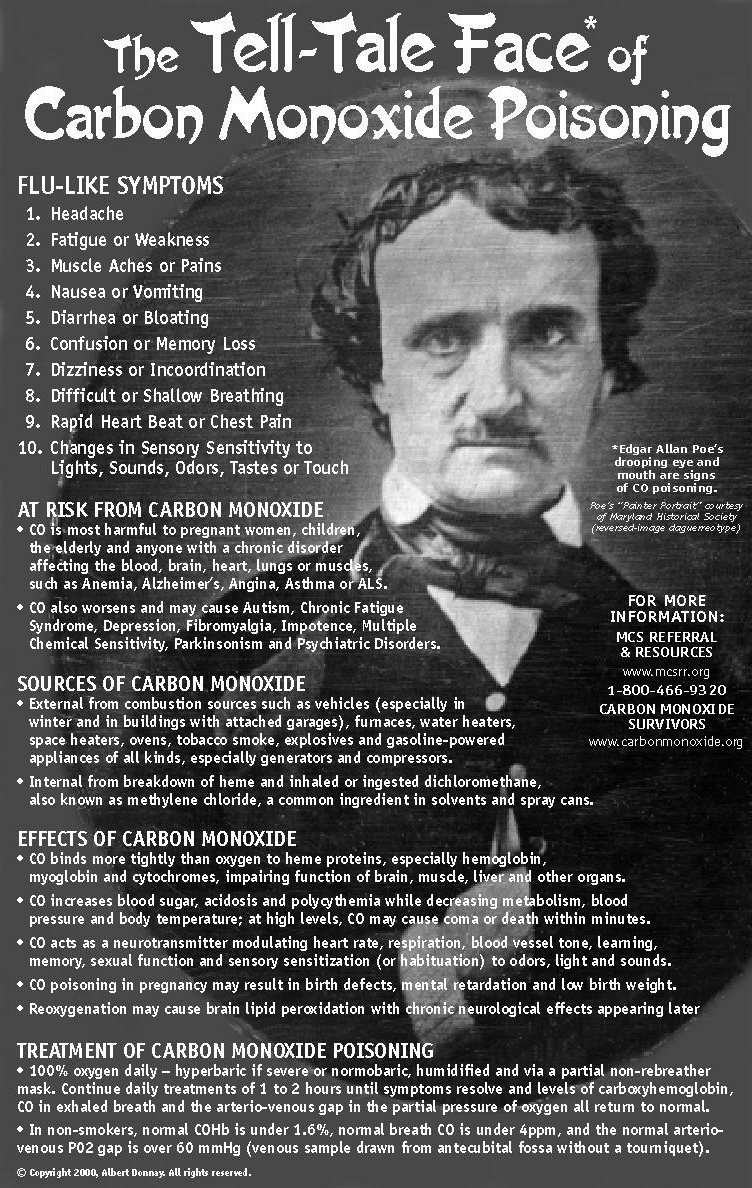
Is it mundane to think that Poe died of medical reasons? Perhaps it is too simple for people that want a more titillating story but the reality seems to be that people were more likely to die by disease than violence in the 19th century (excluding the Civil War). If Poe's death was because of a medical condition, theories include the following (deep breath): diabetes, epilepsy, tuberculosis, heart attack or heart disease, brain tumor, carbon monoxide poisoning, arsenic, lead poisoning, alcohol poisoning (still popular despite contrary evidence), cholera, syphilis, meningitis, and rabies.

Rabies? Yes, and for a time the theory had fairly substantial support. Though most biographies mention the cooping theory, it seems few take it seriously and many point to medical theories instead.

Regardless, one of the greatest imaginations in all of American writing died this day in 1849. Though his death remains a mystery, I am thankful to know that I can enjoy his works any time. It is unfortunate that today, for the first time in about five years, I will not be able to visit Poe at his grave in Baltimore (his original burial plot is today marked, as shown in the photo above).

*As a footnote, on this same day 45 years later, fellow bicentennial poet Oliver Wendell Holmes died. He was 85 years old.

Monday, October 5, 2009

Reynolds, help my poor soul

At Washington College Hospital at Broadway and Fayette Street in Baltimore, Edgar Poe was dying. His room has been described as "prison-like," with barred windows, in a section of the hospital normally reserved for drunks. He was denied visitors.

Poe's had suddenly appeared in Baltimore "rather the worse for wear" after disappearing for six days. His stay at the hospital would provide no answers. He was incoherent, occasionally raving mad. A handful of major legends stand out from this time period, both attributable to the questionable testimony of Dr. John J. Moran, Poe's attending physician from October 3 to October 7, 1849. Moran made a minor celebrity of himself, earning his 15 minutes of fame as Poe's last doctor by offering several stories of the writer's last days — stories which occasionally contradicted one another.

In one of Poe's few coherent moments, the good doctor claims that he tried to cheer Poe by saying he would soon be out of the hospital and enjoying the company of friends. Poe's response was that "the best thing his friends could do is blow out his brains with a pistol."

Moran also claimed that Poe woke up to call out the name "Reynolds" — a claim which has inspired much speculation (if even true). Could the name refer to Jeremiah N. Reynolds, the Antarctic explorer who inspired Poe's novel The Narrative of Arthur Gordon Pym of Nantucket? Many biographers seem to think so, without offering justification why Poe recollected a man he never met 11 years after his novel was published. Historical fiction writers have made the attempt to figure out the mystery as well. Another possibility is Henry R. Reynolds, apparently one of the judges who oversaw Ryan's Tavern's use as the fourth ward polls (Poe was discovered on Election Day). Some suggest Moran misheard and that Poe really was calling for "Herring," his uncle by marriage who lived in Baltimore.

Many of those who speculate on the "Reynolds" mystery seem to ignore that Moran's later accounts did not mention the alleged "Reynolds" rantings. He also claimed that Poe mentioned having a wife in Richmond, which wasn't far off. But, really, how much of Moran's accounts should be trusted?

Moran made it seem as if he was by Poe's side for the entire four days he was in the hospital. This is obviously not likely. But, realistically, it's conceptually possible that Moran was the only witness to Poe's last words. Moran claimed those words were: "The arched heavens encompass me, and God has his decree legibly written upon the frontlets of every created human being, and demons incarnate, their goal will be the seething waves of blank despair."

Huh?

In another account, Moran offered a simpler possibility: "Lord, help my poor soul." That version is the one that has been entered in the record books as "fact."

*The image above is Washington College Hospital as it looks today, courtesy of Baltimore Then and Now.

Saturday, October 3, 2009

Rather the worse for wear

Baltimore City, Oct 3d 1849
Dear Sir, — There is a gentleman, rather the worse for wear, at Ryan's Fourth ward polls, who goes under the cognomen of Edgar A. Poe, and who appears in great distress, & he says he is acquainted with you, and I assure you, he is in need of immediate assistance.
Yours in haste, Jos. W. Walker
This was the letter which Joseph W. Walker sent to his former employer Joseph Evans Snodgrass on October 3, 1849. It is the first document record of Poe since September 27 (if it exists; I haven't seen it and have no idea where it is housed).

Poe was found in a delirious state in or near Ryan's Tavern in Gunner's Hall located at 44 East Lombard Street, Baltimore. The exact situation is unknown (though legend persists he was in a gutter, in an alley, or otherwise in the street; he may very well have been sitting on a chair inside the Tavern). He may or may not have been drunk. He may or may not have been drugged. He may or may not have been wearing someone else's clothing. He may or may not have asked for Snodgrass by name, rather than naming any of his Baltimore relatives.

Snodgrass, a physician/editor, made it to Ryan's by the afternoon. He later recounted that he knew Poe immediately, despite an odd hat — "a cheap palm-leaf one, without a band, and soiled." Snodgrass also later claimed that Poe was a drunken wreck, and his fate was a lesson to all who were intemperate. Snodgrass was, of course, one of the most violently outspoken members of the temperance movement — readers may decide if he had any bias. Snodgrass apparently bumped into a "Mr. H——, a relative of Mr. Poe's by marriage" (identified as his uncle Henry Herring) and the two decided to put Poe in a carriage to the Washington College Hospital. Poe was received by Dr. John Joseph Moran, who later claimed that Poe wore a straw hat that day and that he "had not the slightest odor of liquor upon his breath or person."

The day Poe was found was election day in Maryland "for members of Congress and for members of the House of Delegates," according to one newspaper that morning. Ryan's, besides being a tavern, was also hosting the fourth ward polls, as eluded to in Walker's letter to Snodgrass. Scholar William Hand Browne observed: "At that time the polls were usually held at public houses, and the candidates saw that every voter had all the whiskey he wanted."

This coincidental date/location also lent credence to an early theory that Poe was a victim of "cooping" — that he was abducted by thugs hired by a political party or individual politician to force people's vote. Victims were chosen at random and force-fed alcohol or drugs to make them more cooperative. When not forced into polling booths, these people were held in "coops," tight cages which led to the occasional accidental death. Poe might have been forced into another person's clothing to disguise his identity (the thugs would not have known of his celebrity status). He was then kicked to the curb when they were done with him — or, so says this theory.

The six days that Poe went missing is a mystery, but even his reappearance is full of holes and questions. How credible was Mr. Snodgrass? How about Dr. Moran? Was Poe supposed to be in Baltimore rather than Philadelphia or New York? Where was he found? Who called for Snodgrass? Was it just a coincidence that this was Election Day?

Tuesday, September 29, 2009

A theory to fill the gap

Next to nothing is known about what happened to Poe after September 27, 1849, until six days later (that story will be later this week). It is even unclear where Poe was going when he left Richmond (Richmond's newspaper the Semi-Weekly Examiner reported he was on his way to New York, even though he had an appointment in Philadelphia, but the ship he presumably took was headed to Baltimore). That lack of information has led to speculation which is sometimes wild.

Perhaps the strangest comes from Poe "scholar" John Evangelist Walsh. Among his small series of Poe books is Midnight Dreary: The Mysterious Death of Edgar Allan Poe. Though intended as a scholarly study of the last few days in the life of Poe, Walsh fills in the gaps with several heapings of fiction (the narrative voice he uses is part of the problem). It is from Walsh that we get the strange suggestion of accidental murder on the part of the brothers of Sarah Elmira Royster Shelton.

Elmira had almost certainly agreed to marriage by the time Poe left Richmond, rekindling a teenage romance that could have had a storybook ending. Nevertheless, it seems obvious that Elmira's family was not too pleased with Poe. Elmira may also have been concerned because her ample inheritance from her deceased husband would be slashed by a second marriage.

According to Dr. John J. Moran (the attending physician when Poe dies; any information from him should be deemed questionable at best), a train conductor named George Rollins said that Poe boarded a train from Baltimore to Philadelphia. Upon arriving, he did not disembark, but stayed on the train to return to Baltimore (??). Now, however, he was being followed by two men looking like "sharks."

Walsh says that the two "sharks" were actually three brothers of Elmira Royster, who followed Poe to threaten him into breaking the engagement with their sister. Arriving in Baltimore, here's what Walsh tells us happens:
As he left the depot, the three brothers trailed him, watching as he checked in at the hotel. Scarcely had he settled in his room when they again barged in. First came a faint tap on the locked door, then in response to Poe's wary question perhaps a polite, "Message, sir." As the door opened a crack there came a sudden rush into the room.
The brothers then force-fed whiskey to their victim, breaking Poe's temperance pledge to Elmira and thereby forcing an end to the engagement. They also threatened to ruin his reputation by spreading rumors of his relationship with Sarah Helen Whitman, and fathering an illegitimate child with Frances Osgood. Poe fought back, however, but was overpowered and forced to drink more alcohol. In his stupefied state, they left him outside of Ryan's Tavern — or so Walsh speculates.

Walsh's evidence is based on Poe's disappearing mustache, his traveling trunk (Jeffrey Savoye wrote more on this), a letter from poet Elizabeth Oakes Smith, Moran's testimony (picking what works for his theory and dismissing what doesn't), an ignored article published in 1857 with a similar theory, and his own imaginative prowess. I would speculate most Poe scholars dismiss this theory instantly, though there are a few who think at least a portion of this story is plausible.

Elmira did not speak up after Poe's death, refusing to be brought into the public eye. When she finally did answer questions, she denied her engagement with Poe entirely. Was she hiding her family's involvement?

*The photo above is the Shelton House in Richmond, still standing at 2407 Grace Street (a private residence). The image is courtesy of the incredible "Poe Revealed" web site, which focuses on Poe's bicentennial in the commonwealth of Virginia.

Thursday, August 27, 2009

Poe stays sober

Perhaps the biggest event in Poe's life which inspired this blog, what occurred on August 27, 1849 continues to surprise casual readers of Poe who thought they already knew all about the man...

On August 27, 1849, Edgar A. Poe pledged to abstain from alcohol and stay sober indefinitely. It was a Monday evening when he was initiated into the Shockoe Hill Division (no. 54) of the Sons of Temperance, sworn in by William J. Glenn. Speculation has raged as far as how serious Poe was about this pledge. He had to have been somewhat committed to the idea, if only because membership required a fee. He may have done it to impress a potential second wife he was courting in Richmond (more on her another time) or, as biographer Kenneth Silverman speculates, "the effects of his drinking... had frightened him." A few days earlier, after one of his (rare but excessive) binges, a doctor suggested that drinking would kill him.

The reality is that throughout his life, Poe was aware of the problems that alcohol caused him, and he often made an effort to avoid drinking. Extant letters show updates Poe gave to friends and family about his efforts. But, even if we can't trust Poe's first-hand claims, other accounts do exist. For example, one friend reported that Poe went a full eighteen months* without a single drop of alcohol while living and working in Philadelphia. This undisputed account lends serious evidence against the prevalent image of Poe as a perpetual drunk. His joining the Sons of Temperance in 1849 may have been a final declaration that he would win his battle against alcoholism.

What really would have helped Poe stick to being sober this time? I'd speculate that Poe hoped the special nature of his pledge would make a difference: His membership was very public and, within three weeks, several newspapers were reporting about it in Richmond, Raleigh, Philadelphia, and Boston. Temperance advocates considered Poe's membership a great victory and a boon to their cause as they hoped he would lend his pen to the movement. One wrote, "We trust his pen will sometimes be employed in its behalf. A vast amount of good might be accomplished by so pungent and forcible a writer." Poe, in fact, had already written two temperance tales, of a sort: "The Black Cat" and the humorous "The Angel of the Odd." Writing was important to the group as a form of propoganda to get the word out about their movement; the Sons of Temperance would soon even create their own literary journal (edited by T. S. Arthur, author of Ten Nights in a Bar-Room).

The fact that Poe vowed to stay sober has led to further confusion over his final days right before his mysterious death — which will occur less than two months after taking his temperance pledge.

Perhaps ironically, August 27 is also the anniversary of the death of one of the many responsible for exaggerating Poe's drinking habits. Rufus Wilmot Griswold died this day in 1857 at the age of 42.

* There does not seem to be any question over the veracity of this statement. Give Poe credit for what he was doing: Poe kept his alcoholism in check before it was considered a disease, before self-help books, before AA meetings, etc. By the way, the image above is from a great online exhibit by the Library Company of Philadelphia called "Ardent Spirits."

Monday, August 17, 2009

The Poetic Principle: A rich intellectual treat

Edgar Poe presented an evening lecture on August 17, 1849 in Richmond titled "The Poetic Principle." The lecture, which adapted a similar one presented in Providence, Rhode Island in December 1848, was held at the Exchange Hotel. It began at 8:00 p.m. and admission was 25 cents. Poe spoke to a room filled to capacity.

Poe's appearance was a highly-anticipated event in the city which embraced him as one of their own. One newspaper proudly hailed him as "a native of this city [who] was reared in our midst." Another hyped up the lecture in advance, advising its readers: "Those who desire to enjoy a real treat, should hear this effort of Mr. Poe's." The Richmond Whig newspaper teased that Poe would conclude by reciting "The Raven."

His audience was not disappointed.

The Whig, despite looking forward to hearing "The Raven," had apparently not expected much from Poe. After the lecture, they reported: "We attended the Lecture of Mr. Poe... with the expectation of hearing nothing more than the common dissertation upon the poetic faculty... We must say we were never more delighted in our lives." The Daily Republican reported it was "one of the richest intellectual treats... The clearness and melody of his voice, and the harmonious accentuation of his words, were soul inspiring." Novelist John Esten Cooke recalled that Poe "stood in a graceful attitude, leaning one hand on a small table beside him, and his wonderfully clear and musical voice speedily brought the audience under its spell. Those who heard this strange voice once, never afterwards forgot it... The lecture ended in the midst of applause."

The content of the lecture on "The Poetic Principle" was distinctly Poe. One contemporary review notes that Poe denounced the didacticism in poetry as the "heresy of modern times" rather than allowing a poem to stand for beauty and nothing more. He spoke about specific authors and both praised and criticized as appropriate. Among those he mentioned was Edward Coote Pinkney, likely the American poet which Poe most admired. He also read from the work of Tennyson. Even journalist John M. Daniel, with whom Poe had once almost dueled, reluctantly admitted: "Mr. Poe is a man of very decided genius. Indeed, we know of no other writer in the United States, who has half the chance to be remembered in the history of literature" (though he rightly predicted his reputation would be based on a small number of works).

The irony might be that Poe lost his lecture notes before he made it to Virginia. That means he had to rewrite it just before taking the center stage.

"I never was received with so much enthusiasm," Poe reported to his mother-in-law Maria Clemm. The lecture later became the essay of the same name, published posthumously. That manuscript is somewhat controversial; allegedly found after Poe's death, it was first published by Rufus Wilmot Griswold in his collected works of Poe. The original manuscript was immediately lost after publication.

Tuesday, July 7, 2009

To My Mother

Somewhat lacking in deep literary merit yet undoubtedly sentimental, the poem "To My Mother" needs very little commentary to understand. Despite its title, the emotional, very personal poem (perhaps Poe's most personal) is not about the poet's birth mother Eliza Arnold Poe, nor is it about the woman who raised him, foster-mother Frances Allan. Instead, it is about the mother of his dead wife.

Though Poe's wife Virginia had died in 1847, Poe continued living with and supporting her mother, Maria Poe Clemm (who was also his aunt, sister of his father). He wrote a sonnet to his mother-in-law, who he nicknamed "Muddy" (presumably because of its similarity to "mother"), which was published on July 7, 1849 in the Flag of Our Union newspaper. In its entirety:
To My Mother

Because I feel that, in the heavens above,
The angels, whispering to one another,
Can find, among their burning terms of love,
None so devotional as that of 'mother' —
Therefore by that sweet name I long have called you —
You, who are more than mother unto me,
And fill my heart of hearts, where Death installed you,
In setting my Virginia's spirit free.
My mother — my own mother — who died early —
Was but the mother of myself; but you
Are mother to the one I loved so dearly,
And thus are dearer than the mother I knew;
By that infinity with which my wife
Was dearer to my soul than its soul-life.
Perhaps ironically, this same date, July 7, in 1835 marked the death of Poe's grandmother, Elizabeth Cairnes Poe. The wife of David Poe Sr. (a veteran of the American Revolution who was friends with General La Fayette), she was 79 years old when she died. Her daughter, Maria Clemm (the subject of the poem above), was taking care of her at the time as well as utilizing the pension the widow Poe was receiving for her husband's Revolutionary service — this pension was the small family's main means of financial support. Poe had lived with her in Baltimore for a time.

Thursday, July 2, 2009

Poe, Prison, Pursuers, and a Shaved Moustache

One of the oddest moments in the last few months of Poe's life is so confusing, even the date is unclear. Rumors abound on what Poe was doing in the first few days in July 1849. July 1, it is claimed Poe was jailed in Philadelphia "for getting drunk" — according to Poe himself, who also denies the charges. Poe's friend, the mezzotint engraver John Sartain, later claimed Poe's detainment in Moyamensing, the Philadelphia County Prison (no longer standing), lasted "for a few hours only." The mayor of Philadelphia soon recognized Poe and had him released "without the customary fine."

Ah, John Sartain.

Sartain was a frequent collaborator with Graham's Magazine. In fact, at one point, George Rex Graham says that the engravers like Sartain were followed just as much as the famous writers in the magazine. Sartain apparently believed it, and tried to take credit for the magazine's success. Eventually, he was so confident in his appeal that he split from Graham's to found Sartain's Union Magazine in 1849. In November, shortly after Poe's death, his was the first to publish Poe's poem "The Bells."

Possibly July 2, 1849, Sartain was visited by Poe at his Philadelphia home on Sansom Street. Poe was "pale and haggard, with a wild and frightened expression in his eyes," Sartain later recalled. Poe was looking for "refuge and protection" because he was being followed by men trying to kill him — he had overheard their murderous plan while on the train. Sartain asked why anyone would want to kill him, Poe answered it was "woman trouble." To conceal his identity, Poe asked for a razor so that he could shave off his mustache. Sartain suggested he do it himself using a pair of scissors. Poe agreed and, as Sartain wrote, "Accordingly, I took him to the bathroom and performed the operation successfully."

After a walk for fresh air, Sartain took him back to his house and helped him to bed (the sofa in the dining room, actually). Sartain himself lined up three chairs for a bed of his own and slept next to his friend, "without undressing." It seems Poe stayed with Sartain until July 4; that day, Poe claims his pursuit was just paranoia or hallucinations "created by his own excited imagination."

This strange episode with Sartain (and the disappearing mustache) has often confused Poe scholars. Did the event really happen? Was Poe really being pursued by murderers? Was he hallucinating? What could have caused Poe's hallucinations?

The episode has been used as evidence for some of the many theories on Poe's mysterious death, which occurred just over four months later. Some scholars suggest Sartain's memory was off and the date is inaccurate and might refer to a different year.

*Pictured above is an engraving of Poe by John Sartain, based on a portrait by Samuel Stillman Osgood. The lack of mustache in the image has nothing to do with the July 1849 incident; Poe did not grow the moustache until some time in 1846 or 1847. Prior to that, he kept long mutton-chops, as seen in this image.

Tuesday, June 9, 2009

Poe's final (and forgotten) prose work

Poe's final short story (if it can be called that) was published in the June 9, 1849, issue of Boston's The Flag of Our Union. This final published prose work by Poe, "Landor's Cottage," is more appropriately labeled a "sketch." It is now a relatively-unknown Poe work.

The manuscript for this sketch was written much earlier than its first publication. Poe references the work in a letter to Nancy "Annie" Richmond of Lowell, Massachusetts in a letter to her circa January 21, 1849, according to the Baltimore Edgar Allan Poe Society. The next day, coincidentally, Frederick Gleason of The Flag of Our Union wrote to Poe, inviting him to become a regular contributor.

Poe had some difficulty publishing "Landor's Cottage." In September 1848, Poe wrote to Eli Bowen (former editor of the Columbia Spy), who had recently become editor of the Miner's Journal in Pottsville, Pennsylvania. The duo seem to have agreed that the sketch was not appropriate for that journal. He then submitted the manuscript to the American Metropolitan Magazine in New York. By March 1849, the magazine sent it back to Poe, unpublished. A few months later, The Flag of Our Union picked it up and published it with the subheading "A Pendant to 'The Domain of Arnheim'," referring to an earlier sketch by Poe.

But, what is "Landor's Cottage" about? Mary Gove Nichols, a friend and neighbor of Poe in New York, noted that it was about Poe's time in his small cottage in the Fordham area of The Bronx, New York (pictured at right as it looks today). Modern scholars do not seem to disagree. Nancy Richmond has been identified as the "Annie" in the story, a nickname she later adopted as her legal name. In the sketch, Poe meets Annie and describes her eyes as "spiritual gray" and her hair as "light chestnut."

Certainly, an interesting, if not unfortunate, final prose work — definitely not one which has cemented Poe's legacy (feel free to challenge me on the value of "Landor's Cottage"; I'd love to hear what others think). Only one other new work will see print before Poe's death. You'll hear more about it next month.

Tuesday, May 5, 2009

"Txld yxu sx, yxu knxw!"

One of the many pieces published in the Flag of Our Union toward the end of Poe's life was the comedy "X-ing a Paragrab" — released on May 5, 1849, though the issue carried the cover date of May 12. "X-ing a Paragrab" is, quite simply, one of Poe's funniest works, and its humor easily stands the test of time after a century and a half.

The story follows a "wise man" from the east named Mr. Touch-and-go Bullet-head, whose intellect is easily proven by his being an editor. He also had a bit of a problem with stubbornness, which he considered his greatest strength. After moving to Alexander-the-Great-o-nopolis ("or some place of similar title") in the West, he established a newspaper called The Tea-Pot, assuming no other newspaper existed. He was wrong; the Alexander-the-Great-o-nopolis Gazette had been quite successful for years. Nevertheless, Bullet-head establishes his Tea-Pot offices right next door to the Gazette. As you can imagine, rivalry ensues. No matter how often I read it, Bullet-head's final editorial in The Tea-Pot always has me laughing out loud. Try it yourself. Seriously, read it!!

Poe was openly mocking a couple of things that make the humor even deeper. For one, he was clearly making fun of the "irascibility," "firmness" or, really, obstinacy of editors like Bullet-head. He also mocked the sort of rivalries which became common in the press during this period. Newspapers were battle-grounds; for example, many staunchly supported one political party over another, resulting in back-and-forth arguments printed between opposing party papers. Poe was stretching to ask what would happen if these rivals took their wars beyond the printed page (though, ultimately, the war stays within those printed pages anyway).

Poe's humor has had many, many critics, who suggest that Poe knew nothing about comedy and was only able to present dark, death-obsessed comedy. "X-ing a Paragrab" is either the exception or the proof that this generalization is untrue. There is no blood or gore in this story, even for humorous effect. This is, to put it simply, a cute comedy — and it really is funny.

I also use the story as an example to note Poe's understanding of the printing technology of the day. The humor relies on movable type. There is evidence that Poe was directly responsible for typesetting here and there throughout his career as a writer. As an aside, Walt Whitman knew about movable type as well and personally oversaw the type-setting for the first edition of Leaves of Grass, resulting in the poem's odd yet artistic spacing.

I will be speaking more in-depth on Poe's understanding of his contemporary publishing world, including its technology, a week from today at the Boston Public Library. The lecture, sponsored by the bibliophiles in The Ticknor Society, is called "Poe and Publishing." All are invited: May 12 at 6:00 p.m. in the orientation room of the McKim Building.

Tuesday, April 21, 2009

Ride, boldly ride

Though Poe's relationship with the Boston-based newspaper Flag of Our Union was likely a love-hate one, some of his greatest works were published in it. One of the greatest continues off a theme introduced in "Von Kempelen and His Discovery": the California Gold Rush.

The poem "Eldorado" was first published in the April 21, 1849* issue of the Flag of Our Union, a week after the more comical treatment of "Von Kempelen" was published. "Eldorado" is a short one, but within its 24 lines, I read humor, irony, sadness, foreboding, hope, and courage. Like those who have joined the frenzy of the gold rush, the narrator in this poem is seeking easy riches. Yet, he will learn his journey will be a long, arduous one - and it seems hinted that it will never be successful. Biographer Kenneth Silverman (as he often does) quickly and without irony assigns Poe himself the role of the narrator of this poem: reaching the end of his life, Poe still grasps for success and, though he finds it unattainable, forever continues reaching.

I disagree on the autobiographical reading; instead, the poem should stand on its own for its beauty and strength as a poem. One of its greatest (yet most subtle) beauties is in the changing meaning of the word "shadow" throughout:


Gaily bedight,
A gallant knight,
In sunshine and in shadow,
Had journeyed long,
Singing a song,
In search of Eldorado.

But he grew old—
This knight so bold—
And o'er his heart a shadow
Fell as he found
No spot of ground
That looked like Eldorado.

And, as his strength
Failed him at length,
He met a pilgrim shadow—
"Shadow," said he,
"Where can it be—
This land of Eldorado?"

"Over the Mountains
Of the Moon,
Down the Valley of the Shadow,
Ride, boldly ride,"
The shade replied—
"If you seek for Eldorado!"
*It seems that each issue came out exactly one week before the date on its title page.
**The image above is by French illustrator Edmund Dulac, circa 1920s.

Tuesday, April 14, 2009

A Discovery Greater Than Gold

On April 14, 1849, the Flag of Our Union published Poe's tale "Von Kempelen and His Discovery." The timing is good because it continues the "hoax," the humor and, to a lesser extent, the science fiction aspects of the last post.

The tale begins by knocking down a Brunswick, Maine-based scientist who claims he made the same discovery before Von Kempelen. Poe doesn't believe it, saying that the newspaper reporting it probably made it up to "make a talk." After all, he says, it has an "amazingly moon-hoaxy-air" to it. That same hoaxiness is in the atmosphere of Poe's story too. As is typical, Poe adds just enough possible truth to it that it could be real — the original account of Von Kempelen's discovery was allegedly published in the Home Journal (a journal edited by Poe's friend Nathaniel Parker Willis) and Poe notes some possible errors in translation. In fact, the whole things sounds like a news piece (as intended), with the exception of being written in the first-person singular.

And Poe even seems to admit that he's writing another hoax! "There can be little question that most of the marvellous rumors afloat about this affair are pure inventions, entitled to about as much credit as the story of Aladdin's lamp." Yes, even this marvellous rumor that Poe is writing. He also notes (and a good Poeist catches this one easily) that Von Kempelen is related to a certain Maelzel.

In case you don't know, I don't want to hold you in suspense. What has Von Kempelen discovered? Why, he has been able to transmute lead into pure gold — "in fact, absolutely pure, virgin, without the slightest appreciable alloy!"

Sure, it seems silly today. But remember the story was published in 1849 — amidst the California Gold Rush. Poe was making fun of this sudden lust for gold (he'll note it in a more serious work, the excellent poem "Eldorado," as well). By the end of the story, we learn that Von Kempelen has been arrested and they are trying to force the secret out of him. In fact, people are so convinced that some day the ability to change lead into gold, that Europe already has seen "a rise of two hundred percent in the price of lead." This is comedy gold, certainly, as Poe notes that we choose what is valuable somewhat arbitrarily.

Tuesday, March 31, 2009

All that we see or seem

On March 31, 1849, Boston's Flag of Our Union held the honor of being the first to publish the poem "A Dream Within A Dream." Today it is recognized as one of Poe's best poems. At 24 lines, it is a short but poignant poem which questions the blurry line between reality and ideality.
Take this kiss upon the brow!
And, in parting from you now,
Thus much let me avow—
You are not wrong, who deem
That my days have been a dream;
Yet if hope has flown away
In a night, or in a day,
In a vision, or in none,
Is it therefore the less gone?
All that we see or seem
Is but a dream within a dream.

I stand amid the roar
Of a surf-tormented shore,
And I hold within my hand
Grains of the golden sand—
How few! yet how they creep
Through my fingers to the deep,
While I weep—while I weep!
O God! can I not grasp
Them with a tighter clasp?
O God! can I not save
One from the pitiless wave?
Is all that we see or seem
But a dream within a dream?
The work is, possibly, a reflection of many of Poe's dreams being swept away (The Stylus, his wife Virginia, Sarah Helen Whitman, and others). More likely, Poe was trying to reach out to a universally-understood aspect of the human condition. It has retained its popularity because of this and has become one of Poe's most-quoted works.

This popularity is further emphasized in pop culture, something which Poe has heavily spread into. The Alan Parsons Project, for example, began their 1976 concept album Tales of Mystery and Imagination Edgar Allan Poe with an instrumental homage to the poem (a later re-release included a previously unreleased recording of Orson Welles reading the poem). Even Britney Spears owes something to Poe's poem, when she named her 2001 concert tour "Dream Within a Dream."

Poe's last year included many submissions to the Flag of Our Union — a weekly journal printed in Boston with a very small circulation. Payment was prompt, however, and editor Frederick Gleason dared to match the "Graham page" rate (Graham's was known for its generous payment). In fact, it was Gleason who sought out Poe as a contributor. "I shall be happy to contribute," Poe responded, likely intrigued by the $5 per page rate, "as often as possible." Gleason excitedly reported in each issue that Poe was now a "regular contributor." As an editor, Gleason was an interesting fellow, who staunchly defended his original submissions (he made a minor spectacle of Sartain's Union Magazine and the Home Journal printing one of the poems Poe submited to the Flag for first publication rights).

I would speculate that Poe had a love/hate relationship with the Flag of Our Union. Some of his greatest works were first printed in the journal (including some of my favorites: the poem "Eldorado" and the short stories "Hop-Frog" and "X-ing a Paragrab") but the circulation was so low, it was hardly worth it - not to mention that the publication was based in Boston, far from his more loyal audiences. By April 1849, Gleason announced he could no longer afford to pay contributors, despite his early optimism. Poe unapologetically stopped contributing.