Showing posts with label Southern Literary Messenger. Show all posts

Tuesday, November 3, 2009

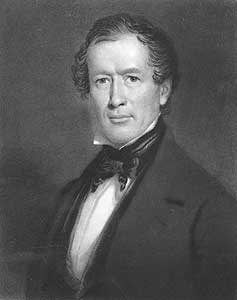
Birth of William Cullen Bryant

Born on November 3, 1794, William Cullen Bryant became one of the most well-known poets of his generation. His earliest poems, including "Thanatopsis" and "To a Waterfowl" remain his most enduring works. Like Poe, Bryant took full-time jobs with the press to make ends meet. His longest run was with the Saturday Evening Post; his affiliation with that publication lasted 50 years.

Poe first reviewed Bryant's work for the Southern Literary Messenger in 1837. Shortly after, Poe attended the Booksellers Dinner in New York's City Hotel. The guest list that day included not only Bryant but also Charles Fenno Hoffman, Washington Irving, Fitz-Greene Halleck, James Kirke Paulding, George Pope Morris, and Lewis Gaylord Clark. Poe proposed a toast to "The Monthlies of Gotham" and their editors.

Years later, in 1841, Bryant was one of the many "heavy-hitters" that Poe solicited for contributions upon taking the editorial reins at Graham's Magazine. A year later, Bryant was one of the top five poets Rufus Griswold used in his frontispiece to better sell The Poets and Poetry of America (in his review, Poe noted that Bryant deserved more attention and representation in the book itself). Bryant's son-in-law Parke Godwin later recalled that Bryant and Poe met face to face in 1845 and "Poe approached him as some Grecian youth might be imagined to approach an image of Plato — with a look and attitude full of the profoundest reverence." This account is almost certainly exaggerated, considering Poe had already corresponded with Bryant — not to mention they probably already met at the Booksellers Dinner eight years earlier.

Poe admitted that Bryant was one of America's most important writers, but noted that his popularity was due to his narrow, "safe" topics which were designed to be accessible to a broad audience. "It will never do to claim for Bryant a genius of the loftiest order," Poe wrote. Referring to Bryant's poem "June," Poe notes "the rhythmical flow, here, is even voluptuous — nothing could be more melodious... The impression left is one of a pleasurable sadness."

As a side note, Bryant was also an active proponent of copyright protection for authors and even founded the Copyright Club.

Happy birthday, William Cullen Bryant.

Tuesday, September 15, 2009

Birth of James Fenimore Cooper

Novelist James Fenimore Cooper was born September 15, 1789.* By rights, he should be considered among the first man of letters in the United States, alongside Washington Irving, Charles Brockden Brown and others. Of course, few of these names are recognized today and, when they are, they're not always considered major players. Irving may still be read but many literary scholars show disdain for his work as being too silly or comical. Cooper is largely forgotten, despite his immense popularity in his lifetime for works like The Last of the Mohicans — which wasn't on the curriculum when I was in school (or in college, for that matter).

Poe solicited contributions from Cooper while the former was working for the Southern Literary Messenger. Even though Poe recognized Cooper's draw, he questioned his legitimacy as a writer (his request for contributions noted they were seeking Cooper's "name" to give the magazine weight). One review from Poe, published in 1840, attacked Cooper's characterization. "We did not look for character in it, for that is not Cooper's forte; nor did we expect that his heroine would be aught better than the inanimate thing she is." Of course, Cooper's depiction of female characters is still the subject of criticism today.

In a review in Graham's Magazine (November 1843) titled "Wyandotté, or The Hutted Knoll. A Tale, By the Author of 'The Pathfinder,' 'Deerslayer,' 'Last of the Mohicans,' 'Pioneers,' 'Prairie,' &c., &c.," Poe noted that Cooper's latest production was "precisely similar to the novels enumerated in the title" (a complaint which is still issued today). Interest in these works, Poe argues, is based on "first the nature of the theme; secondly, upon a Robinson Crusoe-like detail in its management; and thirdly, upon the frequently repeated portraiture of the half-civilized Indian." Having summarized the model for all of Cooper's works, Poe concludes: "It will be at once seen that there is nothing original in this story... It is even excessively commonplace."

Poe satirized Cooper in a short story called "The Literary Life of Thingum Bob, Esq." The briefly mentioned character Mr. Fatquack is considered a genius for his writing but his novel, Dish-Clout, only earns him a whopping 62 (and a half) cents. In a review of another writer, Poe notes the emergence of "native writers": "It is not because we have no Mr. Coopers but because it has been demonstrated that we might, at any moment, have as many Mr. Coopers as we please." Was Poe right? Was Cooper just another dime-a-dozen American prose writer who got more praise than he deserved? Is Cooper's falling reputation evidence of this? I'd love to hear thoughts on this.

*Incidentally, he died one day short of his 62nd birthday on September 14, 1851. Rufus Griswold was one of the many figures who organized a memorial to him in New York.

Wednesday, September 9, 2009

Poe's honorary membership

Poe has received various accolades over the years, but most of them have been after his death. Conversely, during their lifetimes, other writers like James Russell Lowell, Henry Wadsworth Longfellow, Oliver Wendell Holmes, and Washington Irving were getting thrown honorary degrees left and right while they were still living (many from institutions across the pond, like Oxford and Cambridge). Poe was a college drop-out himself so it might not be surprising that he rarely was recognized by many educational institutions during his lifetime.

One major exception might be Jefferson College, named after Thomas Jefferson — the same man who founded the Virginia university which Poe dropped out of. The tiny college in Canonsburg, Pennsylvania (south of Pittsburgh) named its literary society after Benjamin Franklin, who donated the money (in francs) which established the school's first library. The Franklin Literary Society, founded in 1797, extended an honorary membership to Edgar A. Poe on September 9, 1836.* The Franklin Literary Society still exists today, though the institution is now known as Washington & Jefferson College in Washington, PA.

What I find most impressive about this offer is that it was in 1836. Poe had not yet established himself as a major writer of fiction or poetry (his poetry collections did not garner much attention, but some great stories, including "Metzengerstein" and "MS. Found in a Bottle" had already seen print). Instead, the Franklin Literary Society was honoring Poe's contributions to the world of literary criticism, specifically as a staff member at the Southern Literary Messenger.

This might have been controversial. Poe had only recently introduced the world to his new style of literary criticism which was directly opposed to the "puffing" tradition. Instead of unquestioning praise, Poe offered sincere criticism, which often came across as mean-spirited or heavy-handed. Much to other writers' chagrin, Poe also cut his way through bad grammar and poor word choices. He examined sentences like a doctor and diagnosed a number of problems.

I had the good fortune of working at W&J College for a time. I didn't hear about the Poe connection until a few months into my time there. When I learned about it, I couldn't help but get a kick out of it: Poe is everywhere, even in a small town in southwestern Pennsylvania.

*The college maintains the original letter Poe wrote to respectfully accept his honorary membership. Unfortunately, his autograph has been torn off, likely by a collector. Pictured above is the original log cabin which was the first building of Jefferson College; it is still standing.

Wednesday, July 15, 2009

Poe, puffs, and North Carolina

Poe's first job as a critic was in August 1835 when he was hired by the Southern Literary Messenger. Poe brought to the SLM a new style of criticism which distinctly broke away from the "puffs" that plagued American periodicals. In those days, critics were bribed or paid off to provide positive reviews by publishers or authors — or, in some cases, the system of puffing was so ingrained, no pay-off was needed. Poe, on the other hand, provided sincere reviews, whether laudatory or critical. Although, certainly, there are cases where Poe's personal bias influenced his judgment, he was going against the grain in providing a new type of literary criticism. He was a trailblazer, in some sense, and some have credited him as "the father of modern literary criticism."

Of course, one does not blaze a trail without making a few enemies.

On July 15, 1836 (surprisingly early in Poe's critical career), the Newbern Spectator, a periodical out of New Bern, North Carolina, suggested it was time for Poe to resign. His reviews were too caustic, too critical, too different. As the article said, "We think that Mr. Poe will soon see the necessity of resigning his chair, or of conforming to the rules of modern criticism. The Proprietor should look to this."

The irony here is clear, of course. Consider the climate, the "rules of modern criticism" to which Poe was being asked to conform: critic Rufus Griswold at one point wrote to publisher James T. Fields that he puffs books regardless of quality; he later received direct instructions from a minor publisher named T. B. Peterson for the positive review he expected (along with a request to destroy the letter once read); so many critics are patting authors on the backs that the term "mutual admiration society" is thrown around regularly by people like Margaret Fuller, Edwin Percy Whipple, and Oliver Wendell Holmes (the phrase is so prevalent, in fact, I'm having difficulty determining who said it first).

Poe, however, was not without supporters. Later that same July, the editor of the New York Weekly Magazine would respond positively to the Southern Literary Messenger. Others would continue to back Poe and even emulate his style throughout Poe's lifetime and beyond.

But, back to the Newbern Spectator. Poe acknowledged their comments and the Spectator responded, mentioning "the debt of gratitude which we owe its profound editor... having taken 'notice' of us in a manner so gentlemanlike and dignified, and so creditable to his own temper and erudition." Not to say, however, that they became supporters of Poe. Acknowledging the prevalence of "puffs," they question what Poe is doing. "It cannot permit a single voice to be raised against... errors without descending to scurrility and invective; thus showing conclusively the unfitness of its conductor for the task he has undertaken."

To each their own, I suppose. Personally, I wonder why a North Carolina publication has any interest at all in a Virginia newspaper.

Sunday, March 15, 2009

A career turning point

After breaking ties with the Allan family, Poe struggled with half-hearted attempts at a solid career. By 1835, he had published three volumes of poetry — none of which met with significant financial or critical success. A few prose works had made the rounds, including "MS. Found in a Bottle," which won him an impressive $50 prize. One of the judges that awarded Poe his prize was John Pendleton Kennedy, to whom Poe owes his career.

Kennedy, in reviewing Poe's several prose submissions for the contest, encouraged Poe to keep writing. On March 15, 1835, Poe wrote to Kennedy for more explicit career help: he needed permanent employment. Poe's financial situation was so bad that he had to turn down an offer to dine with Kennedy. As he wrote, "I cannot come--and for reasons of the most humiliating nature [in] my personal appearance. You may conceive my deep mortification in making this disclosure to you." Poe didn't have enough money to afford a proper suit, which prevented him from accepting the dinner invitation. Kennedy took sympathy and helped him get new clothes and also tried to find a more long-term solution to Poe's financial troubles by getting him a job.

So, Kennedy wrote to Thomas Willis White a few weeks later. "I told him... that you might find it to your advantage to give him some permanent employ." Sure enough, White brings in Poe as a contributor and, by August 1835, Poe is a staff writer and critic for White's journal The Southern Literary Messenger. Poe's time with the Messenger won't be long, but he will contribute nearly 40 reviews of American and foreign books and periodicals, kick-starting his career as a critic; his role as a critic, of course, will be the main source of his reputation during his lifetime. His solid contributions helped build the readership of the journal and, during the period in which he was supervising content, the circulation grew from 500 to 3,500 subscribers. He will occasionally contribute to the Messenger for the rest of his life.

If you follow the logic, then, Poe's March 15 letter to Kennedy led to his first foray into professional literary criticism, which became his career.

Sunday, February 22, 2009

A Fable for James Russell Lowell

It was on this day in 1819 that James Russell Lowell was born. Over the next 72 years, he would lead a diverse life — as a professor, a poet, an editor, a critic, an ambassador, and as an ardent abolitionist. His most famous connection to Poe comes from his book-length satirical poem A Fable for Critics,* in which he writes:

There comes Poe with his Raven, like Barnaby Rudge,
Three fifths of him genius and two fifths sheer fudge,
Who talks like a book of iambs and pentameters,

In a way to make people of common sense damn metres,

Who has written some things quite the best of their kind,
But the heart somehow seems all squeezed out by the mind,

Who — But hey-day! What's this? Messieurs [Cornelius] Mathews and Poe,

You mustn't fling mud-balls at
Longfellow so (But, more on him in a few days)...

Poe did not leave this mention unanswered. He reviewed A Fable for Critics (rather late) in March 1849 for the Southern Literary Messenger. Unfortunately, Poe proves Lowell's characterization to be accurate by spending far too much time writing about the Fable's structure and poetic meter: "Mr. L. should not have meddled with the anapaestic [sic] rhythm; it is exceedingly awkward in the hands of one who knows nothing about it and who will persist in fancying that he can write it by ear." He also spends too much time judging Lowell's abolitionism rather than looking at the poem independently. Reading the review, I keep thinking, "Lighten up, Poe! It's a joke!" Having read A Fable for Critics, I have to say, I always laugh like crazy, regardless of what meter he used — though I'd agree with Poe that Lowell's attempt at a "plot" is weak.

It's easy to assume from this information that Lowell hated Poe and Poe hated Lowell. But, as is often the case, things are quite a bit more complicated than that.

Poe actually liked Lowell's poetry. For one example, well before Lowell's potshot against him, Poe wrote that he was surprised Rufus Griswold didn't dedicate more space to Lowell in the ground-breaking anthology The Poets and Poetry of America in 1842 (Griswold actually gave Lowell less space by the 1851 edition). A bit earlier, in the December 1841 issue of Graham's Magazine, Poe ranked Lowell to "at least the second or third place among the poets of America. We say this on account of the vigor of his imagination — a faculty to be first considered in all criticism upon poetry" (though, even here, he notes that Lowell doesn't quite have an ear for meter).

I believe Poe appreciated Lowell because of similar aesthetic theories (very disparate from Lowell's close friend Longfellow's theories, but more on that in an upcoming entry). Besides the spirits and sadness in some of Lowell's works which Poe undoubtedly appreciated, Lowell placed the aesthetic beauty of a poem as its foremost quality. He also believed that the poet held a special role because he had an insight that the general population lacked. Poe must have agreed; he once wrote, a writer must "explain the unexplainable."

Lowell and Poe had a falling out for a couple of reasons. For one, Lowell was a New Englander (Elmwood, at right, is where he lived the majority of his life, from birth to death, in Cambridge, MA) and, like many New Englanders, was an abolitionist — a quick turn-off to Southerners like Poe ("Out from the land of bondage 'tis decreed our slaves shall go," Lowell wrote in the poem "On the Capture of Fugitive Slaves Near Washington" in 1845). Additionally, Lowell was sucked into that dreaded idea that poetry should teach lessons (like Longfellow believed) or that poetry could be used for social reform (like Emerson and the Transcendentalists believed). Poe hated both didacticism and Transcendentalism, and the snot-nosed Boston literary culture that embraced Emerson, Longfellow, and Lowell.

This dislike of New England came to a head in the mid-1840s, when Poe paid special critical attention to Lowell's good friend and neighbor Henry Wadsworth Longfellow. Too endeared by Longfellow to look at Poe's criticism objectively, he took his neighbor's side in the conflict. And that endearment is what led to the quote from A Fable for Critics above.

Even amidst the beginnings of the "Longfellow War," however, in 1843 Lowell was the first to publish Poe's now-famous story "The Tell-Tale Heart" in his short-lived journal Pioneer. The journal only lasted three issues and, upon its cancellation, Poe lamented it as "a most severe blow to the cause—the cause of a Pure Taste." In fact, the prospectus for the Pioneer sounds strikingly like the prospectus for Poe's dream-project The Stylus. Around this time, Lowell also referred to Poe as having "that indescribable something which men have agreed to call genius.” Lowell later helped Poe find his way to a role at the Broadway Journal because of his connection to a very good friend named Charles Frederick Briggs (to whom A Fable for Critics was dedicated). Shortly after, Lowell helped set-up a prestigious speaking engagement for Poe in Boston in late 1845. Of course, Poe's "Messenger Star" poem turned out to be... well, that will be a post for another day, perhaps.

In the meantime — if I haven't bored you too much already — here's a great example of Lowell's more typical poetry, an excerpt from "To the Dandelion":

Dear common flower, that grow'st beside the way,

Fringing the dusty road with harmless gold,
First pledge of blithesome May,
Which children pluck, and, full of pride, uphold,
High-hearted buccaneers, o'erjoyed that they
An Eldorado in the grass have found.

Or, perhaps, an excerpt from "The Syrens":

The sea is lonely, the sea is dreary,
The sea is restless and uneasy;
Thou seekest quiet, thou art weary,
Wandering thou knowest not whither;—
Our little isle is green and breezy,

Come and rest thee! O come hither!
Come to this peaceful home of ours
Where evermore
The low west-wind creeps panting up the shore
To be at rest among the flowers;
Full of rest, the green moss lifts,
As the dark waves of the sea
Draw in and out of rocky rifts,
Calling solemnly to thee
With voice deep and hollow,—
"To the shore
Follow! O follow!
To be at rest forevermore!
For evermore!"

Happy birthday, James Russell Lowell.*

Above: Your fearless blogger paying his respects at the grave of James Russell Lowell, Mount Auburn Cemetery


* I had difficulty finding a full version of the Fable online so I started transposing it from an 1888 edition I own (you're welcome).

**My apologies for the extra-long entry. Poe and Lowell intertwine so much and, from there, branch out into so many other stories; the number of tags on this post has to be a record-breaker. And, of course, I am a big fan of Lowell (not just Poe)!

Thursday, January 15, 2009

Poe the Critic (cont'd)

In the last post, I presented a little bit about Poe the critic. Regular readers of this blog will likely get a full helping of Poe's reputation as a critic as 2009 progresses. Here's a place to start.

On January 15, 1836, an editor for the Newbern Spectator expressed his disapproval of the criticism being printed in the Southern Literary Messenger in Virginia. The critic was Poe, of course, and the editor referred to Poe's "unnecessary severity". Poe would earn the nickname (and accompanying reputation) as a "Tomahawk" man.

It is really as a critic that Poe first becomes a well-known figure in American letters. He popularized (I won't say "created" because that's tough to prove) a new type of literary review which was (shockingly) based on sincerity on the part of the reviewer. These honest opinions were presented even if they were negative - which likely surprised readers used to the puffery system. This system, which fellow critic Margaret Fuller later referred to as the "mutual admiration society" (specifically in reference to Boston), was always positive. In other words, reviewers only wrote positive reviews.

People like Poe (and Fuller) took issue with this because it did not push for the betterment of American writing and instead allowed poor writing to pass unchallenged. Poe broke those rules because he couldn't stand the false compliments. Reading reviews of the day, as Poe said, would convince you that "all our poets are Miltons." Poe may have been a bit over-the-top in his criticism partly to add balance to the excessive praise.

On a personal note, I will be out of town celebrating Poe's big day (and doing some personal traveling) for the next week or so. If things are quiet on this blog it's because I've become too entranced in real-life Poe to spend time in my digital Poe world. My apologies in advance!