Poe's works published in December are very representative of his overall bibliography. They include his mournful, sound-focused poem "Ulalume" (December 1847 issue of the American Whig Review), for example, as well as several tales:
• "Bon-Bon," featuring a devil who eats philosophers' souls like chocolates (December 1, 1832 issue of the Philadelphia Saturday Courier)
• "The Conversation of Eiros and Charmion," considered one of the first apocalyptic future stories (December 1839 issue of Burton's Gentleman's Magazine)
• "The Man of the Crowd," a strange urban tale of identity or the lack thereof and secret sin (December 1840 issue of Graham's Magazine)
•one of the installments to the real-life crime story "The Mystery of Marie Roget" (second part in the December 1842 Snowden's Ladies' Companion)
• the humorous "The Literary Life of Thingum Bob, Esq." (December 1844 issue of the Southern Literary Messenger)
• the grotesque hoax-like "The Facts in the Case of M. Valdemar" (December 1845 issue of the American Review)
• the critical theory essay "The Poetic Principle" (December 1848 issue of the Southern Literary Messenger)
• the first installment of his only play Politian, though he never completed it (December 1835 issue of the Southern Literary Messenger).
In this snapshot of Poe's works, you see it all: poetry, horror, hoax, humor, science fiction, detective stories, literary theory, experimental works and even ones that defy a single identifiable genre (I'm thinking of "The Man of the Crowd" in particular here). It goes to show that Poe was not only a horror writer — in fact, he wasn't even primarily a horror writer. We should have the same problem categorizing Poe as the narrator in "The Man of the Crowd" has with defining the title character.
I've hoped that the way we define Poe as a writer can be broadened. Ultimately, there's nothing wrong with labeling him primarily for his horror works but it's also very important that we look beyond it. The problem I have as a Poeist is people that judge Poe solely for a couple of works which, ultimately, are not representative of his whole body of works. And, unfortunately, we don't just define him as a writer by these few works, but as a man as well.
What makes a man write a story about a man who goes crazy and kills an old man just because of a weird eye before chopping up the body parts to conceal his crime? What kind of man writes a revenge tale where a character lures another into a wine cellar to brick him in alive? How does someone write about a tormented narrator whose obsession over his lost love manifests as a lost, ominous black bird? The definition readers often have of Poe are based on those three works ("The Tell-Tale Heart," "The Cask of Amontillado," and "The Raven").
It might be just as useless to ask these questions: What makes a man write a humor story about a man so full of himself that he dares to engage the devil in a debate about philosophy, only to learn the philosophers he mentions have been taken by the devil? What kind of man writes a tale about how urbanization causes us to feel alone while crowded by hundreds of thousands of strangers? How does someone write about how modern technology or techniques can attempt to defy death but ultimately leave us punished for this challenge to God? There is no commonality that generally expressed all of Poe's writing. He should be honored for the "absolute idiosyncrasy" of his wide range of works, the same type of idiosyncrasy which distinguishes the man of the crowd.
Poe was, in case you can't tell, exploring the minds of his readers, not himself. He dove into pop culture, emerging science, and postulated about the future. He found common fears and exploited them just as often as he heightened humor to the level of absurdity. He knew the difference between high quality writing and "just for fun" reading.
It would be nice to see Poe studied, particularly at a younger reading level, identifying all of this. Poe wasn't crazy, he wasn't obsessed with death, he was just a mirror of his own times — and he happened to write really, really well. He is part of his time, his cultural context — and yet, he stands out somehow. He is the man of the crowd.
Showing posts with label publishing. Show all posts
Showing posts with label publishing. Show all posts
Monday, December 28, 2009


Wednesday, December 23, 2009
Birth of the Broadway Journal
Charles Frederick Briggs and John Bisco signed a contract on December 23, 1844 to begin a new publication in New York. Only a couple weeks earlier, Briggs was struggling over what to name the new periodical. He settled on "The Broadway Journal."
Bisco was the brains that handled the business operations while Briggs utilized his established literary reputation to attract both contributors and readers. Briggs, however, was no fool and wanted an even bigger name to attract attention. He asked his close friend James Russell Lowell how to get in touch with Edgar Allan Poe.
The Broadway Journal rose and fell very quickly. Briggs and Bisco partnered with Poe because of his reputation — a reputation earned partly from "The Raven" but also from his harsh, relentless literary criticism. When Poe did the same sort of criticism for the Journal, Briggs was offended (particularly when Poe attacked Henry Wadsworth Longfellow, angering mutual friend J. R. Lowell).
The three business partners never quite came together. Briggs, who was also dealing with personal financial difficulties, attempted to buy out Bisco to take in more profit for himself. Instead, he abandoned the journal he helped start only about six months into the project. Poe considered selling his share of the company to another editor, a lion of New York periodicals named Evert Augustus Duyckinck, or the main proponent of copyright law Cornelius Mathews. Instead, he borrowed money from Horace Greeley and bought out John Bisco. As of October 1845, Poe was the sole owner of The Broadway Journal. Despite Poe's high hopes, the publication shut down with its January 3, 1846 issue (after which Poe vowed to start the Stylus, which never came to be).
Briggs continued to work in the publishing industry, editing several other magazines, journals, newspapers, and annuals. He had a somewhat long run on Putnam's Magazine, where he worked with notables like Parke Godwin (son-in-law of William Cullen Bryant) and George William Curtis. Little seems to be known about John Bisco outside his connection to Briggs and Poe.
Bisco was the brains that handled the business operations while Briggs utilized his established literary reputation to attract both contributors and readers. Briggs, however, was no fool and wanted an even bigger name to attract attention. He asked his close friend James Russell Lowell how to get in touch with Edgar Allan Poe.
The Broadway Journal rose and fell very quickly. Briggs and Bisco partnered with Poe because of his reputation — a reputation earned partly from "The Raven" but also from his harsh, relentless literary criticism. When Poe did the same sort of criticism for the Journal, Briggs was offended (particularly when Poe attacked Henry Wadsworth Longfellow, angering mutual friend J. R. Lowell).
The three business partners never quite came together. Briggs, who was also dealing with personal financial difficulties, attempted to buy out Bisco to take in more profit for himself. Instead, he abandoned the journal he helped start only about six months into the project. Poe considered selling his share of the company to another editor, a lion of New York periodicals named Evert Augustus Duyckinck, or the main proponent of copyright law Cornelius Mathews. Instead, he borrowed money from Horace Greeley and bought out John Bisco. As of October 1845, Poe was the sole owner of The Broadway Journal. Despite Poe's high hopes, the publication shut down with its January 3, 1846 issue (after which Poe vowed to start the Stylus, which never came to be).
Briggs continued to work in the publishing industry, editing several other magazines, journals, newspapers, and annuals. He had a somewhat long run on Putnam's Magazine, where he worked with notables like Parke Godwin (son-in-law of William Cullen Bryant) and George William Curtis. Little seems to be known about John Bisco outside his connection to Briggs and Poe.
Friday, December 4, 2009
Terror is of the soul
Poe's collection of short stories Tales of the Grotesque and Arabesque was issued circa December 4, 1839. His publishers Lea & Blanchard limited its production run, despite protest from the author. It was his first collection of prose, though he had previously published a novel and, well, a controversial textbook on seashells in addition to a couple books of poetry.
Poe's early works were somewhat sensational and he was occasionally criticized for "Germanic" stories, what we might call Gothic romance today. In Poe's introduction to the book, he responds to those accusations with the now-famous line, "I maintain that terror is not of Germany, but of the soul." In fact, I believe that's exactly what Poe was doing throughout his career: mirroring the general thoughts and feelings of his reading audience (okay, except for that seashell thing).
Burton's Gentleman's Magazine announced the book's publication, noting that its title "pretty well indicates their [stories'] character." In case you're like me, you might need more help on the terms "Grotesque" and "Arabesque." They are architectural terms, after all, and not often used in literary discussions today. Poe, however, might have been inspired by fellow writer Sir Walter Scott, who used the terms in his essay "On the Supernatural in Fictitious Composition."
 Both terms refer to a type of complex Islamic art style used in walls and carpets, especially in mosques. Poe used "arabesque" in this way in his essay on "The Philosophy of Furniture" (what? You haven't read Poe's tips on interior design?). In the case of this book, however, Poe may have been trying to create categories within Gothic fiction much like the categories within architecture.
Some scholars define the "grotesque" stories as those where the character becomes a caricature or satire, as in "The Man That Was Used Up," a story which questions the nature of a war hero (likely modeled on General Winfield Scott). The "arabesque" stories are often psychological as in "The Fall of the House of Usher." Other scholars say "grotesque" means blood and gore, while "arabesque" means terror on a metaphysical level. Ultimately, there is no way to accurately define Poe's intentions for these terms, and scholars who attempt a laundry list of "grotesques" and "arabesques" often end up with different results.
*The picture is an arabesque-style tile from the Wazir Khan Mosque in Lahore, Pakistan, circa late 18th century.
Poe's early works were somewhat sensational and he was occasionally criticized for "Germanic" stories, what we might call Gothic romance today. In Poe's introduction to the book, he responds to those accusations with the now-famous line, "I maintain that terror is not of Germany, but of the soul." In fact, I believe that's exactly what Poe was doing throughout his career: mirroring the general thoughts and feelings of his reading audience (okay, except for that seashell thing).
Burton's Gentleman's Magazine announced the book's publication, noting that its title "pretty well indicates their [stories'] character." In case you're like me, you might need more help on the terms "Grotesque" and "Arabesque." They are architectural terms, after all, and not often used in literary discussions today. Poe, however, might have been inspired by fellow writer Sir Walter Scott, who used the terms in his essay "On the Supernatural in Fictitious Composition."
 Both terms refer to a type of complex Islamic art style used in walls and carpets, especially in mosques. Poe used "arabesque" in this way in his essay on "The Philosophy of Furniture" (what? You haven't read Poe's tips on interior design?). In the case of this book, however, Poe may have been trying to create categories within Gothic fiction much like the categories within architecture.
Some scholars define the "grotesque" stories as those where the character becomes a caricature or satire, as in "The Man That Was Used Up," a story which questions the nature of a war hero (likely modeled on General Winfield Scott). The "arabesque" stories are often psychological as in "The Fall of the House of Usher." Other scholars say "grotesque" means blood and gore, while "arabesque" means terror on a metaphysical level. Ultimately, there is no way to accurately define Poe's intentions for these terms, and scholars who attempt a laundry list of "grotesques" and "arabesques" often end up with different results.
*The picture is an arabesque-style tile from the Wazir Khan Mosque in Lahore, Pakistan, circa late 18th century.
Thursday, November 26, 2009
Thank your editor today
 Being from Massachusetts, I'm aware of some of the controversies surrounding the myths of the Pilgrims and Thanksgiving. For one, I know how much of a disappointment it is to actually see Plymouth Rock and realize it is, after all, just a rock... and one which likely has no connection to that fateful day in the year 1620. It's also broken in half. Oops. I also know that the Pilgrims didn't even land in Plymouth first, but first set foot on New World soil in what is now Provincetown, Massachusetts (a town which now has a Pilgrim monument which is much better than a broken rock). I also know that 1620 is a stupid date to celebrate, considering America wasn't "found" that year; it was already settled by millions of natives (who quickly started dying out when paranoid white men deemed them "savage" and also introduced exotic diseases, not to mention slavery, to their land).
But, here's the good news: today's Thanksgiving has less to do with the Pilgrims and 1620 and much more to do with poetry.
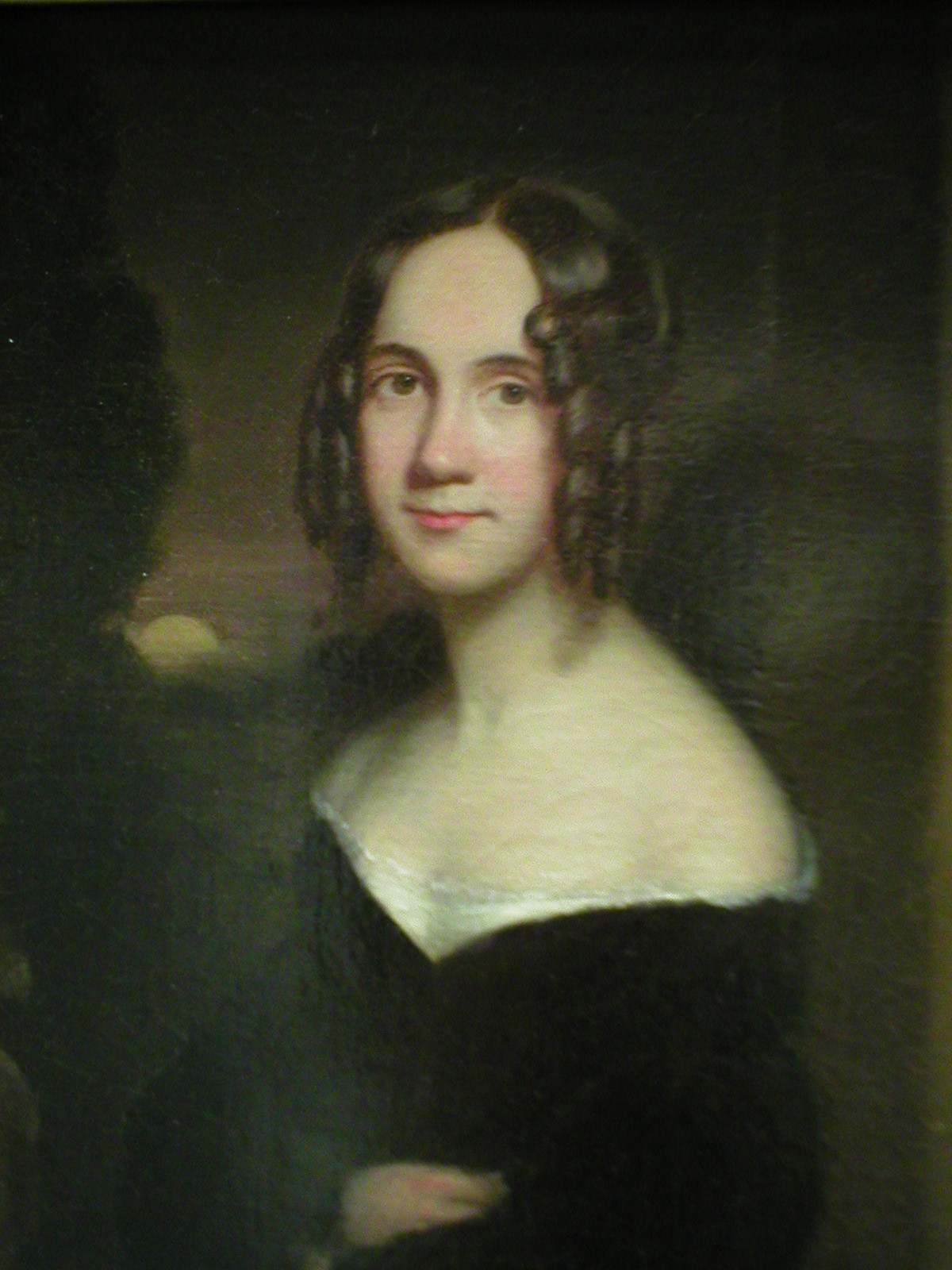
Edgar Poe would have to appreciate the influence that a poet/magazine editor would have, considering how much he wore those hats himself. But I would argue that no magazinist ever had as much influence as Sarah Josepha Hale, the woman who steered the most popular magazine in the United States for half a century.
 Godey's Lady's Book was a powerhouse. Its circulation was incomparable, partly because it was so inoffensive (Hale herself is now mostly forgotten, but her poem about "Mary's Lamb" survives as a nursery rhyme; I consider it the most famous poem in the English language). No doubt, the hand-colored fashion-plates made a difference too; they can still be found in spades at online auction sites and at antique shops, sometimes even framed.
Before Sarah Hale got involved, Thanksgiving was a minor holiday, celebrated by a few states in the Union on no particular date, at that state's discretion. In the midst of the Civil War, Hale campaigned for a national Thanksgiving. She approached no less a figure than President Abraham Lincoln. In her letter to him, she reminded him of the holiday's distinctly American origin, its sentiment, and how the disintegrating country could use some sort of unifying holiday. Lincoln agreed, and Thanksgiving became a national holiday.
Of course, this was after Poe's lifetime and, one could argue, during his life Poe had little for which to be thankful. I disagree.
I think Poe would have embodied the spirit of Thanksgiving fairly well. Though he struggled, he had a loving wife, good friends, and was writing amazing works of literature. For some of those works, he could even thank the "editress" (as she called herself) Sarah Josepha Hale. For Godey's Lady's Book, she published Poe's "A Tale of the Ragged Mountains" (1844), "The Oblong Box" (1844), "Thou Art the Man" (1844), "The Thousand-and-Second Tale of Scheherazade" (1845) and, of course, the now iconic tale "The Cask of Amontillado" (1846).
Friday, November 20, 2009
Grotesque and Arabesque
 Perhaps in ironic contrast to yesterday's post, publishers Lea and Blanchard wrote to Poe on November 20, 1839, declining to print more copies of a book of his writings.
The publishing history of Poe's prose collection Tales of the Grotesque and Arabesque was a horror story unto itself. The collection was two volumes, packaging a hefty 25 stories (including "The Fall of the House of Usher," "The Man That Was Used Up," "Ligeia," and "William Wilson" in volume one; "Berenice," "Metzengerstein," "Von Jung," and "The Unparalleled Adventure of One Hans Pfaall" in volume two). The Philadelphia-based publishers originally offered a production run of 1750 copies. However, still reeling from the Bank Panic of 1837, the struggling economy forced them to cut back to 750 copies. It was released in the first week of December 1839, though it carried an 1840 copyright notice.
They offered to take all financial risk. This is substantial; Poe had to pay out of his own pocket for the publication of his first book, Tamerlane and Other Poems. Having little money, he was limited to only about 50 copies. The book went virtually unnoticed. Typically, publishing in this period required authors personally to purchase any and all unsold copies after a certain time period. Lea & Blanchard were sure to point out their kindness, and their regret for such kindness. In their letter, they noted: "When we undertook their publication, it was solely to oblige you and not with any view to profit." In fact, they noted their concern about recovering their initial investment, and kindly noted Poe should consider contributing "to relieve us from the publication at cost, or even a small abatement."
Poe hoped he could persuade his publishers to eke out a few extra copies. After all, no less a literary luminary than Washington Irving had offered his endorsement of Poe's prose. Reviews noted the book showed "a power of vivid description, an opulence of imagination, a fecundity of invention, and a command over the elegances of diction which have seldom been displayed."
However, the response from Lea & Blanchard in their November 20 letter was straightforward. Hypothetically considering if they were to do it all over again, the publishers noted: "If the offer was now before us we should certainly decline it."
Thursday, November 19, 2009
Not a purpose, but a passion
 The popularity of "The Raven" led to the publication of a collection of poetry titled The Raven and Other Poems, released on November 19, 1845. Wiley & Putnam issued the small volume of 100 pages with a cover price of 31 cents. In his introduction, Poe referred to the poems within as "trifles." He adds: "It is incumbent upon me to say, that I think nothing in this volume of much value to the public, or very creditable to myself."
These "trifles" included not only the title poem but also "The Valley of Unrest," "Bridal Ballad," "The Sleeper," "The Coliseum," "Lenore," "The City in the Sea," "To One in Paradise," "Eulalie," "The Haunted Palace," and "The Conqueror Worm" (my personal favorite), among others.
I tend to agree with George Pope Morris, who wrote in his review: "In spite of Mr. Poe's majestic disclaimer of any great interest in this book, we must venture to think it contains a good deal of that which we call poetry — an element too rare in these days of frigid verse-making to be treated with disregard."
Poe also notes that "with me poetry has been not a purpose, but a passion." He could never dedicate his life to writing poetry because he knew he would never make substantial money from it. So, rather than it being a "purpose," it was a "passion" for him.
Poe dedicated the collection to the popular English poet Elizabeth Barrett. Poe had reviewed her work (specifically The Drama of Exile and Other Poems) earlier that year and Barrett (later Browning) responded positively to "The Raven." Poe's dedication was as follows:
To the Noblest of her Sex—
To the author of
The Drama of Exile—
To Miss Elizabeth Barrett Barrett,
Of England
I Dedicate This Volume
With the most Enthusiasm Admiration
And with the most Sincere Esteem.
Tuesday, November 10, 2009
Poe preserved by the National Park Service
Though Poe lived in many parts of the United States (born in Boston; raised in Richmond, schooled in England and Charlottesville, VA; stationed in South Carolina; lived and worked in Baltimore, New York City, Philadelphia, The Bronx, etc.) there is only one federally-recognized, federally-funded site dedicated to his memory, and it is in Philadelphia.
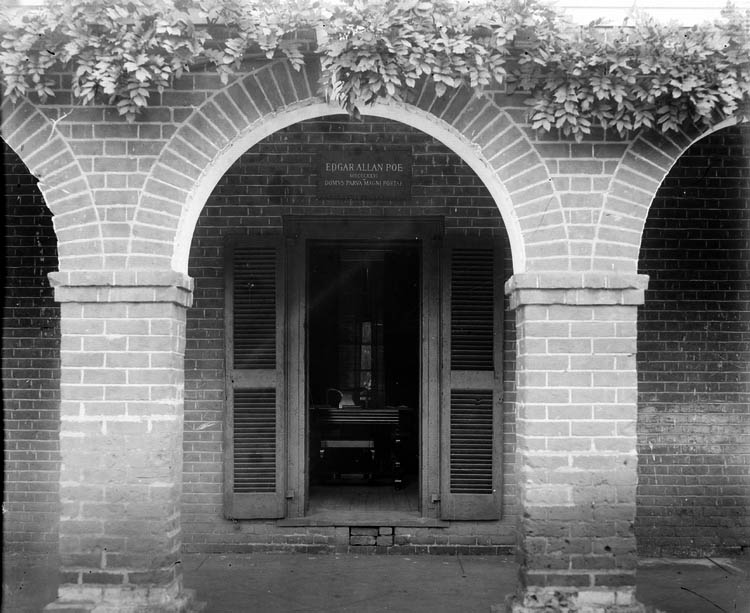
 The Edgar Allan Poe National Historic Site was dedicated as part of the National Park Service on November 10, 1978. It remains one of only five literary landmarks funded by the federal government and overseen by the National Park Service.*
Poe's most productive (and, likely, most sober) years were spent in Philadelphia. He lived at this house near the corner of 7th and Spring Garden Streets for less than a year; none of his other Philadelphia homes (and there were many) are still standing. Nevertheless, in this city, Poe published iconic works like "The Tell-Tale Heart," "The Black Cat," "The Balloon-Hoax," and the world-changing "The Murders in the Rue Morgue." It was also during his time in Philadelphia that Poe met Charles Dickens and reviewed his work.
 The home's extant status is thanks to Richard Gimbel, who became a collector of Poe. He purchased Poe's former home in 1933, making it the centerpiece of his collection. He claimed that Poe began writing "The Raven" here, though it's not likely. Upon Gimbel's death, the home was donated and became the "official" shrine to Poe. However, none of Poe's furniture survived and, lacking clear information on how the interior of the home looked in Poe's time, the house remains empty under the NPS. They refused to "fake it" and install representative period furniture. The result is a creepy, unfurnished, empty house — complete with decaying walls and decrepit fireplaces.
The home remains open to the public after a renovation to its visitor center (completed just in time for the bicentennial) and is open year-round — and admission is always free.
Other sites related to Poe include the Baltimore Poe House and Museum, the Poe Cottage in the Bronx, Poe's preserved dorm-room at the University of Virginia, and the Richmond Poe Museum.
Happy anniversary to the Poe National Historic Site.
*The other four are: The Wayside in Concord, MA; Longfellow National Historic Site in Cambridge, MA; Carl Sandburg National Historic Site in North Carolina; Eugene O'Neill National Historic Site in California.
 The Edgar Allan Poe National Historic Site was dedicated as part of the National Park Service on November 10, 1978. It remains one of only five literary landmarks funded by the federal government and overseen by the National Park Service.*
Poe's most productive (and, likely, most sober) years were spent in Philadelphia. He lived at this house near the corner of 7th and Spring Garden Streets for less than a year; none of his other Philadelphia homes (and there were many) are still standing. Nevertheless, in this city, Poe published iconic works like "The Tell-Tale Heart," "The Black Cat," "The Balloon-Hoax," and the world-changing "The Murders in the Rue Morgue." It was also during his time in Philadelphia that Poe met Charles Dickens and reviewed his work.
 The home's extant status is thanks to Richard Gimbel, who became a collector of Poe. He purchased Poe's former home in 1933, making it the centerpiece of his collection. He claimed that Poe began writing "The Raven" here, though it's not likely. Upon Gimbel's death, the home was donated and became the "official" shrine to Poe. However, none of Poe's furniture survived and, lacking clear information on how the interior of the home looked in Poe's time, the house remains empty under the NPS. They refused to "fake it" and install representative period furniture. The result is a creepy, unfurnished, empty house — complete with decaying walls and decrepit fireplaces.
The home remains open to the public after a renovation to its visitor center (completed just in time for the bicentennial) and is open year-round — and admission is always free.
Other sites related to Poe include the Baltimore Poe House and Museum, the Poe Cottage in the Bronx, Poe's preserved dorm-room at the University of Virginia, and the Richmond Poe Museum.
Happy anniversary to the Poe National Historic Site.
*The other four are: The Wayside in Concord, MA; Longfellow National Historic Site in Cambridge, MA; Carl Sandburg National Historic Site in North Carolina; Eugene O'Neill National Historic Site in California.
Monday, October 19, 2009
$50 found in a bottle
On October 19, 1833, Baltimore's Saturday Visiter published Poe's tale "MS. Found in a Bottle." The tale is considered one of Poe's first major success. The newspaper was sponsoring a writing contest, as announced in their June 15, 1833 issue: "The proprietors of the Baltimore Saturday Visiter feeling desirous of encouraging literature, and at the same time serving their readers with the best that lies within their reach, offer a premium of 50 dollars for the best Tale and 25 dollars for the best Poem, not exceeding 100 lines." Though the newspaper claimed it was a national contest, both winners were identified as "Baltimoreans" — including Poe.
Interestingly, the paper had been founded in part by Lambert Wilmer, a friend of Poe's older brother. The judges for the contest, which included John Pendleton Kennedy, deliberated on October 7. Poe was chosen as the winner for prose and he was granted the $50 prize (apparently this translates to just over $1000 today). His prize-winning tale was published 12 days later with an introduction praising that it was "highly graphic in its style of composition."
"MS. Found in a Bottle" tells the story of an unnamed narrator ("Of my country and of my family I have little to say.") whose was a passenger aboard a ship caught in a hurricane/sandstorm/typhoon. Everyone aboard the ship is blown overboard — except the narrator and an old Swedish man. Driven south by the storm, this ship eventually collides with another, and the narrator climbs on board. It is while aboard this strange ship, continuously heading south, that the narrator begins to record a journal (the "manuscript" of the title). That manuscript is thrown into the sea just before... well, you'll have to read the story.
This incident was not without controversy. Shortly after "MS. Found in a Bottle" was published, Poe's poetry submission, "The Coliseum," was published as well. In fact, the poetry contest winner was "Henry Wilton" — a pseudonym for John H. Hewitt, one of the judges of the contest. Poe (and others) was outraged and suspected something was afoul. He, of course, presumed he would have been the poetry winner, if it wasn't for the whole contest being rigged. Decades later, in 1885, Hewitt claimed that he had a fistfight with Poe on the street over the accusation (no further evidence exists to substantiate this claim). A third judge, John H. B. Latrobe, later admitted that Poe was right: he would have won, if not for Hewitt.
Either way, "MS. Found in a Bottle" was a major financial boon for Poe, not to mention a morale boost for the struggling writer early in his career. Poe would continue writing adventures at sea for many years, including his only complete novel The Narrative of Arthur Gordon Pym of Nantucket. He would later win another writing contest with his tale "The Gold-Bug."
Interestingly, the paper had been founded in part by Lambert Wilmer, a friend of Poe's older brother. The judges for the contest, which included John Pendleton Kennedy, deliberated on October 7. Poe was chosen as the winner for prose and he was granted the $50 prize (apparently this translates to just over $1000 today). His prize-winning tale was published 12 days later with an introduction praising that it was "highly graphic in its style of composition."
"MS. Found in a Bottle" tells the story of an unnamed narrator ("Of my country and of my family I have little to say.") whose was a passenger aboard a ship caught in a hurricane/sandstorm/typhoon. Everyone aboard the ship is blown overboard — except the narrator and an old Swedish man. Driven south by the storm, this ship eventually collides with another, and the narrator climbs on board. It is while aboard this strange ship, continuously heading south, that the narrator begins to record a journal (the "manuscript" of the title). That manuscript is thrown into the sea just before... well, you'll have to read the story.
This incident was not without controversy. Shortly after "MS. Found in a Bottle" was published, Poe's poetry submission, "The Coliseum," was published as well. In fact, the poetry contest winner was "Henry Wilton" — a pseudonym for John H. Hewitt, one of the judges of the contest. Poe (and others) was outraged and suspected something was afoul. He, of course, presumed he would have been the poetry winner, if it wasn't for the whole contest being rigged. Decades later, in 1885, Hewitt claimed that he had a fistfight with Poe on the street over the accusation (no further evidence exists to substantiate this claim). A third judge, John H. B. Latrobe, later admitted that Poe was right: he would have won, if not for Hewitt.
Either way, "MS. Found in a Bottle" was a major financial boon for Poe, not to mention a morale boost for the struggling writer early in his career. Poe would continue writing adventures at sea for many years, including his only complete novel The Narrative of Arthur Gordon Pym of Nantucket. He would later win another writing contest with his tale "The Gold-Bug."
Tuesday, August 25, 2009
Great Astronomical Discoveries
GREAT ASTRONOMICAL DISCOVERIES
Lately Made
BY SIR JOHN HERSCHEL, L.L.D, F.R.S, &c.
At The Cape of Good Hope.
BY SIR JOHN HERSCHEL, L.L.D, F.R.S, &c.
At The Cape of Good Hope.
So read the headline in the August 25, 1835 issue of the New York Sun, supposedly a reprint from the Edinburgh Journal of Science. The article proudly reported that Sir John Herschel, the son of an astronomer who followed his father's footsteps, had built the most powerful telescope in the world. His discoveries were nothing less than amazing.
Throughout the series of six articles which ran daily through August 31, readers were told how Sir John aimed his powerful telescope at the moon. It was powerful enough, it was reported, that its view was "fully equal to that which the naked eye commands of terrestrial objects at the distance of a hundred yards." He saw there oceans, "treeless deserts" and forests.
In fact, he claimed that what he saw conclusively answered the question of whether or not the moon was inhabited. It was reported that "he classified nine species of mammalia, and five of ovipara," including a type of reindeer, elk, and a bipedal tail-less beaver which lived in huts and knew how to make fire. Most shocking was probably the bat-like creatures, as described in the fourth article:

We denominated them as Vespertilio-homo, or man-bat; and they are doubtless innocent and happy creatures, notwithstanding that some of their amusements would but ill comport with our terrestrial notions of decorum.The article also tantalizingly notes that the author of the article faithfully suppressed parts of Sir John's observations by request.
Later nicknamed "The Great Moon Hoax," this article may or may not have really fooled many people (a retraction was never issued). Though presented as an account by Sir John's assistant, the article's real author is assumed to be a journalist named Richard Locke (Sir John Herschel, by the way, was a real astronomer, who likely wasn't pleased by his inclusion).
The story was certainly an influence on Edgar Poe, who became a renowned hoaxster in his own right. An early one included its own "great astronomical discoveries" and its first installment was published two months before "The Great Moon Hoax." The story, "The Unparalleled Adventure of One Hans Pfaal," describes the title character's attempts to visit the moon in a balloon. Later, the same newspaper that published "The Great Moon Hoax," the New York Sun, published Poe's "The Balloon-Hoax" in 1844.
Friday, August 14, 2009
Poe's place in literary history
 Poe's place in literary history is occasionally questioned. Should he be considered a master of American literature? Does he deserve a place in the canon? Is he really important? I might be biased so take my opinion with a grain of salt (this post will shift away from my more academic tone and may, in fact, turn into starry-eyed gushing over my favorite author). Here's my argument: even if you remove the quality of Poe's work from the equation, Poe is one of the most important writers in American history.
The real evidence for this comes on August 14, 1835. It was on that date that the Trustees of the Richmond Academy began selecting their new English teacher. The fact that it was not Poe should solidify Poe's role in American literary history. Excluding his military stints, Poe only applied for two jobs outside of literature. The first was the job with the Richmond Academy teaching English. The second was a job with the Customs House in Philadelphia in 1841, hoping that a connection to Robert Tyler (brother of President John Tyler) would secure his employment. Neither role worked out. That means that Poe never had a job outside of literature; for his 40 short years, he would have no source of income besides his pen.
This is significant because no other major American writers in the first half of the United States were able to sustain themselves in such a manner. Washington Irving had a couple government jobs and was, for a time, part owner in a mercantile business. Henry Wadsworth Longfellow, James Russell Lowell, Oliver Wendell Holmes, and others held full-time teaching positions (at Harvard, in the case of all three). Nathaniel Hawthorne attempted to make a living as a farmer for a time before taking government jobs at two different Customs Houses (one in Boston, another in Salem, Massachusetts). Ralph Waldo Emerson had his ministry for a time and, later, a public lecturing career (he was also supported by an inheritance from the family of his first wife). Margaret Fuller struggled as a teacher in Providence before become a full-time journalist (and, then, nearly all of her writing was not literature but nonfiction).
Poe's financial failure is obvious. Nevertheless, his attempt is nothing less than historical, if not extraordinary. The fact that he stood the test of time is minor (so did the other writers I mentioned above) but, coupled with his lack of any other job outside of literature, Poe should be considered a trailblazer.
Odds were stacked against him, of course. The country was young, its literature younger, and the economy was not established for professional authors. Poe's critical work emphasized that the quality of American literature needed to improve and, as such, he fought against the puffing system which inhibited proper growth. He also railed against the lack of copyright (suggesting authors may as well slit their throats), the culture of republishing without authors' permission, and the tastes of American audiences which, he believed, did not recognize quality over popularity. All of these factors needed to change before an American could make money solely as an author. Poe missed out on those ideal conditions and did not survive into the American Renaissance of the 1850s. Even with all that, when he died at age 40, he showed no signs of turning away from his desired path.
For the sake of full disclosure, Poe was also hampered by bad decisions. He married before he had an established income and, in doing so, inherited not only a young wife but also a mother-in-law who needed his financial support (though, to Maria Clemm's credit, she occasionally provided minor assistance through odd jobs and, of course, begging). He also didn't stay in one place for too long, constantly moving when he needed to escape overdue rent payments or in an optimistic pursuit of greater opportunities — all the money he spent on rent and moving expenses could have been saved to buy a house. Other than that, he was thrifty, particularly in his clothing choices, but his challenges are already numerous.
Yes, Poe was a financial failure in his pursuit of the life of a professional author. But that failure was unprecedented — and it deserves our praise. Thanks to the Trustees of the Richmond Academy for (inadvertently) making it possible.
* Longfellow should be considered America's first successful professional poet as of 1854, when he retired from his professorship. However, Longfellow was gifted a mansion at age 35 thanks to his father-in-law and had saved up enough money from teaching for about 17 years before he had the solid footing to become a professional poet. Credit is deserved there as well, certainly, but he did not have the same challenges as Poe.
Monday, August 3, 2009
A mesmeric republication
Poe often revised and reprinted his works to purposefully improve them and expand his audience. Other times, his works were reprinted without his permission, thanks to the piracy-laden culture of reprinting in American publishing (in some cases, publishers would sell the works to other publishers, without checking with the writer). One example of this is the August 3, 1844 issue of the New World in New York, which reprinted the tale "Mesmeric Revelation," likely without Poe's authorization.
But, what prompted them to republish the work was not so much getting attention thanks to Poe's name, but the inherent interest of the story. The editor wrote: "Mr. Poe cannot, on so serious a subject, trifle with his readers: yet more extraordinary statements can hardly be conceived... we recommend it [e.g. the tale] to the perusal of our readers and invite them to draw their own conclusions."
Poe's story was being republished because it was believed to be a true account.
"Mesmeric Revelation" features a a mesmerist ("animal magnetism," as developed by Franz Mesmer, believed that the fluids in the body could be manipulated with magnets, allowing for a trance-like state similar to hypnotism) who wants to determine if the soul can survive after death. The mesmerist, coyly named "Mr. P.," puts Mr. Vankirk into a "mesmeric sleep." While in this trance, Vankirk and the mesmerist engage in a metaphysical discussion touching upon topics like the true nature of God ("What then is God?" Vankirk's answer is, "I cannot tell."). Vankirk dies while in this trance (much like Poe's similar, more horrific story, "The Facts in the Case of M. Valdemar") and, though Mr. P. tries to bring him back, Vankirk refuses because of his experience and "keenly redefined perception" from transitioning to what is, in essence, the afterlife.
The German-born Franz Mesmer introduced his process in the 1770s, making public spectacles of his discoveries, sometimes accompanied by a glass armonica, a musical instrument developed by Benjamin Franklin. Mesmer died in 1815, but his animal magnetism (he apparently never used the term "mesmerism") lived on, particularly through a traveling practitioner named Charles Lafontaine. In the 1840s, Scottish physician James Braid saw Lafontaine and developed a similar process which earned the name "hypnosis."
"Mesmeric Revelation" was republished several more times in the next few months. One reader responded that the story was likely true, but the "revelations" of Mr. Vankirk were hallucinations. One notable reprint was in the American Phrenological Journal in 1845. That journal, purportedly a one of science rather than literature, noted their belief in the story, though they were not attempting to convince readers. As they introduced: "We simply lay it before our readers, soliciting that they do by it as we have done, think it over fully, and form their own conclusions... Read and re-read." The editors later published a retraction.
Certainly, Poe's story made a stir (to his amusement). We can only speculate if Poe truly believed in mesmerism. The first lines of the "Mesmeric Revelation" are curious: "Whatever doubt may still envelop the rationale of mesmerism, its startling facts are now almost universally admitted." I would argue that Poe was, as he often did, appealing to the interests of his reading audience, rather than showing his personal interests. His italics on the term "facts" in that quote may be the hint...
But, what prompted them to republish the work was not so much getting attention thanks to Poe's name, but the inherent interest of the story. The editor wrote: "Mr. Poe cannot, on so serious a subject, trifle with his readers: yet more extraordinary statements can hardly be conceived... we recommend it [e.g. the tale] to the perusal of our readers and invite them to draw their own conclusions."
Poe's story was being republished because it was believed to be a true account.
"Mesmeric Revelation" features a a mesmerist ("animal magnetism," as developed by Franz Mesmer, believed that the fluids in the body could be manipulated with magnets, allowing for a trance-like state similar to hypnotism) who wants to determine if the soul can survive after death. The mesmerist, coyly named "Mr. P.," puts Mr. Vankirk into a "mesmeric sleep." While in this trance, Vankirk and the mesmerist engage in a metaphysical discussion touching upon topics like the true nature of God ("What then is God?" Vankirk's answer is, "I cannot tell."). Vankirk dies while in this trance (much like Poe's similar, more horrific story, "The Facts in the Case of M. Valdemar") and, though Mr. P. tries to bring him back, Vankirk refuses because of his experience and "keenly redefined perception" from transitioning to what is, in essence, the afterlife.
The German-born Franz Mesmer introduced his process in the 1770s, making public spectacles of his discoveries, sometimes accompanied by a glass armonica, a musical instrument developed by Benjamin Franklin. Mesmer died in 1815, but his animal magnetism (he apparently never used the term "mesmerism") lived on, particularly through a traveling practitioner named Charles Lafontaine. In the 1840s, Scottish physician James Braid saw Lafontaine and developed a similar process which earned the name "hypnosis."
"Mesmeric Revelation" was republished several more times in the next few months. One reader responded that the story was likely true, but the "revelations" of Mr. Vankirk were hallucinations. One notable reprint was in the American Phrenological Journal in 1845. That journal, purportedly a one of science rather than literature, noted their belief in the story, though they were not attempting to convince readers. As they introduced: "We simply lay it before our readers, soliciting that they do by it as we have done, think it over fully, and form their own conclusions... Read and re-read." The editors later published a retraction.
Certainly, Poe's story made a stir (to his amusement). We can only speculate if Poe truly believed in mesmerism. The first lines of the "Mesmeric Revelation" are curious: "Whatever doubt may still envelop the rationale of mesmerism, its startling facts are now almost universally admitted." I would argue that Poe was, as he often did, appealing to the interests of his reading audience, rather than showing his personal interests. His italics on the term "facts" in that quote may be the hint...
Thursday, July 30, 2009
The perfect whiteness of the snow
 The New York publishers Harper & Brothers published a short, two-volume work on July 30, 1838. Presented as an apparent true story with the help of a "Mr. Poe, lately editor of the Southern Literary Messenger," its title, in full, was:
THE NARRATIVE OF ARTHUR GORDON PYM OF NANTUCKET: Comprising the Details of Mutiny and Atrocious Butchery on Board the American Brig Grampus, on Her Way to the South Seas, in the Month of June, 1827. With an Account of the Recapture of the Vessel by the Survivers; Their Shipwreck and Subsequent Horrible Sufferings from Famine; Their Deliverance by Means of the British Schooner Jane Guy; the Brief Cruise of this Latter Vessel in the Atlantic Ocean; Her Capture, and the Massacre of Her Crew Among a Group of Islands in the Eighty-Fourth Parallel of Southern Latitude; Together with the Incredible Adventures and Discoveries Still Farther South to Which That Distressing Calamity Gave Rise.
The book was Poe's only complete novel. It was mostly critically panned. One critic noted the book was clearly a fantasy, despite an "impudent attempt at humbugging the public" into believing it a true account. Another critic, William Evans Burton, called it "a very silly book." Critic Lewis Gaylord Clarke found it confusing, noting the story was "told in a loose and slip-shod style, seldom chequered by any of the more common graces of composition." Modern Poe scholar Scott Peeples summarizes the book this way: "a mock nonfictional exploration narrative, adventure saga, bildungsroman, hoax, largely plagiarized travelogue, and spiritual allegory... one of the most elusive major texts of American literature." He's right on all counts.
The irony is that Poe wrote the book specifically to appeal to mass market tastes in a declining economy amidst the Panic of 1837. Readers, he understood, were looking for long narratives instead of the short stories he had been writing. They wanted adventure, sea stories, exploration narratives — and especially true stories. He even acquiesced to the suggestion that the book be published in two volumes (his publisher called it "the magical number").
The plot is fairly obvious from the novel's subtitle — but, what it doesn't say is that the book is almost senseless. Each chapter introduces more and more unrealistic elements, from the main character hiding in plain sight from his grandfather to his nearly starving to death hidden in a ship's cargo hold right before conveniently finding food and water to his being caught amidst a group of savages on an unknown island. Throughout the very short novel, there are plotholes, inconsistencies, a disappearing dog, shark attacks, overly-detailed descriptions of maritime life and maritime exploration history, and an infamous scene featuring cannibalism.
Oh, then there's the strange part: the ending.
If Poe hadn't convinced you that this could not possibly be a true story (even after plagiarizing word-for-word from a true account by Jeremiah N. Reynolds), nothing could prepare you for the final scene. Traveling closer and closer to the Antarctic region and, ultimately, the South Pole, the ocean surrounding Pym (who is suddenly a nautical expert, though he had no experience with boats on page one) begins to swallow itself, creating dangerous whirlpools. Still, the little boat presses on. Then, from nowhere, a huge figure arises — its skin "of the perfect whiteness of snow." Sorry to give away the ending; that was the last line of the story.
Readers in Poe's day must have been perplexed (as are scholars today). How seriously should we take this novel? Is it just a fun adventure story? Is it a complicated, deeply-allegorical tale strewn with symbolism? Is it the best example we have that Poe was incapable of writing a long, coherent narrative? What the hell is happening at the end??
I don't know. But I can tell you this: it's worth reading.
Sunday, June 21, 2009
Bitten by "The Gold-Bug"
On June 21, 1843, the Dollar Newspaper in Philadelphia published the first part of one of Poe's most important stories. That same day, the Public Newspaper reported:
The high pay-out and the controversy surrounding it helped build interest in an already exciting story. "The Gold-Bug" became the most widely-read of Poe's prose work during the author's lifetime, even inspiring a stage adaptation in Philadelphia. A year after its publication, it was claimed that the story sold 300,000 copies. Poe noted that "it made a great noise."
 I'll briefly emphasize this: the prose work which earned Poe his largest paycheck and garnered his largest reading audience was not a horror story.
"The Gold-Bug" is a gripping adventure tale about the search for buried pirate treasure (set, incidentally, at Sullivan's Island near Charleston, South Carolina, where Poe had served in the Army). Poe keeps us guessing, not only with a narrator who is suspected to be insane, but also through secret-writing — the clues that lead to the treasure which is eventually deciphered. The story is considered an off-shoot of Poe's true detective stories (i.e. "The Murders in the Rue Morgue"). Scholar of cryptography Shawn James Rosenheim (in his worthwhile book The Cryptographic Imagination) calls the story "a stimulus to future cryptographers," including William Friedman, who later broke the code used by the Japanese in World War II. "America's foremost cryptologist," as he was called, credited his interest in secret writing to Edgar Poe and childhood readings of "The Gold-Bug."
"The Dollar Newspaper" for this week, this day published, contains the prize story of "THE GOLD BUG," written by Edgar A. Poe, Esq., which is pronounced, by every man of taste who has read it, a production of superior merit. For ourselves, we never read a fiction that in its plot runs more in the line of probability, and consequently never one that more closely revetted [sic] our attention from its opening to its close.Must have been a slow news day, and the idea that the story was "probable" is somewhat laughable. Actually, the fuss was about the writing contest which the Dollar Newspaper sponsored, specifically because of its unusually-high grand prize: a whopping $100. When it was awarded to Poe, it became (and remained) the single largest sum of money Poe would ever receive for any work he ever published. In fact, jealous writers and suspicious readers (not to mention competitor publishers) suggested the contest was rigged. Philadelphia's Daily Forum called "The Gold-Bug" an "abortion" and "unmitigated trash" worth no more than $15. Those lines drew a libel suit from Poe, though the suit was soon dropped and the editor apologized.
The high pay-out and the controversy surrounding it helped build interest in an already exciting story. "The Gold-Bug" became the most widely-read of Poe's prose work during the author's lifetime, even inspiring a stage adaptation in Philadelphia. A year after its publication, it was claimed that the story sold 300,000 copies. Poe noted that "it made a great noise."
 I'll briefly emphasize this: the prose work which earned Poe his largest paycheck and garnered his largest reading audience was not a horror story.
"The Gold-Bug" is a gripping adventure tale about the search for buried pirate treasure (set, incidentally, at Sullivan's Island near Charleston, South Carolina, where Poe had served in the Army). Poe keeps us guessing, not only with a narrator who is suspected to be insane, but also through secret-writing — the clues that lead to the treasure which is eventually deciphered. The story is considered an off-shoot of Poe's true detective stories (i.e. "The Murders in the Rue Morgue"). Scholar of cryptography Shawn James Rosenheim (in his worthwhile book The Cryptographic Imagination) calls the story "a stimulus to future cryptographers," including William Friedman, who later broke the code used by the Japanese in World War II. "America's foremost cryptologist," as he was called, credited his interest in secret writing to Edgar Poe and childhood readings of "The Gold-Bug."
*The illustration above is by F. O. C. Darley, 1843. It accompanied the first appearance of "The Gold-Bug."
Thursday, April 30, 2009
Misery is manifold
 On April 30, 1835, Poe wrote an amazing letter to justify his decision to write sensational horror stories. This was early in his career; he had just published "Berenice" (one of my personal favorites), a story which is one of his most violent — though there are no scenes of violence anywhere in the story. Instead, the piece focuses on suspense and psychology, as would many later works. Nevertheless, there was some public outcry for its gruesome nature. Poe took the time to defend himself to Thomas Willis White, editor of The Southern Literary Messenger:
"Your opinion of it is very just. The subject is by far too horrible, and I confess that I hesitated in sending it especially as a specimen of my capabilities... But what I wish to say relates to the character of your Magazine more than to any articles I may offer... The history of all Magazines shows plainly that those which have attained celebrity were indebted for it to articles similar in nature—to Berenice... You ask me in what does this nature consist? In the ludicrous heightened into the grotesque: the fearful coloured into the horrible: the witty exaggerated into the burlesque: the singular wrought out into the strange and mystical. You may say all this is bad taste. I have my doubts about it... But whether the articles of which I speak are, or are not in bad taste is little to the purpose. To be appreciated you must be read, and these things are invariably sought after with avidity. They are, if you will take notice, the articles which find their way into other periodicals, and into the papers, and in this manner, taking hold upon the public mind they augment the reputation of the source where they originated."Poe concludes that he admits "Berenice," in fact, "approaches the very verge of bad taste—but I will not sin quite so egregiously again." He notes that similar stories are coming, but he asks White not to judge them without first considering their impact on the circulation of the magazine.
"Berenice" was Poe's first true horror story. In later editions, Poe did self-censor a tiny bit (it's hardly noticeable) but he didn't really back down in the theory he discussed in the above letter to White. He purposely tried to bring his stories right to the edge of grotesqueness, but still keep them entertaining. This letter allows us to question the sincerity of his horror stories and if he really believed they were worthwhile literature. This "pop culture" approach justifies his decision to use themes like premature burial, mesmerism, and other subjects which audiences gobbled up. Of course, Poe presented these themes very differently than most; as mentioned above, gratuitous violence was replaced with suspense and underpinnings focused on the narrator's psyche.
Either way, to me, this shows that Poe knew the publishing industry and, most importantly, he knew his audience. His line about being read in order to be appreciated refers just as much to White as himself; he was holding a carrot in front of White's nose to let him know he intended to increase the magazine's circulation - for White's benefit. And, from what we can tell, he succeeded.
Of course, Poe wasn't entirely sincere about never sinning quite so "egregiously" again. And White knew that. White seems to have had a decent relationship with Poe in his early career and tried to support him through a difficult time. Poe biographer Kenneth Silverman suggests a "fatherly" interest. It's also possible that Poe pursued White's daughter Eliza, then 18, as a potential wife (about a year later, Poe married his young cousin Virginia instead).
*The image above is a screenshot from an amateur film adaptation of "Berenice," created for a graduate film course. The full video (before a custom soundtrack was added) is here.
Sunday, April 19, 2009
Griswold and Graham's
It's hard to tell for certain when the first edition of The Poets and Poetry of America hit book stores. It wasn't until April 18, 1842, however that the anthology's editor, Rufus Wilmot Griswold, was informed by publishers that it was finally published. As Carey & Hart (Philadelphia) wrote to Griswold (in New York): "We have at last published the 'Poets & Poetry of America' & a handsome Book it is."
The publisher must have rushed copies to important or influential literary figures on that first day. George Rex Graham in Philadelphia, the proprietor of the very popular Graham's Magazine, almost immediately jumped to take advantage of the rising star of Griswold. He wrote only a day later, April 19, 1842:
"Have you fully determined on assuming the Chaplaincy* and to abandon the editorial chair? Or could you find it in your heart to locate in Philadelphia? Let me hear from you, as I have a proposal to make. I like your book very much. We received it from Carey & Hart on yesterday, and although it will give offense to a few, it must be popular, and it will please every man of taste."
Graham had recently parted ways with his famous editor, Edgar Poe, who had miraculously increased circulation to 40,000, but resigned in late March. What really drove sales up was Poe's infamous critical review style, which was somewhat controversial. The Arcturus (edited by Cornelius Mathews and Evert Augustus Duyckinck) noted Poe's reviews as "elaborate" and "richly deserving of attention," though he was "somewhat over literal and minute, looking oftener to the letter than the spirit."Joseph Evans Snodgrass in the Saturday Visiter in Baltimore wrote that Poe was "an excellent reviewer" even though he was "at times, provokingly hypercritical." James Russell Lowell was a little less euphemistic and wrote that Poe occasionally mistook "his phial of prussic acid for his inkstand."

The "proposal" Graham wanted to offer Griswold was Poe's former role. Griswold seems to have accepted without hesitation and moved to Philadelphia to take the job with Graham's (leaving his family behind in New York). The transition was so quick, a rumor persisted (and still does in some circles) that Poe came to clean out his desk and saw Griswold already sitting there. The rumor is quite untrue. Nevertheless, Griswold was paid $1000 — $200 more per year than Poe — likely building up some of the animosity between the two.
Griswold's run on Graham's was significantly less successful than Poe's. Though he was able to bring in substantial writers (including James Fenimore Cooper and Henry Wadsworth Longfellow), he never earned much respect there. In fact, a year after he took over, George Lippard wrote, "It was Mr. Poe that made Graham's Magazine what it was a year ago; it was his intellect that gave this now weak and flimsy periodical a tone of refinement and mental vigor."
*Griswold had recently earned the title of "Reverend," though he never had a regular congregation.
The publisher must have rushed copies to important or influential literary figures on that first day. George Rex Graham in Philadelphia, the proprietor of the very popular Graham's Magazine, almost immediately jumped to take advantage of the rising star of Griswold. He wrote only a day later, April 19, 1842:
"Have you fully determined on assuming the Chaplaincy* and to abandon the editorial chair? Or could you find it in your heart to locate in Philadelphia? Let me hear from you, as I have a proposal to make. I like your book very much. We received it from Carey & Hart on yesterday, and although it will give offense to a few, it must be popular, and it will please every man of taste."
Graham had recently parted ways with his famous editor, Edgar Poe, who had miraculously increased circulation to 40,000, but resigned in late March. What really drove sales up was Poe's infamous critical review style, which was somewhat controversial. The Arcturus (edited by Cornelius Mathews and Evert Augustus Duyckinck) noted Poe's reviews as "elaborate" and "richly deserving of attention," though he was "somewhat over literal and minute, looking oftener to the letter than the spirit."Joseph Evans Snodgrass in the Saturday Visiter in Baltimore wrote that Poe was "an excellent reviewer" even though he was "at times, provokingly hypercritical." James Russell Lowell was a little less euphemistic and wrote that Poe occasionally mistook "his phial of prussic acid for his inkstand."

The "proposal" Graham wanted to offer Griswold was Poe's former role. Griswold seems to have accepted without hesitation and moved to Philadelphia to take the job with Graham's (leaving his family behind in New York). The transition was so quick, a rumor persisted (and still does in some circles) that Poe came to clean out his desk and saw Griswold already sitting there. The rumor is quite untrue. Nevertheless, Griswold was paid $1000 — $200 more per year than Poe — likely building up some of the animosity between the two.
Griswold's run on Graham's was significantly less successful than Poe's. Though he was able to bring in substantial writers (including James Fenimore Cooper and Henry Wadsworth Longfellow), he never earned much respect there. In fact, a year after he took over, George Lippard wrote, "It was Mr. Poe that made Graham's Magazine what it was a year ago; it was his intellect that gave this now weak and flimsy periodical a tone of refinement and mental vigor."
*Griswold had recently earned the title of "Reverend," though he never had a regular congregation.
Tuesday, March 31, 2009
All that we see or seem
On March 31, 1849, Boston's Flag of Our Union held the honor of being the first to publish the poem "A Dream Within A Dream." Today it is recognized as one of Poe's best poems. At 24 lines, it is a short but poignant poem which questions the blurry line between reality and ideality.
This popularity is further emphasized in pop culture, something which Poe has heavily spread into. The Alan Parsons Project, for example, began their 1976 concept album Tales of Mystery and Imagination Edgar Allan Poe with an instrumental homage to the poem (a later re-release included a previously unreleased recording of Orson Welles reading the poem). Even Britney Spears owes something to Poe's poem, when she named her 2001 concert tour "Dream Within a Dream."
Poe's last year included many submissions to the Flag of Our Union — a weekly journal printed in Boston with a very small circulation. Payment was prompt, however, and editor Frederick Gleason dared to match the "Graham page" rate (Graham's was known for its generous payment). In fact, it was Gleason who sought out Poe as a contributor. "I shall be happy to contribute," Poe responded, likely intrigued by the $5 per page rate, "as often as possible." Gleason excitedly reported in each issue that Poe was now a "regular contributor." As an editor, Gleason was an interesting fellow, who staunchly defended his original submissions (he made a minor spectacle of Sartain's Union Magazine and the Home Journal printing one of the poems Poe submited to the Flag for first publication rights).
I would speculate that Poe had a love/hate relationship with the Flag of Our Union. Some of his greatest works were first printed in the journal (including some of my favorites: the poem "Eldorado" and the short stories "Hop-Frog" and "X-ing a Paragrab") but the circulation was so low, it was hardly worth it - not to mention that the publication was based in Boston, far from his more loyal audiences. By April 1849, Gleason announced he could no longer afford to pay contributors, despite his early optimism. Poe unapologetically stopped contributing.
Take this kiss upon the brow!The work is, possibly, a reflection of many of Poe's dreams being swept away (The Stylus, his wife Virginia, Sarah Helen Whitman, and others). More likely, Poe was trying to reach out to a universally-understood aspect of the human condition. It has retained its popularity because of this and has become one of Poe's most-quoted works.
And, in parting from you now,
Thus much let me avow—
You are not wrong, who deem
That my days have been a dream;
Yet if hope has flown away
In a night, or in a day,
In a vision, or in none,
Is it therefore the less gone?
All that we see or seem
Is but a dream within a dream.
I stand amid the roar
Of a surf-tormented shore,
And I hold within my hand
Grains of the golden sand—
How few! yet how they creep
Through my fingers to the deep,
While I weep—while I weep!
O God! can I not grasp
Them with a tighter clasp?
O God! can I not save
One from the pitiless wave?
Is all that we see or seem
But a dream within a dream?
This popularity is further emphasized in pop culture, something which Poe has heavily spread into. The Alan Parsons Project, for example, began their 1976 concept album Tales of Mystery and Imagination Edgar Allan Poe with an instrumental homage to the poem (a later re-release included a previously unreleased recording of Orson Welles reading the poem). Even Britney Spears owes something to Poe's poem, when she named her 2001 concert tour "Dream Within a Dream."
Poe's last year included many submissions to the Flag of Our Union — a weekly journal printed in Boston with a very small circulation. Payment was prompt, however, and editor Frederick Gleason dared to match the "Graham page" rate (Graham's was known for its generous payment). In fact, it was Gleason who sought out Poe as a contributor. "I shall be happy to contribute," Poe responded, likely intrigued by the $5 per page rate, "as often as possible." Gleason excitedly reported in each issue that Poe was now a "regular contributor." As an editor, Gleason was an interesting fellow, who staunchly defended his original submissions (he made a minor spectacle of Sartain's Union Magazine and the Home Journal printing one of the poems Poe submited to the Flag for first publication rights).
I would speculate that Poe had a love/hate relationship with the Flag of Our Union. Some of his greatest works were first printed in the journal (including some of my favorites: the poem "Eldorado" and the short stories "Hop-Frog" and "X-ing a Paragrab") but the circulation was so low, it was hardly worth it - not to mention that the publication was based in Boston, far from his more loyal audiences. By April 1849, Gleason announced he could no longer afford to pay contributors, despite his early optimism. Poe unapologetically stopped contributing.
Sunday, March 22, 2009
"Tales" by Edgar A. Poe announced
 An advertisement in the March 22, 1845, issue of the New York-based Weekly News reported: "Wiley & Putnam have in press a volume of Poe's 'Tales by Edgar A. Poe'." Indeed, the work in question — with the very simple title Tales by Edgar A. Poe — was a long time coming. In early March, Wiley & Putnam agreed to issue the collection as the second volume in their "Library of American Books," purposely trying to capitalize on the recent success of Poe's poem "The Raven." The book was copyrighted on June 13 and released on June 25.
For Poe, this is a bit unusual. As a writer, Poe was generally writing exclusively for whatever magazine he was attached to — or, worse, stuck with freelancing. This meant that pay was low, as was circulation. Payments were often slow and Poe was, quite often, forced into drudgery writing just to make money (this has led many scholars to speculate as to which of Poe's works were meant to be taken seriously and which were merely an appeal for quick cash... amongst those on the latter list include "The Raven," "The Gold-Bug," and almost all of his horror tales). Copyright was also a major concern, as many magazines (likely due to their non-stop monthly or even weekly schedule) didn't bother copyrighting — Graham's Magazine is believed to be the first. Shorter works like Poe's were often pirated wholesale and reproduced — even legitimately as part of critical reviews in which massive quoting was the norm; beyond what today's "fair use" laws would allow. Some would say that Poe's focus on the magazine industry rather than the book industry was the sole catalyst for Poe's incessant financial woes; a writer like Washington Irving, for example, actually was capable of turning a profit by focusing on book publishing.
Truth be told, in Poe's lifetime, very few of his works were in book format, and even fewer were produced on a massive scale. Tales likely inspired a great sigh of relief from Poe — Wiley & Putnam even secured the copyright overseas and issued a British edition in July (cross-continental copyright was much more precarious than the magazine industry). The book was a success; by October 4, Poe was claiming 1500 copies sold in the U.S. Of course, Poe was not well-versed in the art of book publishing and did not secure a good deal with Wiley & Putnum; Tales did not make Poe any significant amount of money.
In case you're interested, the table of contents for Tales should really whet your appetite. Its contents were dictated by the influential-yet-forgotten Evert Augustus Duyckinck; Poe was not particularly pleased (noting an excessive focus on ratiocinative tales), but the list isn't so bad for a compact 12-tale book*: "The Gold-Bug," "The Black Cat," "Mesmeric Revelation," "Lionizing," "The Fall of the House of Usher," "A Descent into the Maelström," "The Colloquey of Monos and Una," "The Conversation of Eiros and Charmion," "The Murders in the Rue Morgue," "The Mystery of Marie Rogêt," "The Purloined Letter," and "The Man of the Crowd."
*With the exception of "Lionizing," which is not worth the ink! It's also curious that "The Tell-Tale Heart" did not make the cut. Like Poe, I was also surprised by the lack of "Ligeia" and "The System of Doctor Tarr and Professor Fether."
Wednesday, February 25, 2009
A regular business man
One of Edgar A. Poe's more enduring comedy stories, "The Business Man" was first published in the February 1840 issue of Burton's Gentleman's Magazine in Philadelphia. Poe, of course, wrote a substantial number of comedies and satires (and, really, started his prose career with them) but many have lost their humor after 150 years. "The Business Man," however, is still funny — especially in the context of today's economy!
Poe makes fun of the "typical" businessman (people like John Allan?) who profits through ruthlessness and questionable ethics. The businessman of the story, Peter Pendulum (later renamed to "Peter Proffit"), describes himself:
I am a business man. I am a methodical man. Method is the thing, after all. But there are no people I more heartily despise than our eccentric fools who prate about method without understanding it; attending strictly to its letter, and violating its spirit. These fellow are always doing the most out-of-the-way things in what they call an orderly manner. Now here, I conceive is a positive paradox. The true method appertains to the ordinary and the obvious alone, and cannot be applied to the outre.
Pendulum's "method" is simple: make money, no matter how. Presumably he never violates the spirit of being a businessman throughout his many business ventures. Through the course of the story, he has many careers. For one, he joins the "Eye-Sore" business: purposely building ugly homes and structures adjacent to beautiful new buildings, and asking for 500% of the value to tear it down. He also joins the "Assault-and-Battery" business by provoking people on the street into fights, then suing them for attacking him. He also becomes a "Mud-Dabbler" and asks people to pay him not to splash mud on them as they walk by. Later, he makes his money as a "Cat-Grower": raising cats and selling their tails ("tales"? Could this be an indictment of the businessmen in the publishing industry??).
"The Business Man" is still funny 169 years after its publication — if you don't mind the absolute ridiculousness of it, of course. But, to sum up, here is Poe's version of the great businessman, in the words of Pendulum:
If there is any thing on earth I hate, it is a genius. Your geniuses are all arrant asses—the greater the genius the greater the ass—and to this rule there is no exception whatever. Especially, you cannot make a man of business out of a genius... The creatures are always going off at a tangent into some fantastic employment, or ridiculous speculation, entirely at variance with the "fitness of things," and having no business whatever to be considered as a business at all. Thus you may tell these characters immediately by the nature of their occupations... Now I am not in any respect a genius, but a regular business man.
It's important to remember that Poe was a business owner for a while too, albeit years after this story was printed. Read more about The Broadway Journal in previous blog posts.
After Poe's death, his infamous literary executor Rufus W. Griswold collected his works into a multi-volume edition in 1850. Griswold excluded "The Business Man" from this collection, either because he didn't know about it, or because he considered all of Poe's comedies to be miserable failures. Griswold is at least partially responsible for burying Poe's humor works — and that influence remains to this day. Who out there thinks of Poe as a comic writer?
Poe makes fun of the "typical" businessman (people like John Allan?) who profits through ruthlessness and questionable ethics. The businessman of the story, Peter Pendulum (later renamed to "Peter Proffit"), describes himself:
I am a business man. I am a methodical man. Method is the thing, after all. But there are no people I more heartily despise than our eccentric fools who prate about method without understanding it; attending strictly to its letter, and violating its spirit. These fellow are always doing the most out-of-the-way things in what they call an orderly manner. Now here, I conceive is a positive paradox. The true method appertains to the ordinary and the obvious alone, and cannot be applied to the outre.
Pendulum's "method" is simple: make money, no matter how. Presumably he never violates the spirit of being a businessman throughout his many business ventures. Through the course of the story, he has many careers. For one, he joins the "Eye-Sore" business: purposely building ugly homes and structures adjacent to beautiful new buildings, and asking for 500% of the value to tear it down. He also joins the "Assault-and-Battery" business by provoking people on the street into fights, then suing them for attacking him. He also becomes a "Mud-Dabbler" and asks people to pay him not to splash mud on them as they walk by. Later, he makes his money as a "Cat-Grower": raising cats and selling their tails ("tales"? Could this be an indictment of the businessmen in the publishing industry??).
"The Business Man" is still funny 169 years after its publication — if you don't mind the absolute ridiculousness of it, of course. But, to sum up, here is Poe's version of the great businessman, in the words of Pendulum:
If there is any thing on earth I hate, it is a genius. Your geniuses are all arrant asses—the greater the genius the greater the ass—and to this rule there is no exception whatever. Especially, you cannot make a man of business out of a genius... The creatures are always going off at a tangent into some fantastic employment, or ridiculous speculation, entirely at variance with the "fitness of things," and having no business whatever to be considered as a business at all. Thus you may tell these characters immediately by the nature of their occupations... Now I am not in any respect a genius, but a regular business man.
It's important to remember that Poe was a business owner for a while too, albeit years after this story was printed. Read more about The Broadway Journal in previous blog posts.
After Poe's death, his infamous literary executor Rufus W. Griswold collected his works into a multi-volume edition in 1850. Griswold excluded "The Business Man" from this collection, either because he didn't know about it, or because he considered all of Poe's comedies to be miserable failures. Griswold is at least partially responsible for burying Poe's humor works — and that influence remains to this day. Who out there thinks of Poe as a comic writer?
Saturday, February 21, 2009
Poe and The Broadway Journal
Still reeling from the success of his poem "The Raven," Edgar A. Poe signed into a business partnership on February 21, 1845, as one-third owner of the New York periodical, The Broadway Journal. His partners were John Bisco and Charles Frederick Briggs (a good friend, by the way, of James Russell Lowell - if you're interested in him, come back here tomorrow). The New York-based publication was brand new when Poe signed his year-long contract which also entitled him to one-third of all profits.
Briggs was well-known as the author of the two-volume romp through New York, The Adventures of Harry Franco (1839). He was headstrong and intended to keep his fingers tightly around his editorial duties, but he met his match in Poe. By then the "tomahawk" criticism of Poe was well-known, and Briggs thought it was too much. Partly inspired by Poe's accusations against Henry Wadsworth Longfellow, Briggs gave up on the Broadway Journal by June 1845. And then there were two.
Bisco didn't last much longer. He wasn't the editorial type, but more of a businessman. Poe really could have used his expertise but, by October, Bisco sold his part ownership to Poe for $50. Poe paid him using a loan from, of all people, the newspaper powerhouse Horace Greeley.
Thus, by October 1845, Poe was the sole proprietor and editor of his very own journal. It was the closest he ever got to launching his dream project, The Stylus. With full editorial control, Poe was able to continue his special brand of literary criticism amidst the "puffers" of the time without a boss giving him a hard time for it. Of course, his partners had abandoned ship for a reason: the Broadway Journal never gained its financial footing, and it was sinking. Poe continued as best he could but the market was flooded with competing magazines and periodicals. The final issue was dated January 3, 1846.
Poe never really abandoned his hope for a new journal, however. To inherit a journal is one thing, but to create one in his image was something entirely different. The Stylus, Poe believed, would be superior to the competition in every way, not just in content and scope, but also in its physical presentation: Poe even detailed the high quality paper he wanted to use. Alas, The Stylus, never came to be, and his brief stint as sole owner and editor of the Broadway Journal was as close as he ever got.
Briggs was well-known as the author of the two-volume romp through New York, The Adventures of Harry Franco (1839). He was headstrong and intended to keep his fingers tightly around his editorial duties, but he met his match in Poe. By then the "tomahawk" criticism of Poe was well-known, and Briggs thought it was too much. Partly inspired by Poe's accusations against Henry Wadsworth Longfellow, Briggs gave up on the Broadway Journal by June 1845. And then there were two.
Bisco didn't last much longer. He wasn't the editorial type, but more of a businessman. Poe really could have used his expertise but, by October, Bisco sold his part ownership to Poe for $50. Poe paid him using a loan from, of all people, the newspaper powerhouse Horace Greeley.
Thus, by October 1845, Poe was the sole proprietor and editor of his very own journal. It was the closest he ever got to launching his dream project, The Stylus. With full editorial control, Poe was able to continue his special brand of literary criticism amidst the "puffers" of the time without a boss giving him a hard time for it. Of course, his partners had abandoned ship for a reason: the Broadway Journal never gained its financial footing, and it was sinking. Poe continued as best he could but the market was flooded with competing magazines and periodicals. The final issue was dated January 3, 1846.
Poe never really abandoned his hope for a new journal, however. To inherit a journal is one thing, but to create one in his image was something entirely different. The Stylus, Poe believed, would be superior to the competition in every way, not just in content and scope, but also in its physical presentation: Poe even detailed the high quality paper he wanted to use. Alas, The Stylus, never came to be, and his brief stint as sole owner and editor of the Broadway Journal was as close as he ever got.
Wednesday, February 18, 2009
Upcoming lectures
Looking for some of Rob's famous Poe-expertise outside the electronic/digital realm? Here are some "real world" appearances and lectures coming up:
"Poe and the Maritime Literary Tradition"
Wednesday, March 4 at 7:00 p.m.
160 Derby Street, Salem, Massachusetts
Part of a maritime lecture series by the schooner Fame and Salem Maritime National Park
Join Rob Velella, creator of the Edgar Allan Poe Bicentennial Desk Calendar, to discuss why sea adventures were popular, how Poe was inspired to write several of his own, Poe's personal experience of the sea, and how one particularly famous sailor who has a link to Salem's Friendship may have a connection to Poe`s mysterious (and as yet unsolved) death in 1849.
"A War of the Words: Poe's Battle With Longfellow"
Thursday, April 9 at 7:00 p.m. (I'll confirm the time later)
Cambridge Center for Adult Education, Brattle Street in Cambridge, Massachusetts
In the 1840s, at the height of his literary fame, Edgar Allan Poe publicly accused Henry Wadsworth Longfellow of being a weak poetic imitator. Poe's infamous conflict with the Brattle Street poet drew the attention of other writers with deep connections to Cambridge. Was Poe right or was he just jealous? This discussion will reexamine the various theories behind Poe's accusations and determine his true motivation.
"Edgar A. Poe's Friends and Enemies: A Walk Among the Dead"
Sunday, April 19 at 2:00 p.m.
Mount Auburn Cemetery, Cambridge, Massachusetts
Nothing goes together better than cemeteries and Edgar Allan Poe. Meet many of his interred literary contemporaries at Mount Auburn. As a critic, Poe had much to say about many of these figures, both well-known and lesser-known. Some were friends, and some were enemies.
"Poe and Publishing"
Tuesday, May 12 at 6:00 p.m. (I'll confirm the time later)
Boston Public Library (room TBD)
Sponsored by the Ticknor Society
In addition to his poetry and fiction, Poe was also an editor and magazine proprietor at a time when the publishing industry was changing and technology was rapidly improving. This lecture will discuss Poe's knowledge of the industry, his role in it, and how it changed around him - though, ultimately, he was never able to profit significantly from it.
More to come, I hope!
"Poe and the Maritime Literary Tradition"
Wednesday, March 4 at 7:00 p.m.
160 Derby Street, Salem, Massachusetts
Part of a maritime lecture series by the schooner Fame and Salem Maritime National Park
Join Rob Velella, creator of the Edgar Allan Poe Bicentennial Desk Calendar, to discuss why sea adventures were popular, how Poe was inspired to write several of his own, Poe's personal experience of the sea, and how one particularly famous sailor who has a link to Salem's Friendship may have a connection to Poe`s mysterious (and as yet unsolved) death in 1849.
"A War of the Words: Poe's Battle With Longfellow"
Thursday, April 9 at 7:00 p.m. (I'll confirm the time later)
Cambridge Center for Adult Education, Brattle Street in Cambridge, Massachusetts
In the 1840s, at the height of his literary fame, Edgar Allan Poe publicly accused Henry Wadsworth Longfellow of being a weak poetic imitator. Poe's infamous conflict with the Brattle Street poet drew the attention of other writers with deep connections to Cambridge. Was Poe right or was he just jealous? This discussion will reexamine the various theories behind Poe's accusations and determine his true motivation.
"Edgar A. Poe's Friends and Enemies: A Walk Among the Dead"
Sunday, April 19 at 2:00 p.m.
Mount Auburn Cemetery, Cambridge, Massachusetts
Nothing goes together better than cemeteries and Edgar Allan Poe. Meet many of his interred literary contemporaries at Mount Auburn. As a critic, Poe had much to say about many of these figures, both well-known and lesser-known. Some were friends, and some were enemies.
"Poe and Publishing"
Tuesday, May 12 at 6:00 p.m. (I'll confirm the time later)
Boston Public Library (room TBD)
Sponsored by the Ticknor Society
In addition to his poetry and fiction, Poe was also an editor and magazine proprietor at a time when the publishing industry was changing and technology was rapidly improving. This lecture will discuss Poe's knowledge of the industry, his role in it, and how it changed around him - though, ultimately, he was never able to profit significantly from it.
More to come, I hope!
Subscribe to:
Posts (Atom)