Showing posts with label Edgar Allan Poe. Show all posts

Thursday, December 31, 2009

I offer this Book of Truths

In 1848, Poe published the book that he thought would serve as his major posthumous legacy. He was ultimately wrong, but Eureka still interests both scholars and mainstream Poe fans. In his introduction, Poe addressed his audience:
To the few who love me and whom I love — to those who feel rather than to those who think — to the dreamers and those who put faith in dreams as in the only realities — I offer this Book of Truths, not in its character of Truth-Teller, but for the Beauty that abounds in its Truth; constituting it true. To these I present the composition as an Art-Product alone: let us say as a Romance; or, if I be not urging too lofty a claim, as a Poem.
2009 has brought Poe back to the forefront of the American consciousness, and even internationally. Poe fervor was roaring in January and again in October. Ultimately, did the Poeists broaden our understanding of Poe, or did it merely re-hash the "usual" narrow stuff in his oeuvre? I don't know and I don't think any of us can predict Poe's longevity.

In the end, the Poe Calendar and the Poe Calendar Blog were my 200th birthday presents to Poe. In case you're interested, I totaled 202 posts for his 200th birthday (in varying qualities, I admit). In 2009, I visited Baltimore, Philadelphia, Boston, New York (and ultimately canceled a Richmond trip) on his behalf. I have given lectures, presented papers, screened films, published articles, assisted in a library exhibit, and tried to draw more and more people to Poe. Was I successful? I don't know. I always say it this way: I don't do any of this stuff for me. I do it for him.

Thank you, Edgar, for being a part of who I am. I can't help but believe your introduction to Eureka was written for people like me. And thank you, anyone out there reading these little bits of Poe enthusiasm. Hopefully, you'll follow me over to my new blog.

Though I'm not continuing this blog in 2010, I will leave it up intact as a resource to others. The site is easily searchable, especially using the categories for each post (a list of them is in the sidebar). Anyone with questions is welcome to contact me.

THE END.

Monday, December 28, 2009

Absolute idiosyncrasy

Poe's works published in December are very representative of his overall bibliography. They include his mournful, sound-focused poem "Ulalume" (December 1847 issue of the American Whig Review), for example, as well as several tales:

• "Bon-Bon," featuring a devil who eats philosophers' souls like chocolates (December 1, 1832 issue of the Philadelphia Saturday Courier)
• "The Conversation of Eiros and Charmion," considered one of the first apocalyptic future stories (December 1839 issue of Burton's Gentleman's Magazine)
• "The Man of the Crowd," a strange urban tale of identity or the lack thereof and secret sin (December 1840 issue of Graham's Magazine)
•one of the installments to the real-life crime story "The Mystery of Marie Roget" (second part in the December 1842 Snowden's Ladies' Companion)
• the humorous "The Literary Life of Thingum Bob, Esq." (December 1844 issue of the Southern Literary Messenger)
• the grotesque hoax-like "The Facts in the Case of M. Valdemar" (December 1845 issue of the American Review)
• the critical theory essay "The Poetic Principle" (December 1848 issue of the Southern Literary Messenger)
• the first installment of his only play Politian, though he never completed it (December 1835 issue of the Southern Literary Messenger).

In this snapshot of Poe's works, you see it all: poetry, horror, hoax, humor, science fiction, detective stories, literary theory, experimental works and even ones that defy a single identifiable genre (I'm thinking of "The Man of the Crowd" in particular here). It goes to show that Poe was not only a horror writer in fact, he wasn't even primarily a horror writer. We should have the same problem categorizing Poe as the narrator in "The Man of the Crowd" has with defining the title character.

I've hoped that the way we define Poe as a writer can be broadened. Ultimately, there's nothing wrong with labeling him primarily for his horror works but it's also very important that we look beyond it. The problem I have as a Poeist is people that judge Poe solely for a couple of works which, ultimately, are not representative of his whole body of works. And, unfortunately, we don't just define him as a writer by these few works, but as a man as well.

What makes a man write a story about a man who goes crazy and kills an old man just because of a weird eye before chopping up the body parts to conceal his crime? What kind of man writes a revenge tale where a character lures another into a wine cellar to brick him in alive? How does someone write about a tormented narrator whose obsession over his lost love manifests as a lost, ominous black bird? The definition readers often have of Poe are based on those three works ("The Tell-Tale Heart," "The Cask of Amontillado," and "The Raven").

It might be just as useless to ask these questions: What makes a man write a humor story about a man so full of himself that he dares to engage the devil in a debate about philosophy, only to learn the philosophers he mentions have been taken by the devil? What kind of man writes a tale about how urbanization causes us to feel alone while crowded by hundreds of thousands of strangers? How does someone write about how modern technology or techniques can attempt to defy death but ultimately leave us punished for this challenge to God? There is no commonality that generally expressed all of Poe's writing. He should be honored for the "absolute idiosyncrasy" of his wide range of works, the same type of idiosyncrasy which distinguishes the man of the crowd.

Poe was, in case you can't tell, exploring the minds of his readers, not himself. He dove into pop culture, emerging science, and postulated about the future. He found common fears and exploited them just as often as he heightened humor to the level of absurdity. He knew the difference between high quality writing and "just for fun" reading.

It would be nice to see Poe studied, particularly at a younger reading level, identifying all of this. Poe wasn't crazy, he wasn't obsessed with death, he was just a mirror of his own times — and he happened to write really, really well. He is part of his time, his cultural context — and yet, he stands out somehow. He is the man of the crowd.

Tuesday, December 15, 2009

Return good for evil

Psychoanalytic critics often suggest that Poe was obsessed with sick, dying women that he was personally attracted only to women who were closely aligned with death (rather than it being a literary theory for how to draw in the largest audience with the most poetical topic in the world). Others say that Poe was a pedophile, looking particularly at his relationship with his wife Virginia (I've said this before, I'll say it again: she did grow up) or, at the very least, that he was only attracted to women younger than him.

These critics and analysts conveniently ignore Poe's engagement to Sarah Helen Power, the widowed Mrs. Whitman. She was an accomplished woman and published poet who was exactly six years older than Poe to the day and, being quite healthy, outlived him by nearly thirty years.

The couple became engaged after Poe's proposal in a cemetery in December 1848, but there were several compromises for this to happen. One major one was that Poe promised to stop drinking (a promise he seems to have kept, despite meddling from an anonymous interloper). More importantly, however, was Whitman's financial compromise. She was, after all, quite wealthy.

Whitman's family (particularly her mother Mrs. Anna Power) opposed her relationship with Poe, by then a well-known but financially-struggling writer. They assumed he was only interested in the family’s wealth. To assuage them, she signed over her claim to the estate in a contract dated December 15, 1848. She informed Poe the same day, and he added his own signature a week later. He asked Whitman to "Keep up heart for all will go well. My mother [i.e. Maria Clemm] sends her dearest love and says she will return good for evil & treat you much better than your mother has treated me." That settled, the wedding date was soon chosen. As we all know, however, the wedding never took place.

Unmarried, Whitman never had to give up on her family's wealth (nor did she give up on Poe, who she staunchly defended). When she died in 1878, she gave a substantial portion of her savings to charity, including a fund for "Colored People" and the Rhode Island Society for the Prevention of Cruelty to Animals.

*The image above is a portrait of Sarah Helen Whitman by Cephas Giovanni Thompson, now in the collection of the Providence Athenaeum.

Friday, December 11, 2009

The mystery of David Poe, Jr.

Having already dedicated a post to Poe's mother, it is only fitting to follow it up with one about his father. Perhaps appropriate to the inventor of the modern detective story, however, Edgar Poe's father is a bit of a mystery.

David Poe, Jr. was born in Baltimore in 1784. His father, the original David Poe, was known for his patriotic self-sacrifice during the American Revolution. He was such a strong patriot, in fact, friends called him "General," despite not having such a title. One of those friends was the Marquis de La Fayette (who young Edgar Poe met years later).

David Poe, Jr.'s family was not well-off and they expected him to become a lawyer. He began studying law but, at the age of 22, was in Norfolk, Virginia, when he first laid eyes on the young widow Eliza Arnold Hopkins. Whether he was smitten by her or her acting performance is uncertain, but David decided to become an actor himself, to the dismay of his family. Eliza's first husband, Charles Hopkins, had been dead only six months when she and David married in 1806. Nine months later, their first son (William Henry Leonard Poe) was born. Two years later came baby Edgar. The parents weren't able to take care of their children and relied on David's Baltimore family to take care of them while they traveled and performed.

In fact, David did not excel as an actor. Over six years, he played 137 roles, 19 of them in Shakespeare works. Despite his attractive face, he just couldn't act. One critic noticed Mr. and Mrs. Poe: "the lady was young and pretty, and evinced both talent both as a singer and actress; the gentleman was literally nothing." Another wrote, "This man was never destined for the high walks of the drama; — a footman is the extent of what he ought to attempt." Puns on "Poe" and "p'oh" or "poo" were abundant.

The hard-tempered and sensitive David may have, in fact, suffered from stage fright. He turned to drinking. When Edgar was born, he realized his family was in a financial crisis. Rather than ask his famous father for help, he turned to a cousin in Stockertown, Pennsylvania named George Poe. Arriving at night unannounced, he was asked to come back the next day. Instead, he wrote a note — the only surviving letter from Edgar Poe's father — begging for money, with an all-to-insistent promise to pay him back. Edgar would write several similar notes.

David Poe appeared on stage in October 1809 — apparently his last. By July 1811, David had abandoned his family, quite literally disappearing off the map. It may have been due to his drinking, his lackluster performances, his jealousy of his wife, his frustration over his financial woes, or maybe he was dismissed from the troupe for his bad behavior and attitude (and bad acting skills). Or, perhaps, if we believe rumors suggested by both John Allan and Elizabeth Ellet, he left when his wife became pregnant with a third child — one which was not his.

David Poe, Jr. may have died on December 11, 1811* — three days after Eliza's death — in Norfolk, Virginia — the same town where he met his wife. Poe may or may not have known the circumstances. Known for making up his own autobiographical details, he did once acknowledge that his father outlived his mother, but by "a few weeks." David's burial place is unknown, and no image of him is known to exist.

*This date seems to have come from Susan Archer Talley Weiss, a minor poetess from Richmond who claimed to have known Poe intimately. Her claims should always be considered questionable. Nevertheless, I've seen this date listed in two other Poe sources. Go figure.

Tuesday, December 8, 2009

In Memoriam: Eliza Poe

Elizabeth Arnold Hopkins Poe, known today mostly as "Eliza Poe," died on December 8, 1811 in Richmond, VA. She was 24 years old and left behind three children.

Eliza Arnold was born in London, England in 1787. After her father's death, she sailed with her mother, an actress, to Boston in 1795. There, a nine-year-old Eliza debuted on stage, playing a character named Biddy Blair. That year, her mother re-married and the couple became founding members of a new acting troupe. Though her mother died in 1798, Eliza stayed with the group of traveling actors. Throughout her stage career, Eliza played over 300 characters, including a few singing roles.

In the summer of 1802, at age 15, Eliza married Charles Hopkins, though he died three years later. An 18-year old widow and orphan, she soon met David Poe, Jr. in Virginia. He joined the acting troupe, despite his family's intentions for him to become a lawyer. Eliza and David married in 1806. As it turned out, he was a poor actor, and soon turned to drinking.

Nine months into marriage, the couple's first son was born in Boston. They named him William Henry Leonard Poe. Two years later, their second son was born in that same city (Eliza performed up until 10 days before his birth), on January 19, 1809. They named him Edgar Poe.

David Poe disappeared before Eliza's third child, a daughter named Rosalie, was born. Abandoned by her husband, Eliza did her best to support the small, struggling family. In 1811, however, while in Richmond, she began spitting blood. She performed for the last time on October 11 of that year. Shortly after, advertisements were printed about a benefit performance on Eliza's behalf.

Surrounded by her children, Eliza died (likely of tuberculosis) on December 8, 1811. Her three orphaned children were split up. She was buried in an unmarked grave at St. John's Episcopal Church in Richmond (the same church where Patrick Henry had once asked, "Give me liberty, or give me death!"). Years later, a memorial marker was placed there in her honor (seen at right).

The only likeness of Eliza Poe was a small, watercolor miniature that eventually came into the possession of Edgar, who likely remembered little of his mother. She also left him a watercolor painting of Boston Harbor. On the back, she asked Edgar to "always remember Boston," the city of his birth.

RIP, Eliza.

Friday, December 4, 2009

Terror is of the soul

Poe's collection of short stories Tales of the Grotesque and Arabesque was issued circa December 4, 1839. His publishers Lea & Blanchard limited its production run, despite protest from the author. It was his first collection of prose, though he had previously published a novel and, well, a controversial textbook on seashells in addition to a couple books of poetry.

Poe's early works were somewhat sensational and he was occasionally criticized for "Germanic" stories, what we might call Gothic romance today. In Poe's introduction to the book, he responds to those accusations with the now-famous line, "I maintain that terror is not of Germany, but of the soul." In fact, I believe that's exactly what Poe was doing throughout his career: mirroring the general thoughts and feelings of his reading audience (okay, except for that seashell thing).

Burton's Gentleman's Magazine announced the book's publication, noting that its title "pretty well indicates their [stories'] character." In case you're like me, you might need more help on the terms "Grotesque" and "Arabesque." They are architectural terms, after all, and not often used in literary discussions today. Poe, however, might have been inspired by fellow writer Sir Walter Scott, who used the terms in his essay "On the Supernatural in Fictitious Composition."

Both terms refer to a type of complex Islamic art style used in walls and carpets, especially in mosques. Poe used "arabesque" in this way in his essay on "The Philosophy of Furniture" (what? You haven't read Poe's tips on interior design?). In the case of this book, however, Poe may have been trying to create categories within Gothic fiction much like the categories within architecture.

Some scholars define the "grotesque" stories as those where the character becomes a caricature or satire, as in "The Man That Was Used Up," a story which questions the nature of a war hero (likely modeled on General Winfield Scott). The "arabesque" stories are often psychological as in "The Fall of the House of Usher." Other scholars say "grotesque" means blood and gore, while "arabesque" means terror on a metaphysical level. Ultimately, there is no way to accurately define Poe's intentions for these terms, and scholars who attempt a laundry list of "grotesques" and "arabesques" often end up with different results.

*The picture is an arabesque-style tile from the Wazir Khan Mosque in Lahore, Pakistan, circa late 18th century.

Sunday, October 18, 2009

Bicentennial of Thomas Holley Chivers

Thomas Holley Chivers was born in Georgia on October 18, 1809 — about eight months after Poe. Chivers went on to become a poet in his own right, though it has become quite impossible to talk about Chivers without mentioning Poe.

The two spent several years corresponding (probably about nine years, according to John Ward Ostrom) and met face-to-face only once (in 1845 in New York). Most of their interactions were because of money; Chivers was independently wealthy, and Poe needed financial backing for his dream project to publish The Stylus. Chivers certainly admired Poe, and invited Poe to live with him in Georgia. Biographer Charles M. Lombard suggests Chivers wanted to take care of Poe financially while he converted him to Swedenborgianism and Temperance. Many suggest Chivers was a Transcendentalist, despite being in the South, making his friendship with Poe all the more unique. Most often, scholars debate whether Poe stole his poetic ideas from Chivers (as Chivers accused) or if Chivers, a minor poet, was stealing from Poe.

Consider this elegy written by Chivers after Poe's death. It's called "The Fall of Usher":

"Thou art gone to the grave!" but thy spirit is shining,
And singing afar in the Realms of the Blest;
While the living are left by thy cold grave reclining,
And mourning for thee while they long for thy rest —
Left mourning for thee while they long for thy rest!

"Thou art gone to the grave!" thou art gone where thy slumber
No more shall be broken by sorrow or pain —
Soon to rise with that host which no mortal can number,
To lie down no more in that Valley again!
No more to lie down in that Valley again!

"Thou art gone to the grave!" there is none can restore thee,
Or bring thee again from that Silent Abode!
But the Conqueror of Death went to dwell there before thee,
And He has prepared thee the way to thy God!
Prepared thee the way to thy Beautiful God!

"Thou art gone to the grave!" thou art silently sleeping
A sleep which no sorrow shall ever molest;
And, in longing for which, my poor heart now is keeping
This silent lament in its grave in my breast!
Like Shelley for Keats, in its grave in my breast!

"Thou art gone to the grave!" let the dark Weeping Willow
Bend over thy grave where thy beauty was laid!
While thy form, thus reclined on the earth for its pillow,
Shall live in the Spring-flowers which bloom at thy head —
To feed the young Butterflies born at thy head.

"Thou art gone to the grave!" where the Violets are springing,
And feeding upon thee above the damp sod,
Now thy Pandemos mourns, while thy spirit is singing,
And drinking delight from the Fountains of God —
With thine Ullalume lost from the Fountains of God.
Perhaps more interesting than Chivers's debt to Poe (or vice versa) is how complicated the Georgian poet's life was. At 18 years old, he married his 16-year old first cousin. While she was pregnant with their daughter, a meddling uncle suggested that Chivers physically abused his wife (the facts are still uncertain) and she left him before their daughter was born. Chivers likely never saw her. Several lawsuits were exchanged between the couple (Chivers always seems to have won out) but they never legally divorced; instead, Georgia law voided their marriage for being separated for five years. In his will, he left his first wife and daughter exactly $1. Escaping Georgia for a time, he moved to Tennessee and became a medical doctor.

He remarried in 1834 to a Massachusetts woman named Harriet Hunt. Four years later, Chivers's mother died and four years after that his favorite daughter Allegra Florence Chivers died (on his birthday, 1842). His three remaining children from Harriet Hunt died within four months. So, by 1848, the time that Chivers is asking Poe to move to Georgia, all his children had died or been taken from him.

After Poe's death, Chivers alternated between defending his friend and accusing him of plagiarism, even going so far as to say "The Raven" was completely inspired by his own work. At one point, he said that he had taught Poe how to write poetry. As literary scholar Randy Nelson wrote: "anybody who's read both Poe and Thomas Holley Chivers can see that one of them 'influenced' the other, but just who took what from whom isn't clear."

Chivers's own poetry isn't terribly good. In fact, it's terribly good. He focused on sound and rhythm and rhyme — sort of like Poe, but brought to incredibly hyperbolic, superlative levels. The sounds in his poems, in fact, are so over the top, they can be somewhat silly. Perhaps this is why Poe once called Chivers "of the best and one of the worst poets in America."

Happy 200th birthday, Thomas Holley Chivers.
(Coincidentally, it's also the birthday of Elizabeth Ellet in 1818.)

Friday, October 16, 2009

The Boston Lyceum incident

Years before his death, Poe made his final trip to Boston. On October 16, 1845, dovetailing off the success of "The Raven," Poe presented a lecture at the Boston Lyceum. The fiasco that ensued has invited several interpretations in modern times, most recently by Philip Phillips of Middle Tennessee State University. What was Poe thinking?

Poe had been asked to present an original poem; James Russell Lowell was likely involved in setting up his appearance. We know that Poe disliked many of the prominent Massachusetts writers (not necessarily Bostonian, including Henry Wadsworth Longfellow, William Ellery Channing, and Ralph Waldo Emerson, not to mention his see-sawing responses to Nathaniel Hawthorne) so it might have been awkward for him. Yet, Poe was a Bostonian by birth. He moved there when he left the Allan family and his first book was published there with the byline "by a Bostonian."

The evening on October 16 began with a long oration by Caleb Cushing (pictured at left), a well-known Massachusetts politician who had just returned from a mission to China. His two-and-a-half hour speech got first billing. Poe was next and, after a few quick stabs at Boston audiences, presented something he titled "The Messenger Star" — which was, in fact, his much earlier poem "Al Aaraaf," rather than the original poem expected.

The response was mixed. Some say people in the audience were baffled and confused; some may have left early (blame Cushing?). Editor of the Boston Evening Transcript Cornelia Wells Walter expressed hostility. But poet/editor/travel writer Thomas Wentworth Higginson was not only sympathetic but laudatory (though he admitted confusion too). He said he "felt that we had been under the spell of some wizard."

Poe later claimed it was a hoax, trying to prove that the Boston audience did not know good poetry. "Al Aaraaf," of course, is one of the most allegorical of Poe's poems (which New Englanders love, according to Poe) and also one of the thickest, full of confusing allusions and complicated alternating metrical schemes. The fact that Poe did not give the proper name and instead referred to it as "The Messenger Star" is evidence that he was not trying to play it straight. The poem was 16 years old when he read it, but it had been re-published in excerpts only a few months earlier in an article by J. R. Lowell. But, what did he really intend? Could he really have "hoaxed" anyone?

Thursday, October 15, 2009

Poe in St. Louis

It's fun to see how many cities have a connection to Poe. St. Louis is on that list too.

Edward Horton Norton Patterson, 19 years Poe's junior, was an editor at the Oquawka Spector, a weekly newspaper in Illinois owned by his father. Apparently a man of wealth, Patterson was one of many potential financiers of Poe's dream project The Stylus. Because both men were already in the publishing world, they had a good understanding of the business and they had their own ideas for how to create this new magazine. Patterson even recommended what size typeface to use and cautioned that at least $1,100 of start-up costs were needed. He recommended Poe find 1000 subscribers to start. Poe wrote of his own expectations:
We must aim high — address the intellect — the higher classes of the country... and put the work at $5 [cover price]: — giving about 112 pp. (or perhaps 128) with occasional wood-engravings in the first style of art, but only in obvious illustration of the text.
To discuss the business deal, Patterson invited Poe to meet him in St. Louis and sent him $50 to cover his travel expenses. A meeting was scheduled for October 15, 1849. Along the way, Poe intended to lecture and solicit subscribers. Poe didn't live long enough to make the appointment, having died just over a week earlier.

Patterson may have been the best hope of getting The Stylus off the ground. But Poe was also distracted by his pursuit of Elmira Royster — and he also had a tendency to miss important appointments. Nevertheless, it is with certainty that I suggest The Stylus would have produced its first issue dated January 1850, marking the beginning of the so-called American Renaissance of the 1850s and making Poe an important part of that movement.

Monday, October 12, 2009

Death of Poe: The Mystery Continues

This is the second of a two-part guest blog by mystery novelist Matthew Pearl (The Dante Club, The Poe Shadow, and The Last Dickens).

The Real Investigators of Poe's death
Part II: The Mysterious Mr. Benson
by Matthew Pearl

There may have been another man snooping around Baltimore to find out more about Poe's death in the fall of 1849—or it may be another fiction in the Poe death narrative.

Before going to Baltimore on his way to New York, Poe was staying in Richmond and took the oath from the Sons of Temperance, probably to appease Elmira Shelton and her family. The president of the anti-drinking organization, William J. Glenn, was interviewed at the age of 76 in the Richmond Times March 10, 1893 about Poe's pledge and makes an interesting claim.

“Several of the members of the Council went to Baltimore to make inquiries into the circumstances of the poet’s death,” says Glenn. “After a careful investigation they were satisfied that he had not been drinking. His new coat had been substituted by an old, much-worn garment, and several valuables which he had with him were missing. According to the theory of those who made the investigation, he had been drugged and robbed before he was taken to the hospital where he died.”

Seven years later, in a letter dated December 4, 1900, Glenn gets more specific about this investigation. “In October,” Glenn writes of Poe, “he started to Baltimore... A few days later we heard of his death at a hospital in that city, and the statement was made and too busily circulated that his death was the result of a spree commenced as soon as he reached Baltimore. We of the temperance order to which he belonged exerted ourselves to get at the facts, and the consensus of opinion was that he had not been drinking, but had been drugged. A gentleman by the name of Benson, born in Baltimore in 1811, and living there until he was 21 years old, went to Baltimore, and, as he knew Poe and felt much interest in the manner of his death, went to the hospital at which he died, and had a talk with the doctor (an acquaintance), who told him that Poe had not been drinking when brought to the hospital, but was under the influence of a drug; he added that he suggested the use of stimulants, but that Mr. Poe positively declined taking any.”

Can we put stock in Glenn's accounts? It is intriguing to have a name, at least: Benson. Perhaps it is made more credible by the details about Benson's age and background (if Glenn was making it up, wouldn't he leave that out?). Benson, if he existed, would have been approximately 38 in 1849. He would have lived in Baltimore until about 1832, and by 1849 lived in Richmond. Can we find out who Benson was? If so, could this lead us to more details about Poe's death? Are there other accounts by Glenn or this mysterious Mr. Benson waiting for us out there?

Did the Sons of Temperance really launch their own investigation into Poe's death? If so, was it several members who traveled to Baltimore—as claimed in the 1893 interview—or just one named Benson, as claimed in Glenn's 1900 letter?

*Special thanks to Matthew, who was kind enough to prepare these posts and wait two months before they were posted. On a more personal note, I highly recommend Matthew's novels, especially The Dante Club. -RV

Sunday, October 11, 2009

Death of Poe: The Mystery Begins

On October 7, 1849, after several days at the hospital, Edgar Allan Poe died. His death is still a mystery, and speculation has raged ever since. In honor of the mystery, I am pleased to introduce mystery novelist Matthew Pearl (author of The Dante Club, The Poe Shadow, and The Last Dickens) , who has written today's guest blog (part one of two).

The Real Investigators of Poe's death
Part I: Neilson Poe
by Matthew Pearl

In writing my novel The Poe Shadow I wanted to imagine someone investigating Poe's death, not a hundred years later, but just after it happened, and to use that as a springboard for a fresh perspective. In my novel, the protagonist, a fictional lawyer named Quentin, recruits a world renown detective to help.

Unfortunately, no Dupin-like detective was on the case in October 1849. In fact, there was no mystery ascribed to the death for years after it happened.

Some still believe there is not much mystery.

There are at least two figures* I have identified as actually investigating Poe's death soon after it happened. (Please note that this post is about the early investigators, not about the complex facts and theories surrounding the death.)

The first investigator is Neilson Poe of Baltimore, a cousin of Edgar's well known to Poe biographers. Neilson was on the case almost right away, and wrote a letter to Poe's aunt and mother-in-law, Maria “Muddy” Clemm, dated October 11, 1849 (Poe had died on the 7th). It is from this letter we receive many of the most reliable and immediate facts about Poe's hospital stay and funeral. (See images from this letter here.)

Here is a key sentence: “At what time he arrived in this City, where he spent the time he was here, or under what circumstances, I have been unable to ascertain.” The latter phrase indicates Neilson was making active inquiries, though not yet satisfied with what he found.

By November 1, he writes to Poe literary executor Rufus Griswold: “The history of the last few days of his life is known to no one so well as to myself, and is of touching & melancholy interest, as well of the most admonitory import. I think I can demonstrate that he passed, by a single indulgence, from a condition of perfect sobriety to one touching upon the madness usually occasioned only by long continued intoxication, and that he is entitled to a far more favorable judgment upon his last hours than he was received – All this I will make the subject of a deliberate communication.”

We may assume that in the roughly three weeks between October 11 and November 1 Neilson had done more investigation. The promise of “a deliberate communication” is tantalizing, but never materialized. As late as 1874, Neilson's friend N. H. Morison writes this in a letter: “The story of Edgar Poe’s death has never been told. Nelson [sic] Poe has all the facts, but I am afraid may not be willing to tell them. I do not see why. The actual facts are less discreditable than the common reports published. Poe came to the city in the midst of an election, and that election was the cause of his death.”

While writing my novel, I came across an archival letter in which a Baltimore resident named George B. Coale documents a conversation with Neilson in 1871 about Poe's death.** This is the only known account following up on Neilson's promise to Griswold in 1849. Coale's letter can be interpreted in different ways, though it seems to me to be dismissive of the cooping theory, oddly alluded to by Morison as if it were Neilson's.

One question worth asking: Why did Neilson choose to keep his information to himself, after seeming ready to share it?

*Several obituary writers also seemed to have done some original investigating but those who did, like the New York Herald's Baltimore correspondent, remain unidentified.

**I reprint Coale's letter with my analysis of it in the second of a two part essay in the Edgar Allan Poe Review here. The first part is here.

Thursday, October 8, 2009

Death of Poe: The funeral

On Monday, October 8, 1849, Edgar Poe was laid to rest in his family's burial plot in Baltimore, Maryland after a short funeral. The funeral, held in a light rain beginning at 4:00 that afternoon, was attended by six people: Dr. Joseph Evans Snodgrass, cousin Neilson Poe, University of Virginia classmate Z. Collins Lee, cousin Elizabeth Herring and her husband, and former schoolmaster Joseph Clarke. The ceremony was officiated by the Reverend W. T. D. Clemm, cousin of Poe's wife Virginia. He had prepared a longer speech, but cut it short when he saw the small crowd. Instead, it lasted about three minutes.

The sexton at the Westminster Church and Burial Ground, George W. Spence oversaw the burial. He reported: "It was a dark and gloomy day, not raining but just kind of raw and threatening."

There's no doubt that the affair was rushed. Poe had died only the day before. Nevertheless, all of the logistics were taken care of. According to various reports, a shroud was made by the wife of Dr. John J. Moran (Poe's attending physician in his final days), Poe's cousin Neilson Poe provided a hearse, and Poe's uncle Henry Herring provided a mahogany coffin (claimed to have no nameplate, no handles, no cloth lining, and not even a cushion for the corpse's head). He was buried in a plot of the cemetery which was already owned by his family, next to his grandfather, "General" David Poe (his brother, William Henry Leonard Poe, was buried there as well).

Poe's grave was left unmarked. A white marble headstone was commissioned by cousin Neilson Poe (pictured at left; image from Matthew Pearl) with the inscription "Here, at last, he is happy." The completed stone never made it to the cemetery. A train derailed and crashed into the monument yard where it was housed, destroying the headstone. Instead, Poe was marked with a sandstone block marked "No. 80."

Poe would not rest forever in this spot.

Poe's importance was recognized posthumously; supporters included fellow bicentennial poet Alfred, Lord Tennyson, who referred to Poe's "long-neglected" burial spot and called him "the greatest American genius" (apparently echoing similar laudatory words from Fitz-Greene Halleck). Baltimore teacher Sara Sigourney Rice led a campaign to better memorialize Poe. But, more on that another time. In the meantime, Poe's supporters had something else to deal with in the days after Poe's death.

Wednesday, October 7, 2009

Death of Poe

On October 7, 1849, Edgar Poe died. He was 40 years old. Thus ended his struggle for financial success, his foibles (whatever they were), and his genius. Thus begins his greatest mystery.

Perhaps it is fitting (or ironic, depending on your point of view) that the man who invented the modern detective story left such a strange question unanswered: What killed Edgar Poe?

Rising to the challenge, several have offered their theories — some inspired by personal bias, others based on scientific evidence; some a posthumous attempt to malign his character, others an attempt at further fictionalizing the man's already-fascinating story. Besides the cooping theory, and the theory that Poe was drugged/beaten by the brothers of Sarah Elmira Royster, there have been suggestions that Poe was murdered (some even dare to suggest Rufus Griswold) or that he committed suicide. I tend to disagree with those violent suggestions (and even the quote from Baudelaire that says Poe's death was a suicide which was long time in coming).

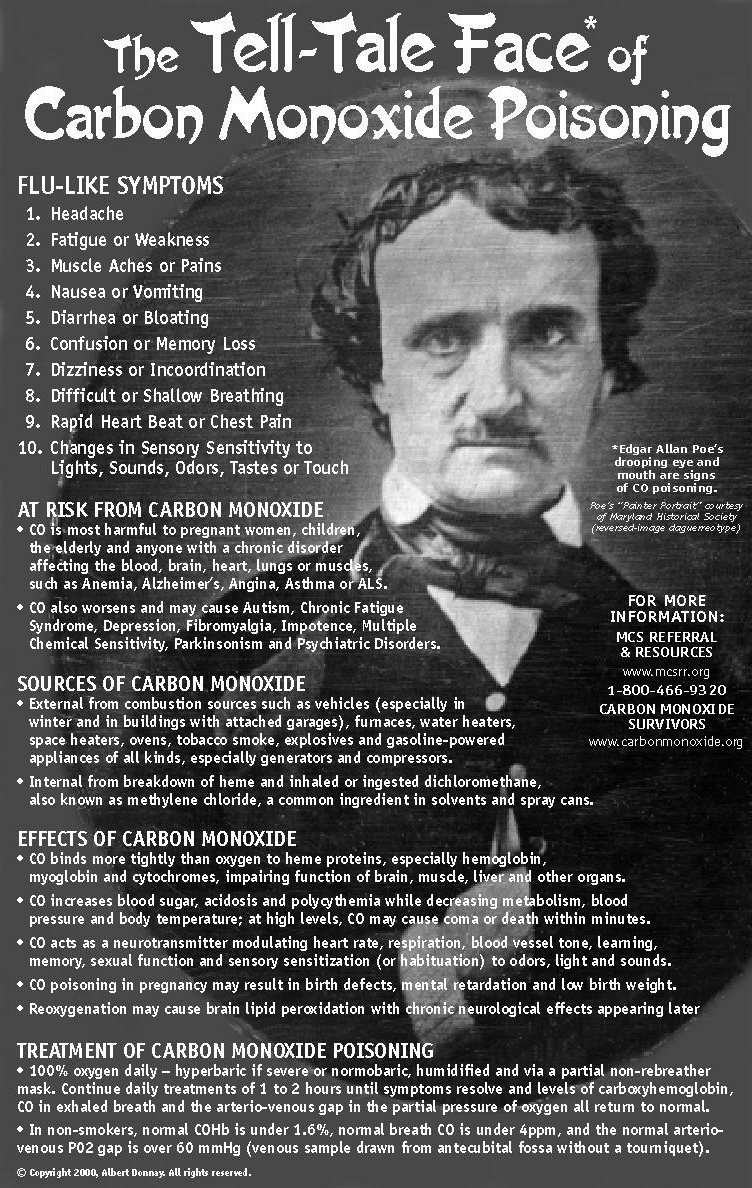
Is it mundane to think that Poe died of medical reasons? Perhaps it is too simple for people that want a more titillating story but the reality seems to be that people were more likely to die by disease than violence in the 19th century (excluding the Civil War). If Poe's death was because of a medical condition, theories include the following (deep breath): diabetes, epilepsy, tuberculosis, heart attack or heart disease, brain tumor, carbon monoxide poisoning, arsenic, lead poisoning, alcohol poisoning (still popular despite contrary evidence), cholera, syphilis, meningitis, and rabies.

Rabies? Yes, and for a time the theory had fairly substantial support. Though most biographies mention the cooping theory, it seems few take it seriously and many point to medical theories instead.

Regardless, one of the greatest imaginations in all of American writing died this day in 1849. Though his death remains a mystery, I am thankful to know that I can enjoy his works any time. It is unfortunate that today, for the first time in about five years, I will not be able to visit Poe at his grave in Baltimore (his original burial plot is today marked, as shown in the photo above).

*As a footnote, on this same day 45 years later, fellow bicentennial poet Oliver Wendell Holmes died. He was 85 years old.

Saturday, October 3, 2009

Rather the worse for wear

Baltimore City, Oct 3d 1849
Dear Sir, — There is a gentleman, rather the worse for wear, at Ryan's Fourth ward polls, who goes under the cognomen of Edgar A. Poe, and who appears in great distress, & he says he is acquainted with you, and I assure you, he is in need of immediate assistance.
Yours in haste, Jos. W. Walker
This was the letter which Joseph W. Walker sent to his former employer Joseph Evans Snodgrass on October 3, 1849. It is the first document record of Poe since September 27 (if it exists; I haven't seen it and have no idea where it is housed).

Poe was found in a delirious state in or near Ryan's Tavern in Gunner's Hall located at 44 East Lombard Street, Baltimore. The exact situation is unknown (though legend persists he was in a gutter, in an alley, or otherwise in the street; he may very well have been sitting on a chair inside the Tavern). He may or may not have been drunk. He may or may not have been drugged. He may or may not have been wearing someone else's clothing. He may or may not have asked for Snodgrass by name, rather than naming any of his Baltimore relatives.

Snodgrass, a physician/editor, made it to Ryan's by the afternoon. He later recounted that he knew Poe immediately, despite an odd hat — "a cheap palm-leaf one, without a band, and soiled." Snodgrass also later claimed that Poe was a drunken wreck, and his fate was a lesson to all who were intemperate. Snodgrass was, of course, one of the most violently outspoken members of the temperance movement — readers may decide if he had any bias. Snodgrass apparently bumped into a "Mr. H——, a relative of Mr. Poe's by marriage" (identified as his uncle Henry Herring) and the two decided to put Poe in a carriage to the Washington College Hospital. Poe was received by Dr. John Joseph Moran, who later claimed that Poe wore a straw hat that day and that he "had not the slightest odor of liquor upon his breath or person."

The day Poe was found was election day in Maryland "for members of Congress and for members of the House of Delegates," according to one newspaper that morning. Ryan's, besides being a tavern, was also hosting the fourth ward polls, as eluded to in Walker's letter to Snodgrass. Scholar William Hand Browne observed: "At that time the polls were usually held at public houses, and the candidates saw that every voter had all the whiskey he wanted."

This coincidental date/location also lent credence to an early theory that Poe was a victim of "cooping" — that he was abducted by thugs hired by a political party or individual politician to force people's vote. Victims were chosen at random and force-fed alcohol or drugs to make them more cooperative. When not forced into polling booths, these people were held in "coops," tight cages which led to the occasional accidental death. Poe might have been forced into another person's clothing to disguise his identity (the thugs would not have known of his celebrity status). He was then kicked to the curb when they were done with him — or, so says this theory.

The six days that Poe went missing is a mystery, but even his reappearance is full of holes and questions. How credible was Mr. Snodgrass? How about Dr. Moran? Was Poe supposed to be in Baltimore rather than Philadelphia or New York? Where was he found? Who called for Snodgrass? Was it just a coincidence that this was Election Day?

Sunday, September 27, 2009

Poe takes his last trip

On September 27, 1849, Edgar A. Poe fell off the radar. He will not be seen or heard from again for another six days.

The night before his disappearance, there are several stories about what he was doing; how true they are is debated. He apparently visited the office of the Southern Literary Messenger (his former employer) to meet with John R. Thompson. He told Thompson he was leaving for New York the next day but stopping in Philadelphia on the way. In Philadelphia, he was supposed to edit a volume of (bad) poetry by a poetaster named Mrs. Marguerite St. Leon Loud — a gig he only accepted for the decent pay. Thompson gave Poe $5 to cover the trip (as well as a letter to give to Rufus Griswold in Philadelphia); Poe paid him back with a manuscript of a poem titled "Annabel Lee." Likely, this was just a gift, not intended for publication, as "Annabel Lee" had just been sold to John Sartain of the Union Magazine. Thompson published it anyway, claiming to Griswold that he paid "a high price" for it. Information from Thompson comes from his letter to Griswold as well as interviews with the questionable William Fearing Gill, an early (fanatic) biographer of Poe.

Sarah Elmira Royster Shelton claimed that Poe visited her at home the same day. "He came up to my house on the evening of the 26th Sept. to take leave of me — He was very sad, and complained of being quite sick." Elmira claimed he had a fever and urged him not to travel in such a condition the next day. She claims that she confirmed he had already left the next morning when she tried to check on him. Elmira's recollections often wavered so she may or may not be credible.

"About half-past nine" in the evening, Poe visited a young doctor named John F. Carter, presumably for the fever Elmira mentioned. He left (supposedly switching canes with Carter) to eat dinner at Sadler's Restaurant. According to Dr. Carter, the restaurant later told him Poe left "at exactly twelve that night" to board a boat which would depart at four o'clock. Biographer Arthur Hobson Quinn did some considerable thinking about this aspect of the story, whether Poe was really taking a boat which left at 4 a.m. or one at 4 p.m. and which boat, if any, was scheduled to leave that day.

Either way, it was the next day, September 27, a Thursday, when Poe left Richmond. It is believed he boarded a steamer to Baltimore (odd, considering the plans he revealed to John Thompson), identified by Arthur Hobson Quinn and others as Pocahontas. If it was this particular ship, we know that it successfully arrived in Baltimore the next day. Whether it was the next day or not, Poe's next appearance (six days later) would definitely be in Baltimore. Speculation rages if Poe went to Baltimore first, then went on to Philadelphia or New York, then returned to Baltimore, or if he never made it out of Baltimore. That's not including the speculation about whether or not Poe actually left on the 27th or if he went a day or two later. Poe was not in a condition to explain any of it. More on that soon.

Thursday, September 17, 2009

Poe and politics

Frederick William Thomas came to visit Poe at his house (then on Coates Street in Philadelphia) on September 17, 1842. Years later, he described Poe's home life in the so-called Quaker City:
He lived in a rural home on the outskirts of the city. His house was small, but comfortable inside for one of the kind. The rooms looked neat and orderly, but everything about the place wore an air of pecuniary want. Although I arrived late in the morning Mrs. Clemm, Poe's mother-in-law, was busy preparing for his breakfast. My presence possibly caused some confusion, but I noticed that there was delay and evident difficulty in procuring the meal. His wife entertained me. Her manners were agreeable and graceful... She and her mother showed much concern about Eddie, as they called Poe, and were anxious to have him secure work.
Thomas was a writer himself and, throughout his 60 years, lived in Providence, Charleston, Baltimore, Cincinnati — though it was in Philadelphia that he met Edgar Poe. Thomas maintained a long, frequent correspondence with Poe, three years his junior; letters between the two are very frank, honest, and interesting. Thomas also got his hands dirty in politics and campaigned on behalf of William Henry Harrison, who died shortly after his presidential inauguration. Harrison's successor, the "accidental president" John Tyler, compensated Thomas for his support by granting him a clerkship at the Treasury Department in Washington, D.C.

Thomas hoped his connection with the new president would lead to a job for his friend Poe. Their September 1842 meeting was to discuss this possibility. Robert Tyler, son of the new president, was in town and would likely show his support for granting Poe a government job, Thomas believed. But, Poe knew his preferred path: even as Thomas chatted with Poe about obtaining a government post, Poe chatted about creating his own literary journal. Nevertheless, the struggling writer/critic was somewhat intrigued by government work, which he had heard was easy money. Thomas implied the job was all but his already; Robert Tyler was "remarkably fond of poetry." He agreed to meet Thomas the next morning.

Thomas likely didn't hear from Poe for several days. A letter from Poe dated September 21, 1842 excuses his absence:
I am afraid you will think that I keep my promises but indifferently well, since I failed to make my appearance at Congress Hall on Sunday, and I now, therefore, write to apologize... Upon reaching home Saturday night, I was taken with a severe chill and fever — the latter keeping me company the next day. I found myself too ill to venture out, but, nevertheless, would have done so had I been able to obtain the consent of all parties.
Poe blamed both illness and his wife for not allowing him to meet with Tyler, the president's son. Was he really sick? Was his wife concerned about his health? Or, as biographer Kenneth Silverman concludes, was he just nursing a hangover after a night's drinking? When Poe realized he had missed a good opportunity (apparently, the job promised an annual salary of $1,500 — nearly double what he was making at Graham's Magazine), he wrote he still wanted to pursue the job, "if he [Tyler] can look over matters & get me the Inspectorship I will join the Washingtonians" — a temperance group (years later, Poe did, in fact, join a temperance organization).

Wednesday, September 9, 2009

Poe's honorary membership

Poe has received various accolades over the years, but most of them have been after his death. Conversely, during their lifetimes, other writers like James Russell Lowell, Henry Wadsworth Longfellow, Oliver Wendell Holmes, and Washington Irving were getting thrown honorary degrees left and right while they were still living (many from institutions across the pond, like Oxford and Cambridge). Poe was a college drop-out himself so it might not be surprising that he rarely was recognized by many educational institutions during his lifetime.

One major exception might be Jefferson College, named after Thomas Jefferson — the same man who founded the Virginia university which Poe dropped out of. The tiny college in Canonsburg, Pennsylvania (south of Pittsburgh) named its literary society after Benjamin Franklin, who donated the money (in francs) which established the school's first library. The Franklin Literary Society, founded in 1797, extended an honorary membership to Edgar A. Poe on September 9, 1836.* The Franklin Literary Society still exists today, though the institution is now known as Washington & Jefferson College in Washington, PA.

What I find most impressive about this offer is that it was in 1836. Poe had not yet established himself as a major writer of fiction or poetry (his poetry collections did not garner much attention, but some great stories, including "Metzengerstein" and "MS. Found in a Bottle" had already seen print). Instead, the Franklin Literary Society was honoring Poe's contributions to the world of literary criticism, specifically as a staff member at the Southern Literary Messenger.

This might have been controversial. Poe had only recently introduced the world to his new style of literary criticism which was directly opposed to the "puffing" tradition. Instead of unquestioning praise, Poe offered sincere criticism, which often came across as mean-spirited or heavy-handed. Much to other writers' chagrin, Poe also cut his way through bad grammar and poor word choices. He examined sentences like a doctor and diagnosed a number of problems.

I had the good fortune of working at W&J College for a time. I didn't hear about the Poe connection until a few months into my time there. When I learned about it, I couldn't help but get a kick out of it: Poe is everywhere, even in a small town in southwestern Pennsylvania.

*The college maintains the original letter Poe wrote to respectfully accept his honorary membership. Unfortunately, his autograph has been torn off, likely by a collector. Pictured above is the original log cabin which was the first building of Jefferson College; it is still standing.

Monday, September 7, 2009

Poe reviews Griswold

Rufus Griswold vs. Edgar Poe is probably the greatest, and most confusing, literary battle in the history of the written word in any language. It's unclear what was really going on, who was the instigator and, most importantly, why Griswold was so harsh to Poe when Poe was dead and unable to fight back. Many scholars trace all the animosity back to one little critical review in 1842.

While preparing what would become his most important work, Rufus Griswold turned to Edgar Poe, one of the most well-known literary critics of the day. Knowing that The Poets and Poetry of America, Griswold's landmark anthology, could use some publicity to sell well, he asked Poe for a review (odd, considering Poe was somewhat biased, considering he was one of the many poets included in the book). Griswold knew Poe was desperate and he offered money out of pocket for his review — and Poe caught on that Griswold intended this exchange of cash to be a bribe. "You need not trouble yourself about the publication of the review, should you decide upon writing it," Griswold cooed, "for I will attend to all that."

Poe, however, was not known for letting people get off easy in his reviews, thanks to his caustic, "tomahawk"-style criticism. Couple that with at least some jealousy at the upstart arbiter of American literary taste stepping into the position he coveted, Poe did the unthinkable (to Griswold): he wrote a lukewarm review. Neither heavily critical nor heavily laudatory, Poe's review of The Poets and Poetry of America was, quite simply, fair. He praised Griswold's ambitious effort, while scolding some of the specific selections. He disagreed with excessive space granted to poets like Charles Fenno Hoffman and Charles Sprague and lamented the exclusion of James Russell Lowell. Ultimately, however, he determined the book was "the most important addition which our literature has for many years received." And that's saying something.

Griswold, however, was unhappy with this result. He believed his bribe should have guaranteed a review of exclusive praise, not balanced by valid criticism. Griswold knew the puffing game well, having directly demanded positive reviews throughout his career (and agreeing to write just as many as requested by others), and believed Poe's positive review "might be of good consequence." Yet, this was not a good review which Poe handed him. Lest he be judged hypocritical, Griswold simply had to do what he promised, to "attend" to finding a publisher.

On September 7, 1842, Griswold wrote to his frequent correspondent, the Boston publisher James Thomas Fields. "Perhaps Poe's article will not affect the book at all," he theorized, "but I am rather pleased that it is to appear, lest Poe should think that I had prevented its publication." He did get it published, as promised... by burying it in a relatively-unknown newspaper called the Boston Miscellany.

Not that it mattered. Poe had already published a review of The Poets and Poetry of America in Graham's Magazine by then. It was one of his last pieces before he left his editorial role there. He was immediately replaced by Rufus Griswold himself. Comparisons between Griswold and Poe as editors of Graham's rolled in immediately and, much to Griswold's dismay, he was not the favored of the two. Animosity continued to build (almost exclusively on Griswold's side; even his friends found him untrustworthy, easily angered, and at least one fellow editor, John Sartain, said that he was blackmailed by Griswold on a regular basis to prevent bad notices of his own journal).

This feud culminated on October 9, 1849, when Griswold did the unthinkable. But, more on that another time.

Tuesday, September 1, 2009

A Poe romance

September 1, 1827 saw the third and final installment of Merlin, a play in verse by Maryland writer Lambert A. Wilmer. Published in the North American, the three-act play followed a heroine named Elmira and her despondent pursuer Alphonse. The drama was based on the true story of a young Edgar Poe — the first in what would be a long series of fictionalized stories about Poe over several decades.*

As a young man, Poe pursued a neighboring Richmond woman named Sarah Elmira Royster. The relationship seemed strong enough and the couple apparently made some kind of agreement to get married. Poe then left Richmond to attend the University of Virginia and, somehow, the relationship ended. Poe wrote her often, imploring for a response. Miserable at college, quickly running out of money (due to insufficient support from his guardian John Allan) and, now, nursing a broken heart, the seventeen-year old Poe eventually gave up on his studies and never graduated. Royster, he assumed, had forgotten him, perhaps fallen in love with another man.

As it turns out, the villain of this real-life story was none other than Royster's father, who carefully intercepted each of Poe's letters before his daughter saw them. After months of hearing nothing from her husband-to-be, she gave up on him. By the time Poe returned home from his unsuccessful stint at the University, Poe realized Royster was no longer available. One story says that Poe went to see her at her family home and was surprised to find a party being hosted there — it turned out to be Royster's engagement party.

Whether that story is true or not, Poe and Royster lost their opportunity to live happily ever after — for now. The star-crossed lovers whose relationship inspired a play would rekindle their relationship many years later, when both were widows. That story will be told later this month.

* Though modern works like Matthew Pearl's The Poe Shadow or Louis Bayard's The Pale Blue Eye come to mind first and foremost, this post shows that neither author was doing anything particularly new or innovative. Literally scores of works based on Poe have been produced over the years, including short stories, novels, video games, and films.

Monday, August 17, 2009

The Poetic Principle: A rich intellectual treat

Edgar Poe presented an evening lecture on August 17, 1849 in Richmond titled "The Poetic Principle." The lecture, which adapted a similar one presented in Providence, Rhode Island in December 1848, was held at the Exchange Hotel. It began at 8:00 p.m. and admission was 25 cents. Poe spoke to a room filled to capacity.

Poe's appearance was a highly-anticipated event in the city which embraced him as one of their own. One newspaper proudly hailed him as "a native of this city [who] was reared in our midst." Another hyped up the lecture in advance, advising its readers: "Those who desire to enjoy a real treat, should hear this effort of Mr. Poe's." The Richmond Whig newspaper teased that Poe would conclude by reciting "The Raven."

His audience was not disappointed.

The Whig, despite looking forward to hearing "The Raven," had apparently not expected much from Poe. After the lecture, they reported: "We attended the Lecture of Mr. Poe... with the expectation of hearing nothing more than the common dissertation upon the poetic faculty... We must say we were never more delighted in our lives." The Daily Republican reported it was "one of the richest intellectual treats... The clearness and melody of his voice, and the harmonious accentuation of his words, were soul inspiring." Novelist John Esten Cooke recalled that Poe "stood in a graceful attitude, leaning one hand on a small table beside him, and his wonderfully clear and musical voice speedily brought the audience under its spell. Those who heard this strange voice once, never afterwards forgot it... The lecture ended in the midst of applause."

The content of the lecture on "The Poetic Principle" was distinctly Poe. One contemporary review notes that Poe denounced the didacticism in poetry as the "heresy of modern times" rather than allowing a poem to stand for beauty and nothing more. He spoke about specific authors and both praised and criticized as appropriate. Among those he mentioned was Edward Coote Pinkney, likely the American poet which Poe most admired. He also read from the work of Tennyson. Even journalist John M. Daniel, with whom Poe had once almost dueled, reluctantly admitted: "Mr. Poe is a man of very decided genius. Indeed, we know of no other writer in the United States, who has half the chance to be remembered in the history of literature" (though he rightly predicted his reputation would be based on a small number of works).

The irony might be that Poe lost his lecture notes before he made it to Virginia. That means he had to rewrite it just before taking the center stage.

"I never was received with so much enthusiasm," Poe reported to his mother-in-law Maria Clemm. The lecture later became the essay of the same name, published posthumously. That manuscript is somewhat controversial; allegedly found after Poe's death, it was first published by Rufus Wilmot Griswold in his collected works of Poe. The original manuscript was immediately lost after publication.